
Rubber mats can grip and cushion. HDPE access panels can spread loads and build connected routes. Choose the wrong finished system, and it may still sink, shift, or slow your crew. This guide compares both by the job they are designed to perform.
| Semi-Rigid HDPE Access Panel | Typical Flexible Rubber Mat |
|---|---|
 |
 |
| Load Spreading / Connected Route | Cushioning / Floor Protection |
This comparison focuses on purpose-built semi-rigid HDPE access panels versus typical flexible rubber floor or surface-protection mats. Specialized engineered rubber access systems should be evaluated on their own panel construction and test data.
Quick Answer: HDPE for Access, Rubber for Cushioning
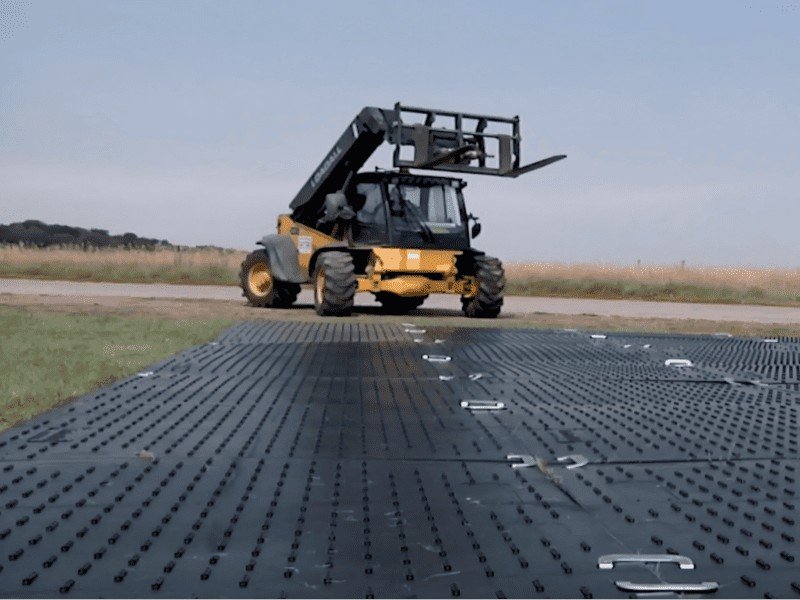
For temporary roads, vehicle access, muddy ground, lawns, and reusable outdoor routes, purpose-built HDPE ground mats are usually the stronger starting point.
For anti-fatigue standing areas, vibration isolation, animal flooring, workshops, gyms, and impact cushioning over a firm base, rubber is often the better material.
| Performance Need | Semi-Rigid HDPE Access Panels | Typical Flexible Rubber Mats |
|---|---|---|
| Load spreading over soft ground | Strong advantage | Usually limited by flexibility |
| Connected temporary road | Purpose-built systems available | Less common |
| Mud and lawn access | Better starting point | Can sink or follow ruts |
| Shock and vibration absorption | Not the main purpose | Often selected for cushioning; verify the compound and construction |
| Anti-fatigue standing | Not the main purpose | Often the better product category |
| Vehicle turning on wet ground | Better with tread and connectors | Depends heavily on thickness and base |
| Indoor floor protection | Can work, but often overbuilt | Often more suitable |
| Long outdoor access route | Easier to standardize | Usually less efficient |
| Cleaning after mud | Smooth, non-absorbent panels are practical | Depends on groove and compound |
| Material consistency | HDPE grade and additives matter | Rubber compound matters greatly |
Neither material is automatically safe for open trenches, unsupported voids, or crane outrigger point loads.
First Decide Whether You Need Ground Access or Floor Protection
“Rubber mat” can mean an anti-fatigue mat, stable mat, gym tile, floor mat, recycled-tire panel, or equipment pad. Those products are not automatically temporary roadway systems.
Rubber compounds differ in weather, oil, abrasion, and temperature performance.1
HDPE access mats serve another purpose: spreading moving loads through connected lanes or work pads.
First decide whether you need load spreading, cushioning, vibration control, or temporary vehicle access.
For a broader comparison of HDPE, UHMWPE, PP, PVC, and composite materials, see HDPE vs Other Plastics for Ground Protection Mats.
Semi-Rigid HDPE Access Mats Are Usually Better Suited to Soft-Ground Vehicle Routes
Soft soil, wet turf, clay, and mud need a panel that spreads load beyond the tire contact area.
HDPE is known for a high strength-to-density ratio and greater hardness than LDPE.2 In a properly designed mat, that balance supports a semi-rigid panel that can distribute loads across local surface variation when the underlying ground remains adequately supported.
A typical flexible rubber mat may follow the rut instead of distributing a wheel load across the full panel.
Thick engineered rubber can work on a firm base, but soft subgrade can let flexible mats settle into the same weak shape. Wet soil is also more vulnerable to compaction.3
For lawns, mud, and general temporary vehicle access, start with purpose-built HDPE ground mats. Move to heavy equipment mats or heavier roadway systems when machine weight, repeated traffic, turning, or ground conditions justify the upgrade.
Purpose-Built Rubber Flooring Is Better Suited to Cushioning Applications
Purpose-built rubber flooring is often selected for cushioning, impact protection, or standing comfort. Actual performance depends on compound, thickness, hardness, reinforcement, and construction.
Some engineered compliant floors can reduce peak impact forces.4 That does not mean every rubber mat provides the same damping.
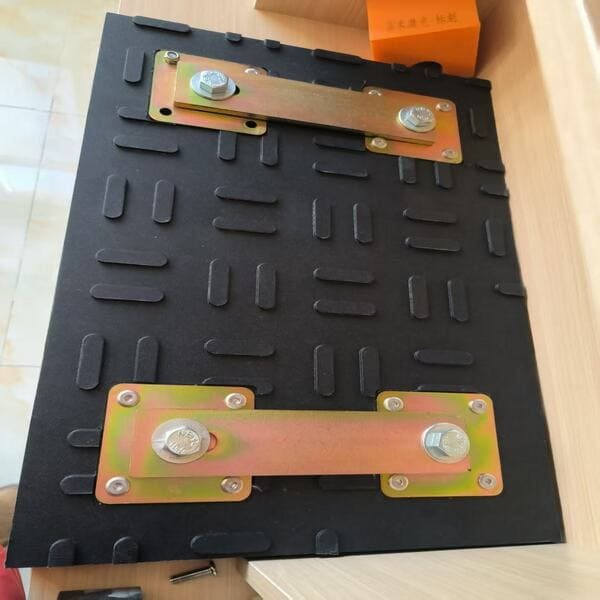
Depending on the compound and construction, rubber can suit anti-fatigue stations, vibration isolation, animal stalls, workshops, gyms, and stationary equipment on hard floors.
BKM focuses on HDPE and UHMWPE access products. I would not recommend a plastic road mat when cushioning or vibration isolation is the real requirement.
Traction Depends on the Surface and Contamination
Rubber often feels grippy on clean concrete, but that advantage can change outdoors.
Mud fills shallow textures, water creates contamination, and flexible mats may move. No surface is slip-resistant under every condition.
Workplace flooring must remain suitable for the activity and safe under expected contamination.5
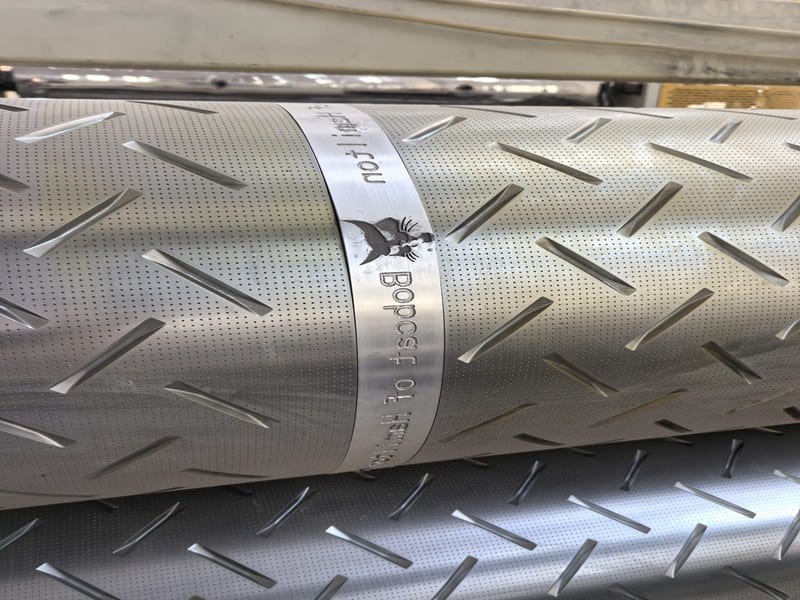
HDPE vehicle mats use raised diamond, chevron, or cleated tread to give tires a defined contact pattern.
| Route Condition | Better Direction |
|---|---|
| Clean concrete workshop | Rubber |
| Muddy vehicle access | Textured HDPE with connectors |
| Wet public walkway | Test the actual surface and joints |
| Finished driveway | HDPE route or suitable protective underlay |
| Oil-exposed area | Confirm exact material compatibility |
Do not compare only the texture. Check whether the mat moves, curls, or separates.
HDPE Builds a Route; Rubber Usually Covers a Spot
Portable HDPE mats can use two-way or four-way connectors to form straight lanes, parking grids, turning pads, and wider work areas.
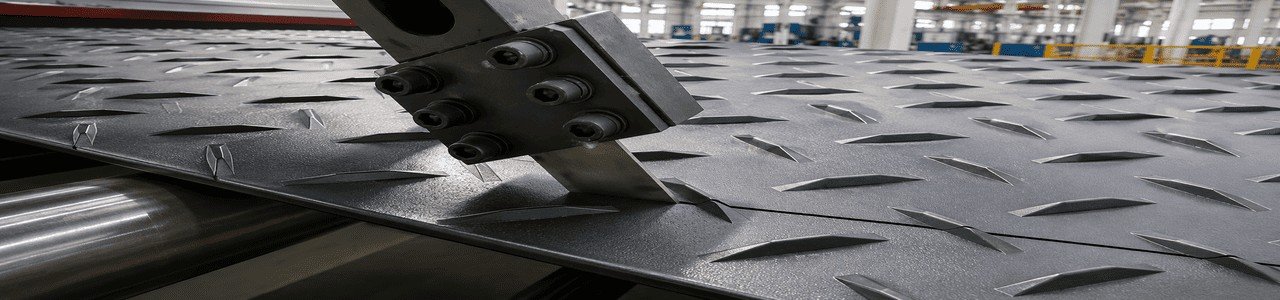
Rubber mats are often sold as sheets, rolls, or floor tiles designed for firm floors.
For long routes, connection geometry matters. Braking and turning can open loose joints, so temporary road mats are usually easier to scale.
Firmness Matters for Pedestrians and Small Wheels
A surface can feel soft and comfortable while still being difficult for wheelchairs, carts, or narrow casters.
Accessible floor and ground surfaces should be stable, firm, and slip resistant. Firm surfaces resist deformation under applied forces.6
That is why a thick, soft rubber mat is not automatically the best public walkway.
Softness helps at a standing station. On an outdoor route, too much deformation can make carts harder to push.
Temporary walkway mats are designed around connected movement. For mixed traffic, select around the heavier load and smallest wheels.
Compare Actual Weight, Not Material Stereotypes
Do not assume rubber is always heavier or HDPE is always lightweight.
Finished weight depends on thickness, fillers, structure, and panel size. Ask for panel weight, square-meter weight, lifting points, pallet quantity, and crew requirement.
Handling may decide the better product even when both materials survive the route.
Weather Performance Depends on the Formulation
Neither “rubber” nor “HDPE” guarantees unlimited outdoor life.
Rubber compounds differ: EPDM is often chosen for weather resistance, while natural rubber and nitrile serve other needs.1
HDPE also needs a suitable outdoor formulation because temperature and UV exposure affect its properties.7
Ask whether the actual product suits your climate.
For outdoor fleets, request the temperature range, weathering information, material identification, and storage guidance.
Oil and Chemical Exposure Can Reverse the Decision
Rubber performance around oil depends on the compound. Natural rubber can swell in mineral oils, while nitrile rubber is used where oil resistance matters.1
HDPE also requires compatibility checks for the specific fluid and temperature.
For hydraulic oil, fuel, solvents, animal waste, or cleaning chemicals, request compatibility data for the exact product.
Do not buy “rubber” or “plastic” as a generic chemical solution.
Cleaning and Fleet Reuse Favor Simple Panel Designs
Mud and debris collect in deep textures and joints.
HDPE panels can be washed, inspected, stacked, and returned to service. Rubber can also be washable, but the cleaning burden depends on grooves, porosity, and construction.
For rental use, compare the turnaround cycle.
| Fleet Task | HDPE Access Mats | Rubber Mats |
|---|---|---|
| Mud removal | Straightforward on solid panels | Depends on grooves and surface |
| Inspection | Edges, holes, tread, warping | Tears, cuts, curling, compression |
| Storage | Standard panel geometry | Flexible sheets need different storage |
| Best reuse | Outdoor access routes | Specialized floor protection |
A rental product must return to service quickly.
Which Material Fits Each Application?
| Application | Better Starting Material | Reason |
|---|---|---|
| Muddy construction entrance | HDPE | Load spreading and connected route |
| Lawn access for compact equipment | HDPE | Surface protection and route control |
| Skid steer or excavator route | HDPE/UHMWPE system | Turning and repeated traffic |
| Indoor anti-fatigue station | Rubber | Cushioning and worker comfort |
| Machinery vibration isolation | Rubber | Energy absorption |
| Temporary event walkway over firm base | Depends on traffic | Compare firmness, traction, and joints |
| Driveway protection under moving equipment | HDPE route, sometimes with underlay | Continuous load-spreading path |
| Stable or animal flooring | Rubber | Cushioning and hoof comfort |
| Long outdoor rental route | HDPE | Standardized panels and connectors |
| Crane outrigger support | Dedicated pad | Concentrated load needs separate assessment |
For finished concrete or pavers, review driveway protection during construction rather than choosing only by material.
For concentrated loads, weight distribution mats or dedicated outrigger pads may be required.
How BKM Helps You Choose Without Overspecifying
BKM manufactures HDPE and UHMWPE access products, not general-purpose rubber flooring.
That focus suits vehicle routes, turf protection, heavy equipment access, and reusable fleets.
BKM can support custom sizes, tread patterns, hand holes, connector layouts, CNC machining, colors, logos, private labels, and export packing.

Send BKM the equipment, ground, route dimensions, turns, reuse plan, climate, and handling method.
If the job is anti-fatigue comfort or vibration isolation, rubber may be better. If it is vehicle access over mud, grass, or sensitive ground, HDPE usually provides the more useful system.
FAQ
Are Rubber Mats Stronger Than HDPE Ground Mats?
“Stronger” is too broad. Performance depends on the rubber compound and finished product. Semi-rigid HDPE access panels are usually better suited to load spreading over supported soft ground.
Can Rubber Mats Be Used for Heavy Equipment?
They can protect hard floors or cushion stationary loads when designed for that purpose. For moving heavy equipment over mud or grass, use a purpose-built access system.
Which Material Gives Better Traction in Mud?
A properly designed HDPE tread is usually the better starting point for vehicle access in mud. Rubber grip on a clean hard floor does not guarantee performance when mud fills the surface.
Are Rubber Mats Better for Concrete and Pavers?
Rubber can cushion and reduce abrasion on firm surfaces. For moving equipment, you may still need a continuous HDPE route that spreads load and keeps wheels away from edges.
Which Material Is Easier to Carry?
Compare the finished panel weight and size. Thickness, fillers, and structure matter more than the material name alone.
Can HDPE Mats Be Used Indoors?
Yes, but they may be unnecessarily rigid for anti-fatigue stations or impact-sensitive floors. Check tread, transitions, and floor protection.
Do Rubber Mats Last Longer Outdoors?
It depends on the rubber compound. EPDM, natural rubber, SBR, and nitrile have different weather, oil, and temperature behavior. HDPE also needs proper UV stabilization.
Can HDPE and Rubber Be Used Together?
Yes. Rubber can serve as a local protective or cushioning layer over a firm surface, while HDPE panels form the vehicle route. The combined system must remain stable and level.
Choose the Function Before the Material
Choose purpose-built HDPE access panels for a semi-rigid, connected route over mud, grass, or supported soft ground. Choose suitable rubber flooring when cushioning, vibration control, anti-fatigue comfort, or stationary floor protection is the main requirement.
Choose the material designed for the force you need to control.
References
The Open University. [Natural and Synthetic Rubbers](https://www.open.edu/openlearn/science-maths-technology/chemistry/introduction-polymers/content-section-1.2.1). ↩
Plastics Europe. [Polyolefins](https://plasticseurope.org/plastics-explained/a-large-family/polyolefins/). ↩
University of Minnesota Extension. [Soil Compaction](https://extension.umn.edu/natural-resources/conservation/agricultural-soil-and-water/soil-compaction). ↩
Tatemoto, T. et al. [Shock-Absorbing Effect of Flooring-Adopted Mechanical Metamaterial Technology and Other Shock-Absorbing Floorings](https://pmc.ncbi.nlm.nih.gov/articles/PMC9510406/). ↩
UK Health and Safety Executive. [Flooring](https://www.hse.gov.uk/slips/flooring.htm). ↩
U.S. Access Board. [Chapter 3: Floor and Ground Surfaces](https://www.access-board.gov/ada/guides/chapter-3-floor-and-ground-surfaces/). ↩
National Institute of Standards and Technology. [Temperature and Light Intensity Effects on the Photodegradation of High-Density Polyethylene](https://www.nist.gov/publications/temperature-and-light-intensity-effects-photodegradation-high-density-polyethylene). ↩