
The most expensive plastic is not always the best ground protection material. If your real problem is turning damage, shifting joints, difficult handling, or soft ground, upgrading the resin may only increase your cost.
This guide helps you match the material to the way your mats will actually earn their money.
Start With the Failure You Need to Prevent
If you are buying ground protection mats for a contracting business, rental fleet, distribution line, or project, you probably care less about polymer theory than the result on site.
You need to know whether the mats will survive your equipment, whether your crew can handle them, and how many jobs you can get from the investment.
That is where I start the material discussion.
A landscaper moving a skid steer across finished turf has a different problem from an industrial contractor building a repeated access route. An event company protecting grass also needs something different from a fleet moving equipment through abrasive aggregate.
So before comparing HDPE, UHMWPE, PP, PVC, or softer polyethylene, identify the expensive failure first.
Is the mat wearing through? Is it bending too much? Are connectors pulling at the holes? Are crews wasting time moving heavy panels? Are tires polishing the tread? Is the customer complaining about lawn damage?
Your answer usually tells you more than the material name.
HDPE Is Usually the Practical Starting Point
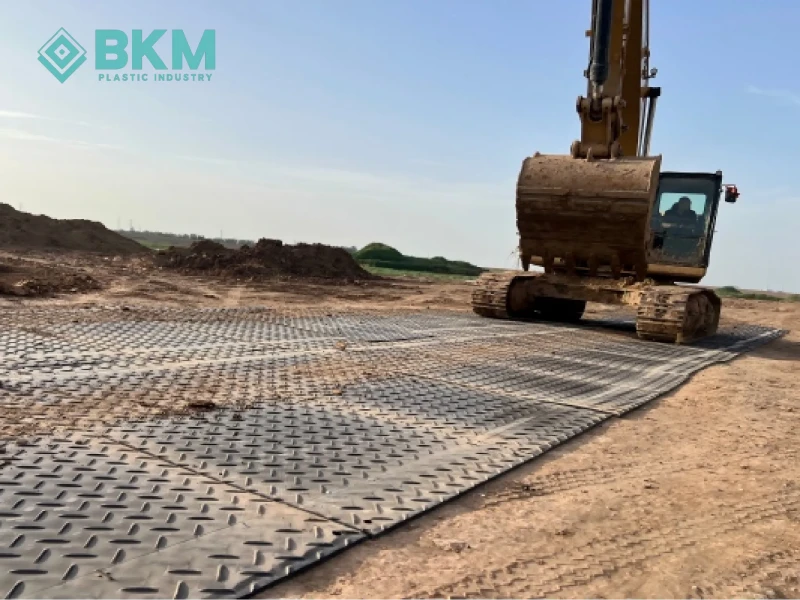
For most portable temporary-access work, I would evaluate HDPE first.
HDPE gives you a useful balance between stiffness, flexibility, impact resistance, moisture resistance, handling weight, fabrication, and purchase cost. That balance is why HDPE ground mats fit so many construction, landscaping, utility, farm, rental, and event applications.
You can build a route that crews can install, recover, clean, stack, and deploy again without treating every project like a major civil works operation.
That matters commercially.
If your business rents mats or moves them between projects, the product must survive more than vehicle traffic. It also has to survive forklifts, trailers, pressure washing, stacking, dragging, connectors, and different crews.
HDPE normally makes sense when portability and repeat deployment matter as much as extreme wear resistance.
I would look closely at HDPE for:
- landscaping and property access
- light and medium construction equipment
- utility maintenance routes
- temporary parking
- outdoor events
- rental fleets
- grass and finished-surface protection
- frequently relocated temporary roads
For a temporary road mat program, that combination can matter more than choosing the polymer with the most impressive laboratory property.
UHMWPE Makes Sense When Wear Is Costing You Money
UHMWPE becomes more interesting when abrasion and repeated impact are what actually retire your mats.
Think about gritty industrial ground, aggressive tracked movement, repeated dragging, or access routes that remain in demanding service. In those conditions, wear resistance can justify a higher material cost.
But I would not automatically move you to UHMWPE because the project sounds “heavy duty.”
You still have to ask how the mat is failing.
If panels are separating because the route is poorly connected, UHMWPE will not fix the connection plan. If a skid steer repeatedly pivots on a narrow lane, a more expensive polymer will not make that turning geometry disappear.
If the ground underneath is unsupported, neither material should be treated like a bridge.
For heavier repeated access, compare the full construction of the proposed heavy duty access mats, not simply the UHMWPE name.
What you are paying for should address a real source of replacement cost.
HDPE vs UHMWPE in a Buying Decision
| Procurement Factor | HDPE Direction | UHMWPE Direction |
|---|---|---|
| General temporary access | Strong starting choice | Usually unnecessary premium |
| Frequent manual deployment | More practical | Depends on finished mat weight |
| Large fleet quantity | Easier to control investment | Higher capital requirement |
| Severe abrasion | Suitable for moderate wear | Strong reason to evaluate |
| Repeated sliding contact | May wear sooner | More attractive |
| Heavy industrial reuse | Depends on mat construction | Stronger candidate |
| Turf and landscaping work | Practical choice | Often more than the job needs |
| Rental fleet | Strong cost/performance balance | Useful for selected severe-duty inventory |
| Custom holes and fabrication | Practical | Confirm design and production method |
| Main buying question | Does the panel fit the route? | Does extra wear life repay the premium? |
I would not use this table to declare a universal winner.
Use it to decide which supplier proposal deserves the next round of technical questions.
Softer Polyethylene Is Not Automatically Better on Uneven Ground
You may also see LDPE or softer polyethylene blends promoted because they flex more.
Some flexibility is useful. A mat needs to follow normal ground variation without sitting like a rigid sheet over every small contour.
But too much movement under a wheel can make the route feel unstable.
For your procurement decision, do not ask only whether a mat is “flexible.” Ask how the finished panel behaves under your actual equipment.
If you run compact equipment, turning matters especially.
With skid steer ground protection mats, straight travel tells you only part of the story. Skid steers create significant lateral movement when steering.
This is exactly where buyers sometimes blame the resin when the real problem is route width, turning space, or panel connection.
PP and PVC Need a Different Buying Conversation
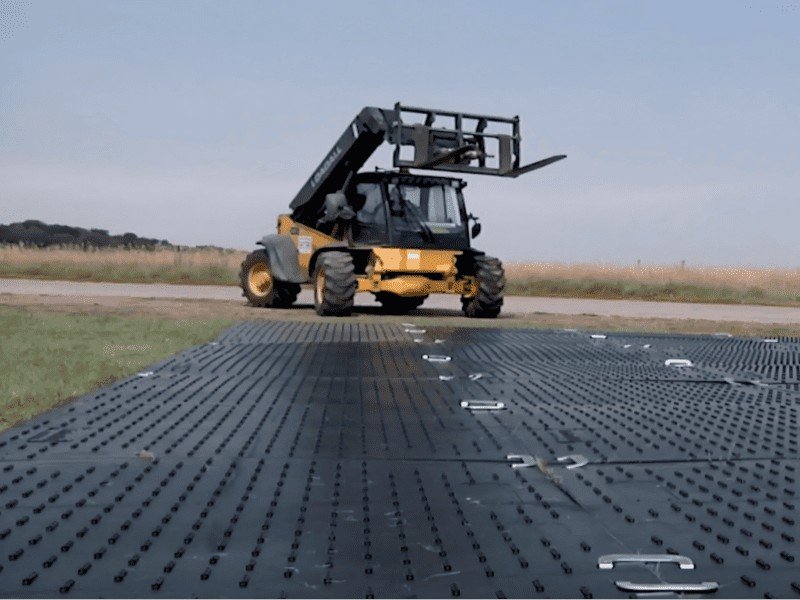
PP and PVC can work in specific modular flooring systems, but I would not compare them with an HDPE vehicle mat using a generic resin chart.
First identify what the finished product is designed to do.
A lighter PP modular panel may be very useful for pedestrian access or event flooring. A PVC system may perform well when it has firm support and controlled traffic.
That does not mean either system should automatically carry your equipment route.
If you receive a PP or PVC quotation, ask about the actual panel, temperature range, joint design, supported traffic, ground requirement, and repeated-load behavior.
You are buying a route, not a resin sample.
“Composite” Also Needs a Proper Specification
The word composite sounds strong, but it is not a complete specification.
A composite ground protection mat may use a different polymer matrix, internal reinforcement, core design, thickness, and connection method.
Those choices can change weight, stiffness, wear, handling, and price.
If a supplier offers a composite option, ask what problem the reinforcement solves.
Is the goal greater stiffness? Reduced weight? Long-span support? Better repeated-load performance?
If the answer is only “composite is stronger,” you still do not have enough information to make a procurement decision.
The Finished Mat Matters More Than the Resin Brochure
This is one of the most important points I would want you to take from this comparison.
Your result depends on three things working together:
the material, the finished panel, and the complete route.
A good resin cannot rescue a poor panel design.
The finished mat still needs the right body thickness, dimensions, tread, weight, hand holes, connector holes, and edge design.
The route still needs enough width, suitable ground support, drainage, connections, and turning space.

Surface pattern deserves more attention than it often receives.
If your route handles muddy tires, you need traction that works after the surface becomes dirty. If people also walk on the mats, an extremely aggressive vehicle tread may not be the best compromise.
For high-value turf, the underside and dwell time matter too. You may want to compare purpose-built turf mats for ground protection instead of selecting only from vehicle-road specifications.
Connectors Can Decide Whether the Material Gets a Fair Chance
I have seen buyers spend a lot of time comparing material grades while treating connectors like a minor accessory.
That is backwards when your route sees turning, braking, mud, or repeated passes.
Once panels start opening at the joints, tires find the edges. Corners move, connector holes take more side force, and the route becomes harder to manage.
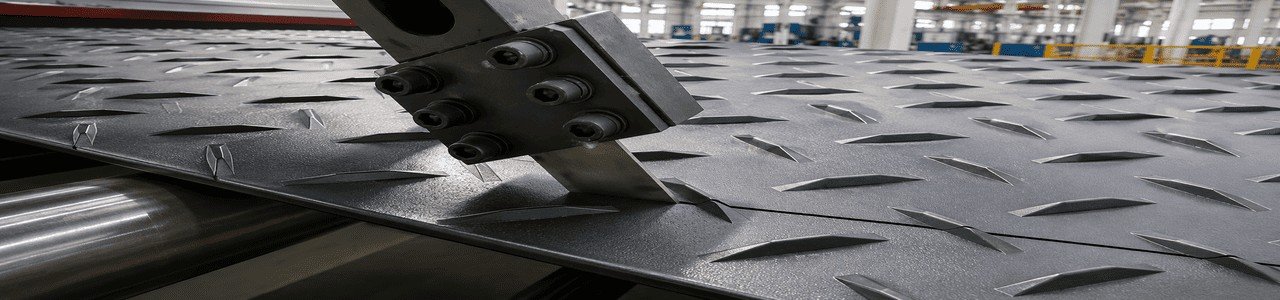
For a straight light-duty route, the connection plan can be simple.
For construction access, parking layouts, staging areas, or repeated equipment turns, tell your supplier exactly where the vehicles change direction. That information affects the connector layout and the number of panels you actually need.
Before blaming HDPE for early damage, I would always check the route geometry and connection points first.
Virgin or Recycled HDPE Should Be a Performance Decision
You will also have to decide whether virgin HDPE is worth paying for.
I would not make that decision from the word “recycled” alone.
For lower-risk access, a controlled recycled HDPE formulation can make commercial sense. For repeated rental use, demanding climates, tighter appearance requirements, or high-value jobs, you may prefer the consistency of virgin material.
The important thing is to compare the finished product under the same purchasing requirements.
Ask for the material description, mat weight, body thickness, surface condition, connector-hole quality, color requirement, and intended use.
A low-cost mixed plastic mat should not be compared with a controlled HDPE mat only because both quotations say “4 × 8 ground mat.”
Your Application Should Decide Where You Spend More
If you distribute mats or build a rental fleet, you do not necessarily need every panel to be the most expensive specification.
A mixed product strategy can make more sense.
You may keep portable HDPE mats for landscaping, utilities, events, and standard construction access. You can reserve heavier systems for industrial projects where repeated abrasion or higher route demands justify them.
The same thinking applies inside one project.
Your straight access section may have different demands from the turning pad. Your turf route may need something different from the aggregate staging area.
That is why material selection should follow the route map.
It keeps you from overspending everywhere just because one difficult section needs a stronger solution.
What I Would Ask Before Approving a Supplier Quote
You can eliminate many bad comparisons before discussing the final price.
| Quote Detail | What You Need to Know |
|---|---|
| Material | Exact HDPE, UHMWPE, recycled content, or composite construction |
| Body thickness | Separate from tread height |
| Finished mat weight | Useful for handling and quote comparison |
| Traffic | Vehicle, axle, tire, track, pedestrian, or mixed |
| Turning | Straight travel is not enough information |
| Ground | Grass, clay, mud, sand, gravel, concrete, or prepared base |
| Tread | Vehicle, pedestrian, or dual-purpose surface |
| Connectors | Type, quantity, hole layout, and whether included |
| Climate | Outdoor exposure and expected temperature |
| Reuse plan | One project, contractor fleet, or rental inventory |
| Customization | Size, holes, color, logo, and private label |
| Packing | Pallet, bundle, container loading, and unloading plan |
If a supplier cannot give you these answers, the material comparison is not finished.
You should be able to compare two quotations on the same application, not two different interpretations of the word “heavy duty.”
Where BKM Fits Into This Decision
BKM works with both HDPE and UHMWPE engineering plastics, so the conversation does not need to start with pushing one material.
For a standard portable access program, we can discuss HDPE ground protection mats 4×8 and other HDPE configurations. For more demanding access, the panel construction and material can be adjusted around the duty.
If you are building a product line, BKM can also support custom dimensions, surface patterns, drilling, hand holes, connector layouts, colors, logo marking, and private-label requirements.
That matters when you are not buying one job lot.
A distributor or rental company may need consistent dimensions so new mats work with existing inventory. You may also need packaging that protects edges and uses container space efficiently.

This is why I recommend discussing packaging before production, not after the mats are finished.
Tell us whether you unload by forklift, whether pallets must fit warehouse racking, and whether you sell mats individually or as systems. Those details affect how the order should leave the factory.
The Buying Rule I Would Use
If your main needs are portable temporary access, fast deployment, turf protection, and controlled fleet cost, start with HDPE.
Move toward UHMWPE when abrasive wear, repeated industrial use, or impact is genuinely driving replacement. Consider other plastics only when the finished system solves a specific route requirement better.
Do not pay more because one resin sounds more advanced.
Pay more when the extra performance removes a cost you already know you have.
FAQ
Can I Mix HDPE and UHMWPE Mats in the Same Rental Fleet?
Yes, and that can be commercially sensible. Keep portable HDPE mats for standard access and reserve heavier mats for high-wear jobs.
Check dimensions, surface height, and connector compatibility before mixing different systems in one route.
Is Plastic Ground Protection Really Cheaper Than Using Plywood?
It depends on how often you reuse it.
If plywood is repeatedly damaged, soaked, disposed of, or replaced, a reusable plastic ground mat can become easier to justify. Include crew handling and cleanup in your calculation, not only sheet price.
What Should a Pre-Production Sample Prove?
Use the sample to check more than appearance.
Check weight, thickness, flatness, tread, hand holes, connector fit, edge quality, flexibility, and how the surface behaves with your actual tire or footwear.
Can I Order Mats to Match Connectors Already in My Fleet?
Often, yes, but do not rely on overall mat size alone.
Send the existing hole spacing, edge dimensions, connector measurements, and drawings. A 4×8 panel from two suppliers may not share the same connection geometry.
Should I Use the Same Mats on Grass and Gravel?
Not automatically.
A route over grass may prioritize weight, underside behavior, turf protection, and removal. Gravel may create more abrasion and surface wear, so the same fleet can age differently.
What Changes If My Equipment Has Steel Tracks?
Tell the supplier before ordering.
Steel tracks, grousers, and pivot turns can create much harsher surface contact than rubber tires. The exact mat and route should be reviewed for that use.
What Should I Ask About Packaging Before a Container Order?
Ask for packed unit dimensions, pallet quantity, total gross weight, container loading quantity, forklift access, and how connector hardware is packed.
For distribution, also decide whether you need retail-ready bundles, neutral packaging, or private-label identification before production.
Can BKM Add My Brand to Ground Protection Mats?
Yes, private-label projects can include logo marking, color requirements, customized dimensions, hole layouts, and packaging based on order confirmation.
For an existing product line, send your current mat and connector specifications first so the new order can be planned around your inventory.