
One stuck truck can delay deliveries, damage the entrance, and leave your crew rebuilding access in the rain. The best time to solve a muddy access problem is before traffic creates deep ruts. This guide shows you how to keep the route open through wet weather.
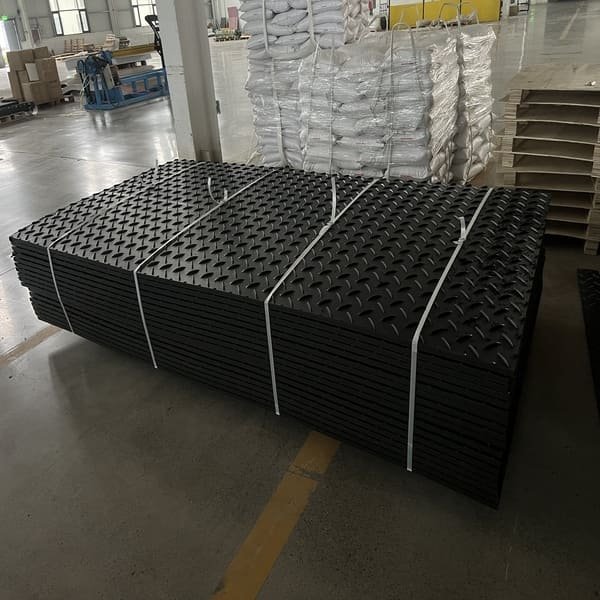
Quick Answer: How Do You Keep Access Open on a Muddy Construction Site?
Reliable access comes from a planned system: supported ground, enough route width, suitable construction mud mats, the correct connection pattern, and inspections after conditions change.
The mats should spread wheel or track loads, provide usable traction, and keep traffic inside one controlled route. They do not replace drainage, ground preparation, trench protection, or permanent road construction.
| Site Condition | Better Starting Direction |
|---|---|
| Wet entrance with truck traffic | Connected solid mud mats with wider entry coverage |
| Straight equipment route over supported soil | Portable HDPE mats or temporary road mats |
| Repeated skid-steer turning | Wider connected work pad |
| Heavy loaded trucks on soft ground | Heavy-duty solid or roadway mat system |
| Long access corridor | Continuous temporary road layout |
| Deep saturated or pumping ground | Ground preparation plus a heavier engineered system |
| Open trench or unsupported void | Approved bridging system, not standard mud mats |
I would choose the system around the worst route section, not the easiest straight section.
The Real Cost of Mud Is Lost Access
Mud itself is not the main business problem.
Your cost comes from delivery trucks waiting outside, machines losing traction, crews rebuilding entrances, and soil being tracked onto public roads.
Vehicle tracking controls are used where construction traffic moves from disturbed soil toward off-site roads.1 Mud mats can stabilize the access route, but your site may still need stone, sweeping, or wheel-cleaning controls at the exit.
This distinction matters.
A ground mat helps vehicles cross the site. It does not automatically remove mud from tires before they enter a public road.
The entrance is easy to underestimate because every truck brakes, turns, queues, and crosses the same limited area. Protecting the main route while leaving the gateway exposed can still shut the site down.
“Mud Mat” Can Describe Different Products
The term mud mat does not identify one universal construction.
For construction sites, it may describe portable solid HDPE panels, thicker solid HDPE/UHMWPE mats, large composite roadway panels, or rollable reinforced systems.
BKM focuses on plastic ground protection systems and matching connectors.
| BKM Product Direction | Typical Use | Handling |
|---|---|---|
| Portable solid HDPE mud mats | Entrances, landscaping, compact equipment, short routes | Manual or team handling |
| Heavy solid HDPE/UHMWPE mats | Repeated trucks, excavators, industrial work areas | Team or mechanical handling |
| Heavy composite roadway panels | Long heavy routes, infrastructure, pipeline, very soft sites | Mechanical handling |
The correct comparison is not simply “plastic versus plastic.”
You need to compare panel structure, body thickness, finished weight, tread, connectors, route width, and ground support.
For the complete structural classification, see Types of Ground Protection Mats.
Surface texture matters in mud, but the deepest cleat is not always the best choice. You still need a pattern your crews can clean and your equipment can use without excessive vibration.
Read the Ground Before Choosing the Mat
A mat can spread load only when the ground underneath provides continuous support.
Firm wet soil, soft clay, saturated fill, loose topsoil, and deep pumping mud are not the same condition. Wet soil is more vulnerable to compaction under construction traffic.2
Walk the full route before asking for a final specification.
Look for:
- low spots that hold water
- recently disturbed fill
- buried utilities
- slopes
- sharp debris
- soft shoulders
- trench edges
- turning points
- loading and staging zones
If the route crosses weak organic soil or deeply saturated ground, a mat-only solution may disappoint you. You may need grading, drainage, separation fabric, aggregate, wider coverage, or another engineered access system.
BKM supplies mats and connectors. Geotextile, stone, drainage materials, anchors, and trackout controls can be sourced locally when the site design requires them.
Match the Mat to How the Equipment Moves
Total vehicle weight is only one part of the decision.
A loaded truck driving straight creates different stress from a skid steer pivoting, an excavator digging, or a telehandler braking with a raised load.
For mud mats for heavy equipment, send the operating weight, wheel or track arrangement, tire size, turns, and expected number of passes.

Route length alone is not enough. Turning locations often change the required width, mat quantity, and connector plan.
For loaded truck access, the protected route must cover the complete wheel path and leave room for steering correction.
Do not plan a route so tightly that one small steering error drops a loaded tire into the mud.
Design the Route by Zone
A construction mud route is rarely one continuous risk level.
The entry, straight lane, turn, unloading area, and exit all behave differently.
| Route Zone | Main Stress | Practical Mat Plan |
|---|---|---|
| Site entrance | Turning, braking, and trackout | Wider connected grid |
| Straight lane | Repeated wheel loads | Continuous aligned rows |
| Tight corner | Strong lateral movement | Wider turning pad |
| Loading area | Stationary and repeated load | Larger work pad |
| Slope | Braking and gravity | Connected route with frequent checks |
| Low spot | Water and pumping soil | Preparation, wider coverage, or heavier system |
| Exit | Acceleration and mud transfer | Stable surface plus trackout control |
For long routes, temporary road mats give you a clearer system than moving a few panels forward repeatedly.
Temporary roads still need suitable width, gradients, drainage, and maintenance as conditions change.3
Calculate more than the straight distance.
Add mats for the entrance, turns, loading points, parking, passing, and spare coverage. The straight line is usually the easiest part of the job.
Install Before Traffic Creates Deep Ruts
Mud-specific installation starts with timing. Put the route down before repeated traffic pumps water and fine soil through the access line.
Begin from pavement, compacted stone, or another firm point. Address soft corners and low spots before laying panels, and widen muddy turns instead of forcing vehicles through a narrow lane.
For the complete laying, connecting, testing, removal, and storage process, use the ground protection mats installation guide.
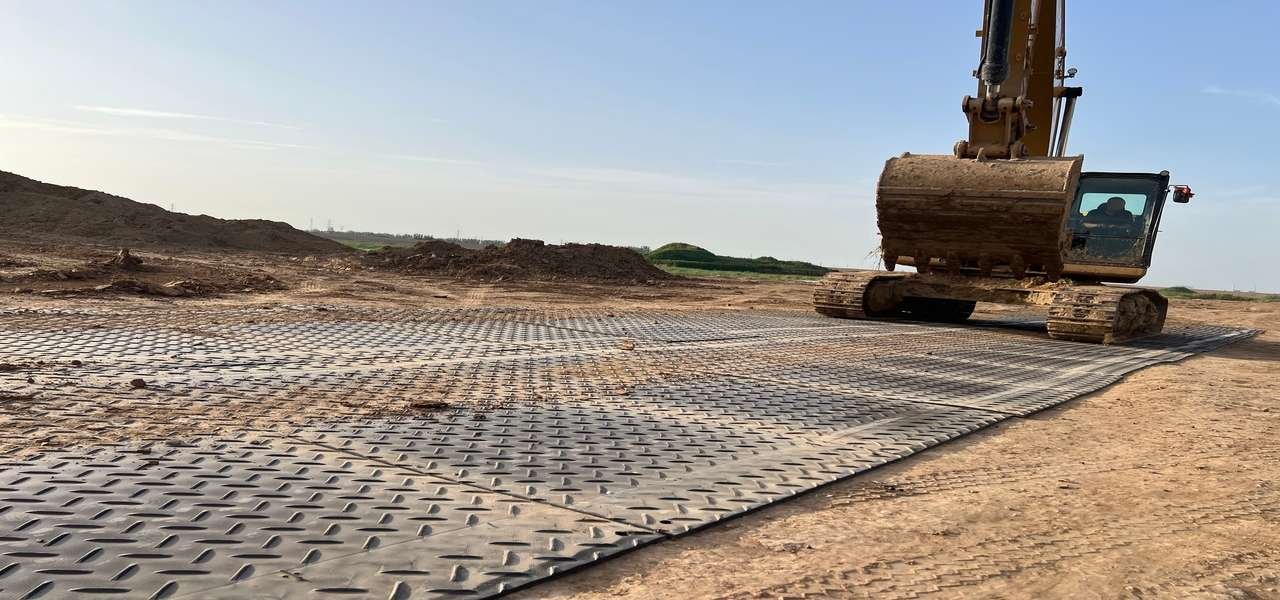
After installation, test the route slowly and check for rocking panels, open joints, soft edges, and movement at turns. Correct the first small failure before heavier traffic makes it harder to repair.
Connectors Matter Most Where Vehicles Change Direction
Straight traffic mainly pushes downward. Turning, braking, and reversing add side force.
That is where loose panels start to separate.
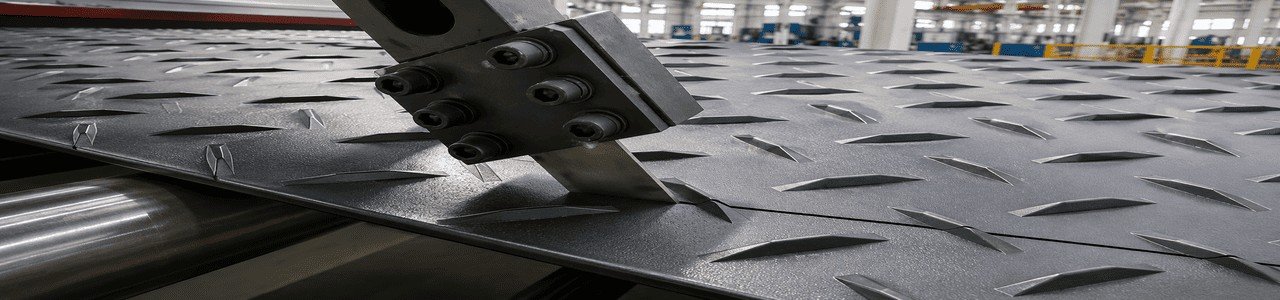
Portable solid mats may use 2-way or 4-way connectors, depending on the grid. Heavy composite roadway systems use their own locking or overlapping connections.
Increase connection coverage in high-movement zones according to the mat system, especially at entrances, corners, slopes, work pads, and repeated turns.
Connectors do not increase the structural capacity of the mat. They keep compatible panels aligned so the route can function as a system.
For a deeper connector guide, read How Do Locking Links and Connectors Work?.
Keep the Route Working During Rain
A construction route changes during use.
Rain can soften shoulders, create new low spots, and move mud beneath the panels. Inspect the route after heavy rain and regularly during repeated traffic, especially at entrances, turns, slopes, and low spots.
Check:
- connectors and locking points
- mat drift
- mud pumping through seams
- tire drop-off at edges
- standing water
- damaged tread
- debris under panels
- new soft spots
Keep vehicle speed low and avoid sharp turns. Tire spinning can move the mats and tear up the ground beside the route.
If one section repeatedly fails, do not keep resetting it without changing the plan. Add width, improve the base, change the traffic line, or move to a heavier system.
Know When Mud Mats Are Not Enough
Mud mats are temporary access equipment. They are not a cure for every weak site.
Do not use standard mats to bridge open trenches, septic covers, deep holes, or unsupported voids. Excavation areas require separate protective systems.4
They also do not replace dedicated outrigger pads under cranes, concrete pumps, or stabilizer legs. Those concentrated loads need their own ground-bearing assessment.
If your route will remain in daily use for months, compare the mat system with a properly prepared temporary road. Repeated stone replacement can be expensive, but an underspecified removable route can also become costly.
The honest answer may be a combined system: ground preparation below, mats above, and local trackout control at the exit.
How BKM Supports Construction-Site Mud Access
BKM can support ground protection mats for construction, portable mud mats, heavy solid panels, and composite roadway solutions for suitable projects.
HDPE is known for its high strength-to-density ratio.5 BKM can also produce UHMWPE and customized engineering-plastic configurations when the duty requires them.
Available options can include:
- common or custom dimensions
- vehicle traction patterns
- hand holes
- connector-hole layouts
- custom colors
- CNC machining
- logo marking
- private-label packaging
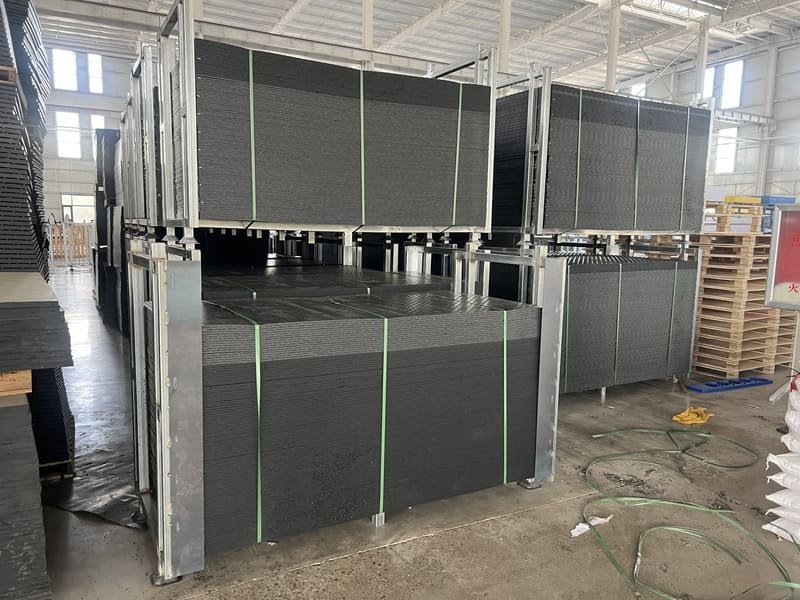
Tell BKM how the mats will be unloaded, stored, cleaned, moved between jobs, and packed with connectors.
A contractor fleet, rental business, and distributor may need the same panel size but different packaging and spare-hardware plans.
I would rather adjust the route specification before production than sell you a thicker mat that leaves the real site problem unchanged.
FAQ
Can I Lay Construction Mud Mats Directly Over Deep Mud?
Only when the mud still provides continuous support. Deep pumping or saturated ground may need separation fabric, aggregate, drainage, wider coverage, or another engineered system.
How Wide Should a Mud-Mat Route Be for Trucks?
The route must cover the complete tire path and allow steering correction. Turns, entrances, and loading areas need more width than straight travel.
Do I Need Geotextile Under Mud Mats?
Not on every site. It can help separate soft soil from aggregate or reduce pumping in prepared routes, but the need depends on the ground and project design.
Which Side of a Double-Sided Mud Mat Faces Up?
Use the traction surface selected for your vehicle and site condition. Confirm the specific tread orientation with the mat drawing or supplier instructions.
Can Steel-Tracked Equipment Use HDPE Mud Mats?
Only after checking the exact track, grouser shape, turning movement, panel design, and ground support. A mat intended for rubber tires is not automatically suitable.
Can Mud Mats Stop Construction Trackout?
They can stabilize the access route and reduce rutting, but they are not a complete trackout-control system. Your exit may still require stone, sweeping, or wheel cleaning.
How Often Should the Route Be Inspected?
Inspect after the first vehicle passes, after heavy rain, and throughout repeated traffic. Entrances, turns, slopes, and low spots need the closest attention.
Are Construction Mud Mats Better Than Plywood?
For repeated wet-site use, reusable plastic mats usually offer more consistent handling and connection. Plywood may still make sense for one short, dry, low-risk job.
Build the Route Before the Mud Controls the Schedule
The best mud mat is not simply the thickest panel. It is the mat system that matches your ground, traffic, turns, handling, and reuse plan.
Install before deep rutting, reinforce the high-movement zones, inspect during rain, and treat unsupported ground as an engineering problem—not a product-selection shortcut.
References
Minnesota Pollution Control Agency. [Construction Stormwater Best Management Practice — Vehicle Tracking](https://stormwater.pca.state.mn.us/construction_stormwater_best_management_practice_vehicle_tracking). ↩
University of Minnesota Extension. [Soil Compaction](https://extension.umn.edu/natural-resources/conservation/agricultural-soil-and-water/soil-compaction). ↩
UK Health and Safety Executive. [Temporary Workplaces and Unprepared Roadways](https://www.hse.gov.uk/workplacetransport/temporaryworkplace.htm). ↩
Occupational Safety and Health Administration. [Trenching and Excavation — Construction](https://www.osha.gov/trenching-excavation/construction). ↩
Plastics Europe. [Polyolefins](https://plasticseurope.org/plastics-explained/a-large-family/polyolefins/). ↩