
One uncontrolled access route can damage far more ground than the work area itself. Tires spread mud, compact wet soil, destroy vegetation, and create runoff paths. This guide shows how ground protection mats can reduce that footprint—and where you still need drainage, sediment controls, permits, cleaning, and restoration.

For broader operational, access, labor, and cost advantages, see Benefits of Ground Protection Mats. This page focuses specifically on environmental risk, sensitive ground, and responsible reuse.
Environmental Protection Starts With Controlling Where Traffic Goes
The environmental benefit does not come from placing plastic on the ground. It comes from controlling traffic before vehicles create wider routes.
A planned ground protection mat road keeps wheels, tracks, carts, and workers inside a defined footprint. It also makes removal and site recovery more predictable.
Environmental preservation comes from a smaller disturbed area, better route discipline, repeated reuse, and responsible restoration.
| Environmental Risk | How Mats Can Help | What Mats Cannot Replace |
|---|---|---|
| Soil compaction | Spread vehicle loads and keep traffic within a defined route | Suitable ground support and traffic limits |
| Rutting and vegetation loss | Reduce direct wheel or track contact | Proper route width and careful turning |
| Erosion and sediment movement | Stabilize access and reduce random disturbance | Drainage, sediment controls, and site BMPs |
| Turf damage | Protect against direct wear and rutting | Time limits, heat management, and recovery |
| Wetland disturbance | Create removable temporary access | Permits, restoration, and site-specific controls |
| Material waste | Support repeated deployment | Cleaning, maintenance, and end-of-life planning |
| Invasive species transfer | Provide cleanable equipment surfaces | Washing and inspection between sites |
This is the honest way to judge the environmental value of ground protection mats.
Protecting Soil Structure From Repeated Traffic
Soil damage often begins below the visible surface.
When heavy equipment crosses wet ground, pressure reduces pore space and limits the movement of water and air through the soil.1 The first tire pass may leave little visible damage, while repeated passes create compaction and deeper rutting.
Ground protection mats spread vehicle loads across a wider area while keeping repeated traffic on one planned route.

For construction access, ground protection mats for construction can reduce direct tire contact with vulnerable ground.
They do not eliminate compaction. Saturated soil, sharp turning, narrow routes, and excessive loads can still damage the subgrade. The environmental decision begins with the ground, not the mat thickness.
Limiting the Total Disturbed Footprint
One of the most effective construction principles is to disturb only the area needed for the work.2
Mats create a visible movement boundary. Operators know where to drive, crews know where to walk, and deliveries follow one route.
Even a correctly selected mat can underperform when the lane is too narrow. Protect entrances, turns, loading zones, passing areas, and work pads—not only the straight line.
For landscaping and customer-facing properties, landscape ground protection mats can help keep work inside a defined access corridor.
The goal is not to cover the largest possible area. It is to protect the smallest area that can safely handle real traffic.
Reducing Erosion and Sediment Movement
Rutting does more than damage the appearance of a site.
Deep tire tracks can collect water, redirect runoff, loosen soil, and increase the amount of sediment leaving disturbed ground. Construction runoff can carry sediment into rivers, lakes, and other water bodies.3
A stable mat route can reduce random disturbance and keep vehicles from widening muddy tracks.
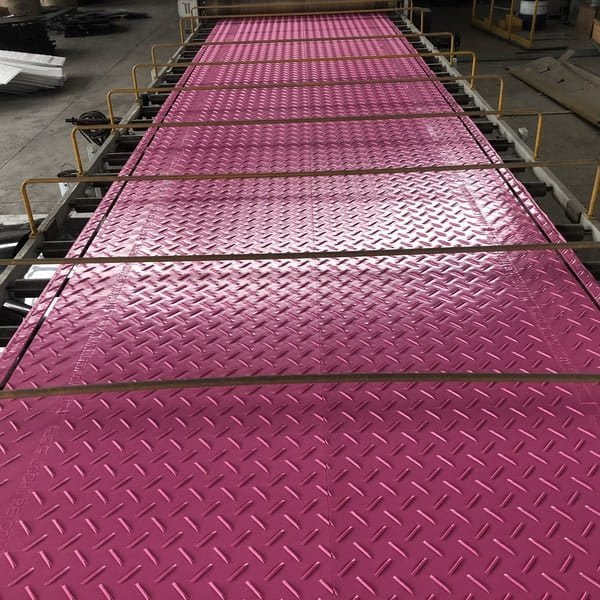
For sensitive access zones, erosion protection matting may form one part of the route strategy.
Mats are not sediment barriers. They do not replace drainage, silt controls, stabilized exits, or a stormwater plan. The wider system must still manage water and sediment.
Protecting Grass, Roots, and Existing Vegetation
Vegetation protects soil from erosion and supports water infiltration. Once grass or root zones are repeatedly crushed, recovery can take longer than the project itself.
Traffic stress includes visible plant wear and compaction around the root zone.4 Mats reduce direct tire and foot contact, but they also cover living turf.
Turf mats for ground protection can be useful when grass condition after removal matters. For landscaping routes, the product choice should also consider mat weight, underside behavior, and removal method.
Lift dirty panels instead of dragging them across finished turf.
Solid mats may restrict light and airflow, while dark surfaces can build heat. For longer projects, review Do Ground Protection Mats Harm Grass?.
A mat can prevent rutting and still stress grass if left down too long.
Creating Temporary Access Through Wetlands and Sensitive Corridors
Wetlands, riparian areas, and other sensitive ground require stricter planning than a normal construction entrance.
These environments help store water, manage runoff, and support habitat.5 A temporary route should therefore minimize disturbance, remain within approved boundaries, and be removed when the work ends.
Turf, wetland, and soft-ground access systems can provide a removable access surface for suitable projects.
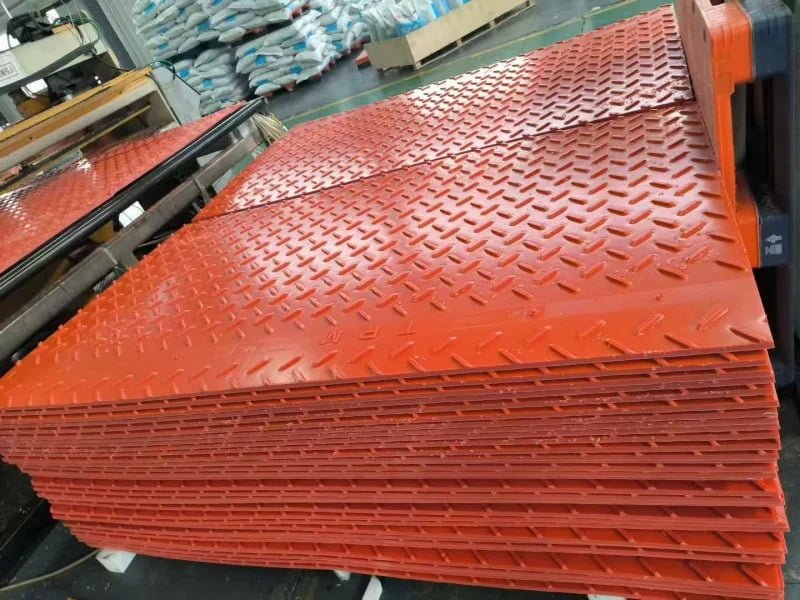
The mat does not provide permission to enter a protected area.
You still need permits, route approval, seasonal restrictions, restoration planning, and site-specific controls. The system also needs continuous support unless engineered otherwise.
For pipeline corridors, ground protection matting can help define a temporary linear work route across long, environmentally sensitive alignments.
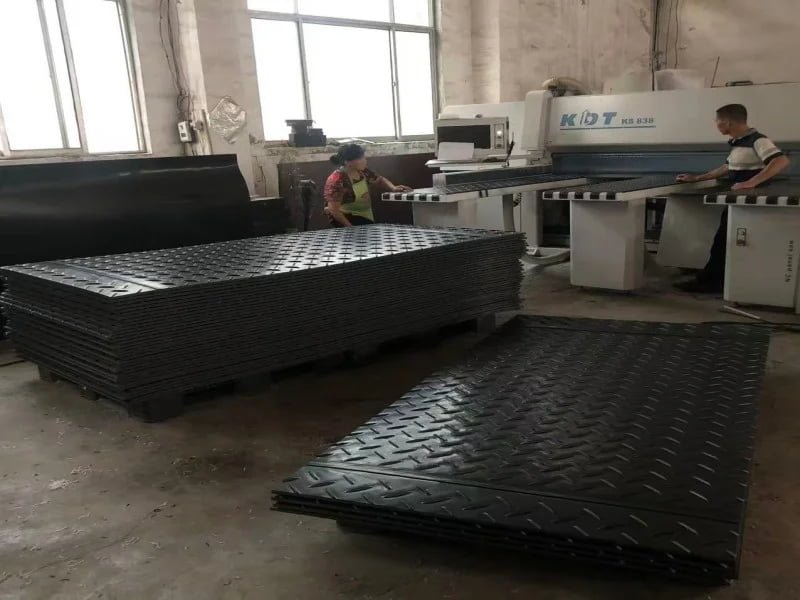
A clearly marked corridor reduces unplanned vehicle spread and makes post-project inspection easier.
Preventing Soil and Seeds From Moving Between Sites
Reusable mats can carry mud, plant material, seeds, and other debris from one project to another.
That means cleaning is part of environmental performance.
Cleaning boots, vehicles, tires, tools, and site equipment helps reduce the movement of seeds, insects, spores, and other invasive material between locations.6
Before mats leave a sensitive project, remove soil from tread, connector holes, edges, and undersides.
Build inspection, debris removal, washing where required, wash-water control, and connector cleaning into the operating procedure.
A reusable product supports environmental preservation only when it is reused responsibly.
Reuse Can Reduce Waste, but Avoid Greenwashing
Ground protection mats are often promoted as environmentally friendly because they can replace disposable plywood or repeated aggregate placement.
Reuse and source reduction sit above disposal in the waste-management hierarchy.7 However, the environmental case still depends on service life, transport, cleaning, repair, and end-of-life recovery.
A poorly selected mat that fails early is not automatically a better environmental choice. Neither is an oversized panel that adds unnecessary material and freight to every shipment.
Match the specification to the work. Use the lightest safe system, standardize dimensions and connectors, and replace lost hardware instead of discarding usable panels.
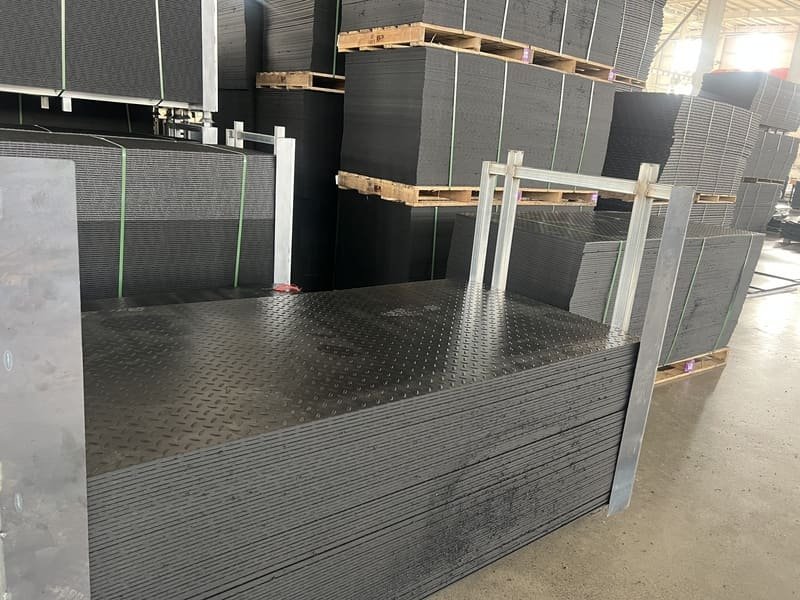
Efficient pallets, protected edges, organized connector packs, and realistic container quantities reduce avoidable handling and transport problems.
Choosing a Mat System Around the Environmental Risk
Different sites need different priorities.
| Project Situation | BKM Product Direction | Environmental Planning Priority |
|---|---|---|
| Urban construction site | Construction ground protection mats | Trackout, runoff, defined traffic |
| Landscaping property | Landscape ground protection mats | Turf condition and clean removal |
| Long utility corridor | Temporary road or pipeline mats | Narrow disturbed footprint |
| Wetland access | Wetland ground protection mats | Permits, low disturbance, restoration |
| Event on grass | Turf protection mats | Coverage time, heat, crowd movement |
| Logging or remote access | Logging access mats | Sensitive soil and equipment cleaning |
| Repeated contractor use | Standardized reusable mat fleet | Cleaning, repair, and reuse |
| Deep unsupported ground | Engineered access system | Ground assessment before product selection |
For a general route, temporary road mats can help create a continuous access line instead of scattered protection.
The ground protection mats installation guide explains route preparation, panel alignment, connectors, testing, and removal.
How BKM Supports Environmentally Sensitive Access Projects
BKM can support HDPE and UHMWPE mat solutions for construction, landscaping, utilities, pipelines, wetlands, events, and reusable rental fleets.
The specification can include common or custom dimensions, surface patterns, hand holes, connector layouts, colors, CNC machining, logo marking, and private-label packaging.
Send BKM:
- ground type and moisture condition
- vehicle or track details
- route length and width
- turns and work pads
- sensitive vegetation or water features
- expected installation duration
- cleaning requirements
- reuse frequency
- unloading and storage method
We can separate the route into normal, high-movement, and sensitive zones before recommending panels and connectors.
I would rather narrow the footprint than sell a heavier mat for the whole site.
FAQ
Do Ground Protection Mats Prevent All Soil Compaction?
No. They spread traffic and reduce direct rutting, but heavy loads can still compact wet or weak soil. Ground support, route width, turns, and traffic frequency remain important.
Can Ground Protection Mats Reduce Erosion?
They can reduce random traffic disturbance and help stabilize access. They do not replace drainage, sediment barriers, slope stabilization, or a stormwater plan.
Are Plastic Ground Protection Mats Environmentally Friendly?
Not automatically. Their value comes from damage prevention, repeated reuse, efficient transport, maintenance, and responsible end-of-life handling.
Can Ground Protection Mats Be Used in Wetlands?
They may be used in suitable permitted projects to reduce soil disturbance. Wetland access still requires site-specific approval, restoration planning, and environmental controls.
Should Mats Be Cleaned Between Jobs?
Yes, especially after wetlands, farms, forests, or sites with invasive plants. Remove mud, seeds, and vegetation before moving the system elsewhere.
Is Recycled HDPE Always the Greener Choice?
No. Recycled content is one factor. Service life, consistency, replacement rate, transport, and recyclability also affect the environmental result.
How Long Can Mats Stay on Grass?
There is no single safe duration. Weather, sunlight, mat color, grass condition, traffic, and panel structure all matter. Remove mats as soon as practical.
What Should I Send BKM for a Sensitive-Site Recommendation?
Send the site conditions, equipment, route, turns, environmental constraints, project duration, cleaning rules, expected reuse, and delivery requirements.
Protect the Route Before Damage Becomes Restoration Work
Ground protection mats matter for environmental preservation because they help you control where traffic goes and how much ground is disturbed.
They work best within a wider plan: minimize the route, manage runoff, clean equipment, remove mats on time, and restore the site where necessary.
The goal is to complete temporary work while leaving the smallest practical footprint behind.
References
University of Minnesota Extension. [Soil Compaction](https://extension.umn.edu/natural-resources/conservation/agricultural-soil-and-water/soil-compaction). ↩
U.S. Environmental Protection Agency. [Developing Your Stormwater Pollution Prevention Plan: A Guide for Construction Sites](https://nepis.epa.gov/Exe/ZyPURL.cgi?Dockey=60000FNM.TXT). ↩
U.S. Environmental Protection Agency. [National Menu of Best Management Practices for Stormwater—Construction](https://www.epa.gov/npdes/national-menu-best-management-practices-bmps-stormwater-construction). ↩
UMass Amherst Center for Agriculture, Food, and the Environment. [Traffic Stress & Turf Cultivation](https://www.umass.edu/agriculture-food-environment/turf/best-management-practices-bmps-for-lawn-landscape-turf/9-traffic-stress-turf-cultivation). ↩
U.S. Environmental Protection Agency. [Incorporating Wetland Restoration and Protection in Planning Documents](https://www.epa.gov/wetlands/incorporating-wetland-restoration-and-protection-planning-documents). ↩
USDA Animal and Plant Health Inspection Service. [How to Stop Invasive Pests](https://www.aphis.usda.gov/plant-pests-diseases/hungry-pests/how-stop-them). ↩
U.S. Environmental Protection Agency. [Non-Hazardous Materials and Waste Management Hierarchy](https://www.epa.gov/smm/sustainable-materials-management-non-hazardous-materials-and-waste-management-hierarchy). ↩