
 English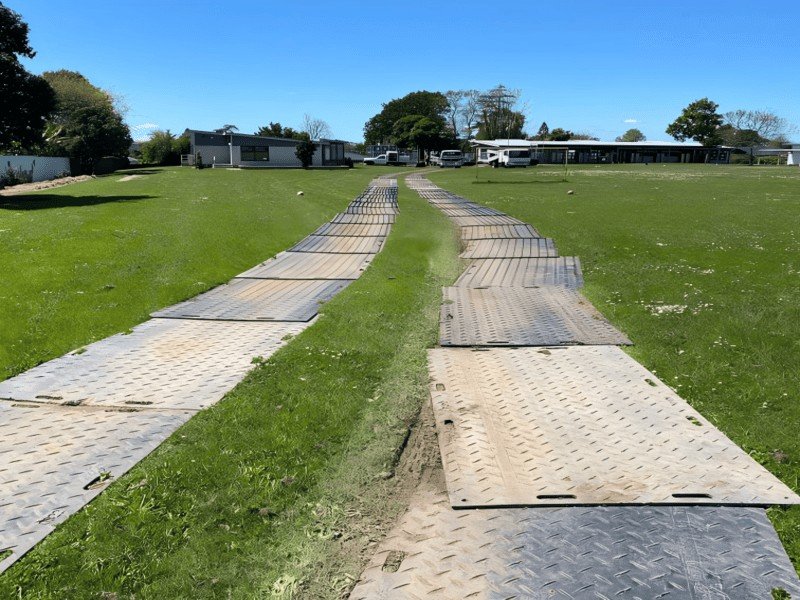
Do Ground Protection Mats Harm Grass? Practical Answer for Landscaping, Events, and Temporary Access
A mat can save your lawn from deep tire ruts, but it can also leave yellow patches if it stays down too long. That is the part many people only notice after the job is finished.
Ground protection mats are designed to protect grass from vehicle ruts, mud, and surface damage. But if they are used incorrectly, they can still stress or damage the lawn underneath.
The simple answer is this: ground protection mats do not usually harm grass when they are used for short-term access, installed correctly, checked during the job, and removed on time.
They can harm grass if they are left in place too long, used during hot sunny weather, dragged across turf, or placed on newly planted or already weak grass.
For landscapers, contractors, event teams, tree service companies, municipalities, and rental businesses, the key is not only asking, “Are mats safe for grass?”
I think what you care about most is simple: can the job be finished without leaving ugly ruts, yellow patches, or an unhappy property owner behind?
That is why mat choice is not only about load rating. It is also about time on grass, weather, mat color, traffic movement, and how quickly the route can be removed.
Can Ground Protection Mats Protect Grass and Still Stress It?
Yes. This is the part many people misunderstand.
A ground protection mat protects grass from one type of damage, but it may create another type of stress if used the wrong way.
When trucks, skid steers, mini-excavators, forklifts, lifts, or event vehicles drive directly over grass, the damage usually starts from pressure. Tires compress the grass and soil. If the ground is wet, the tires sink. If vehicles turn, the grass tears.
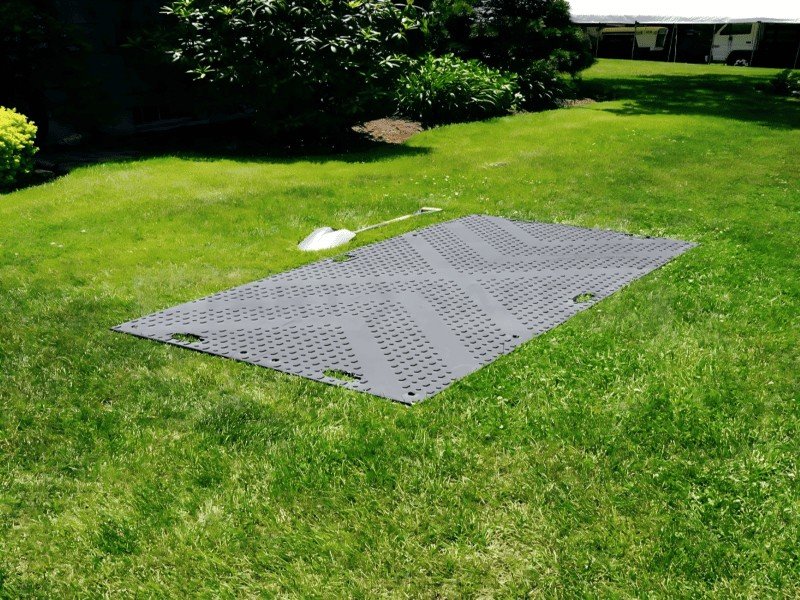
A ground protection mat spreads the load over a wider area, so the pressure is not concentrated only under the tires. That is why mats are useful for lawn protection, tree work, landscaping, outdoor events, temporary parking, and construction access over grass.
For short-term use, mats are usually much better than letting vehicles drive directly on the lawn.
But grass is still a living surface. When you cover it, you also reduce light, airflow, and heat exchange. That is why time, weather, mat color, and removal timing matter.
This is why a good mat plan should protect both sides of the job: your equipment access during the work, and the lawn condition after you leave.
How I Judge Grass Risk Before Recommending Mats
When BKM discusses grass protection, I do not start with the mat size.
I start with the condition of the lawn and the job.
Is the grass established or newly planted? Is the weather cool or hot? Will vehicles drive straight or turn? Is the route for one afternoon, one full day, or several days? Does the customer expect the grass to look good immediately after removal?
On many jobs, the real pressure is not only from the machine. It is also from the expectation that the lawn should still look acceptable when the work is done.
Those questions decide whether standard HDPE ground protection mats are enough, or whether you should consider lighter-colored mats, ventilated turf panels, or a different layout.
This is the basic framework I would use:
| Question | Why It Matters |
|---|---|
| Is the grass established or new? | New sod and young seedlings are easier to damage. |
| Is the weather hot and sunny? | Heat builds faster under dark solid mats. |
| Will vehicles turn on the lawn? | Turning creates tearing and side pressure. |
| How long will mats stay down? | Longer coverage increases turf stress. |
| Is the turf high-value? | Golf courses, event lawns, parks, and sports fields need stricter planning. |
| Is the mat solid or ventilated? | Solid mats protect from ruts but reduce airflow and light. |
| Is the route connected? | Connected mats reduce shifting and exposed grass edges. |
The goal is not to avoid mats. The goal is to use them as temporary access tools, not as long-term flooring over live grass.
Ground Protection Mats Protect Grass from Rutting First
The main benefit of a ground protection mat is load spreading.
If a machine drives directly over wet grass, the tire or track pressure goes straight into the turf and soil. If the same traffic repeats, shallow marks can quickly become deep ruts.
Traffic stress on turf has two parts: visible wear on the grass surface and compaction stress in the root zone. Both vehicle traffic and foot traffic can reduce turf vigor when they repeat over the same area.1
A mat helps reduce direct tire contact. It gives the machine a temporary surface to travel over, instead of letting the grass take the full pressure.
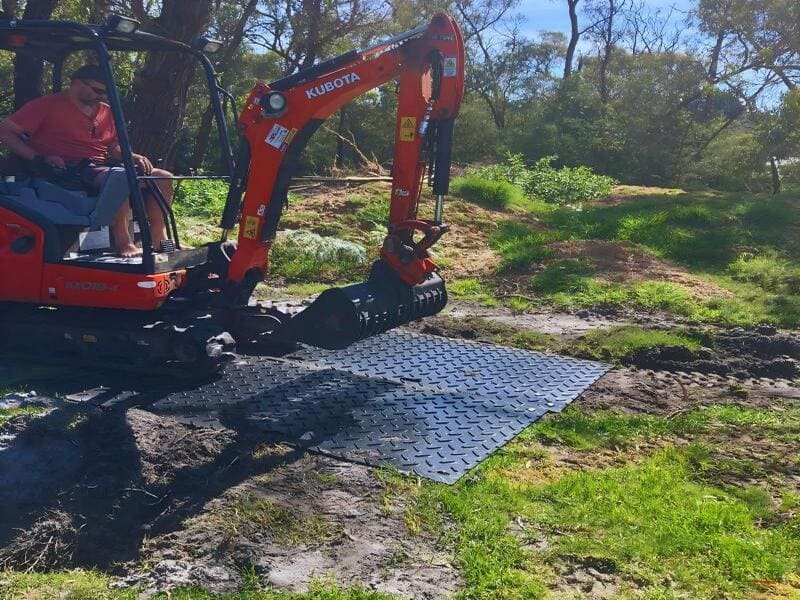
This is why mats are useful for moving a mini-excavator across a lawn, setting up an outdoor event, protecting a finished landscape, or creating a temporary route across wet grass.
But the mat does not make the grass immune. Heavy traffic still puts pressure into the ground below, especially when the soil is wet.
So for grass protection, the mat route should be planned before the first vehicle arrives.
Why Grass Can Be Damaged Under Mats
Grass needs light, air, moisture balance, and a temperature range it can tolerate.
A solid mat protects the grass from direct traffic, but it also changes the environment around the turf.
The main risks are:
-
Lack of sunlight Grass needs light for photosynthesis. A solid opaque mat blocks that process.
-
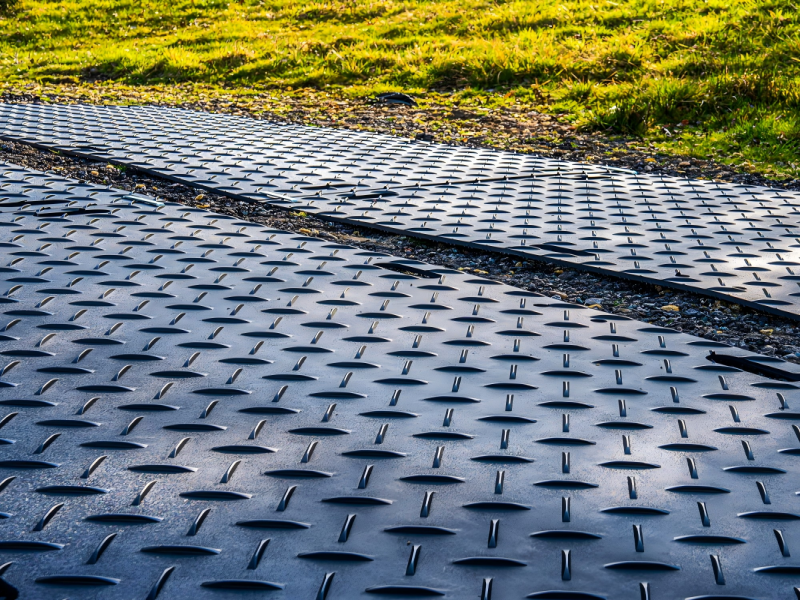
Heat buildup Dark mats can become hot in direct sun. Heat can stress or burn the turf underneath.
-
Reduced airflow Without airflow, grass can become weak, yellow, or more sensitive to moisture problems.
-
Moisture trapped under the mat Warm, damp conditions under a covered surface can slow turf recovery.
-
Soil compaction from repeated traffic Even with mats, heavy or repeated traffic still affects the soil below.
-
Mechanical damage during installation or removal Dragging mats across grass can tear blades and damage the surface.
Turf under shade or cover receives less light, and reduced light directly affects growth and plant energy production.2
This is why I do not recommend treating lawn protection mats as permanent flooring. They should be installed, used, checked, and removed based on site conditions.
How Long Can Ground Protection Mats Stay on Grass?
There is no single safe time for every project.
The safe window depends on temperature, sun exposure, mat color, mat design, grass condition, soil moisture, traffic load, and turf value.
For solid black HDPE mats, the safe period is usually shorter because dark surfaces absorb more heat. Dark low-reflectance surfaces absorb and transfer more solar heat than light-colored reflective surfaces.3
In cooler conditions, many solid mats may be acceptable for one working day, but they should still be lifted at the end of the day if grass health matters.
In hot weather or direct sun, the safe time can be much shorter. Solid dark mats can heat quickly and increase turf stress.
For BKM project planning, I use this practical rule:
The hotter the weather and the more valuable the lawn, the sooner you should inspect and remove the mats.
I know it is tempting to leave the mats in place until everything is completely finished. But if the grass matters, convenience should not decide the removal time.
For valuable lawns, remove or lift solid mats as soon as the access work is finished.
For hot sunny weather, check the grass under the mats frequently.
For multi-day events, consider lighter-colored, raised, ventilated, or turf-specific panels where grass recovery is important.
For heavy construction access, accept that some turf stress may occur, but reduce it with correct layout, short dwell time, and careful removal.
Black Mats, White Mats, and Ventilated Mats
Mat color and structure affect grass risk.
Black HDPE mats are common because they are durable, practical, and cost-effective. They work well for construction access, muddy jobs, tree work, and general temporary roads.
However, black mats absorb heat, especially in full sun.
If your job is on finished grass and appearance matters, do not leave black mats down longer than necessary.
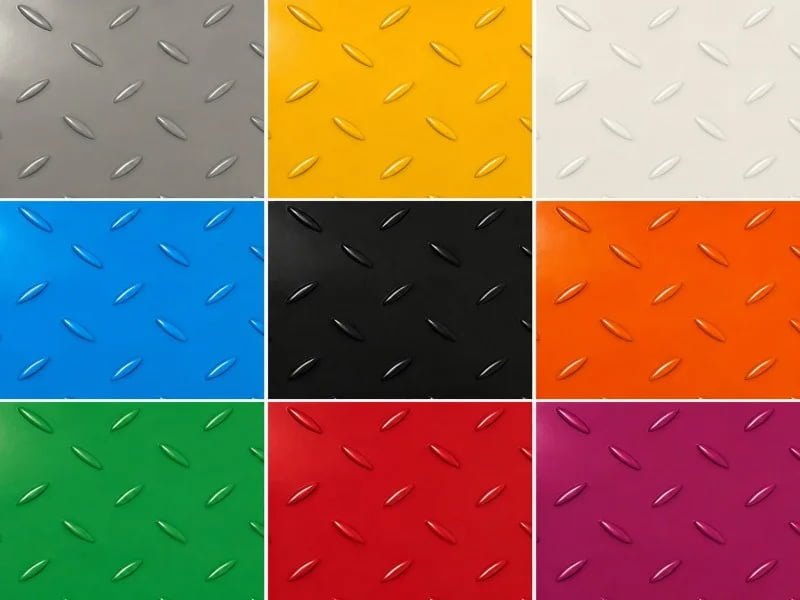
White or light-colored HDPE mats reflect more sunlight and usually reduce heat buildup compared with black mats. They can be a better choice for summer work, event access, golf courses, parks, and high-value lawns.
This does not mean white mats can stay on grass forever. White mats can still block airflow and affect grass if left down too long.
Ventilated or raised turf protection panels are different from standard solid ground mats. Some are designed with openings, raised feet, or airflow space under the surface.
These systems are often used for stadiums, concerts, pedestrian-heavy areas, and multi-day events where grass preservation is more important than heavy equipment access.
The choice depends on your main job.
If you need heavy vehicle access, solid HDPE mats may be more suitable.
If you need multi-day pedestrian access on high-value grass, a ventilated turf protection system may be better.
New Grass Needs Extra Caution
New grass is much easier to damage than established turf.
If the lawn was recently seeded, sodded, or repaired, avoid placing heavy ground protection mats on it unless there is no other option.
Newly planted or renovated turf needs time to establish roots before it can tolerate traffic and stress.4
New sod also needs time to root into the soil below. Seeded grass usually needs even longer because it must germinate, sprout, and establish enough root strength before traffic.
For BKM customers working on residential landscaping, parks, schools, and event venues, I usually ask whether the grass is newly installed.
If it is new, the risk is higher. In that case, reduce load, reduce time, avoid sharp turns, and remove mats as early as possible.
A mature lawn may tolerate a short mat route. A new lawn may show damage much faster.
How to Use Ground Protection Mats Without Damaging Grass
The best way to protect grass is to plan the route before vehicles arrive.
First, choose the shortest practical access route. Do not cover more lawn than necessary, but do not make the route too narrow.
Vehicles need enough width to stay fully on the mats.
Second, avoid sharp turns on grass. Turning is often more damaging than straight driving because tires push sideways.
If turning is unavoidable, add more mats to create a wider turning pad.
Third, connect the mats if vehicles will use the route. Loose mats can move, expose grass edges, and create weak areas.
Connectors help keep the temporary road stable.
Fourth, place mats instead of dragging them whenever possible. Dragging heavy mats can tear the grass surface.
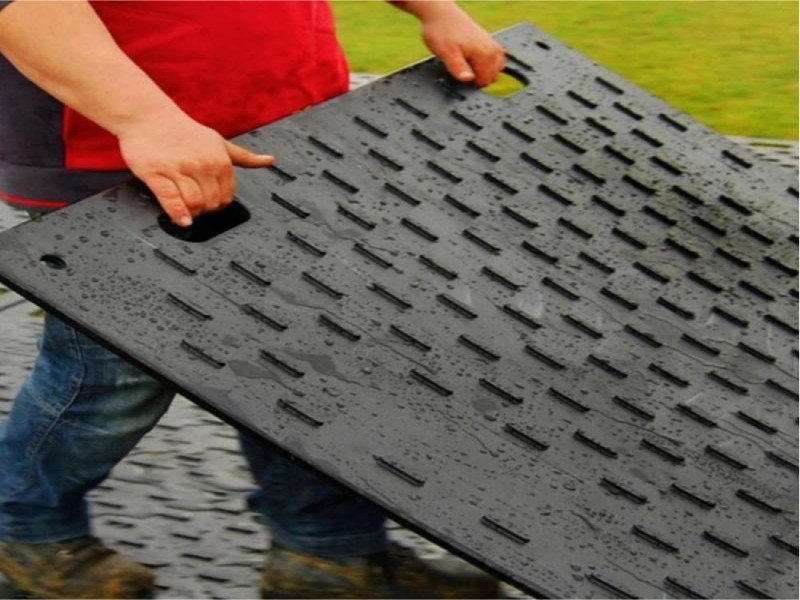
If workers need to reposition mats, lift from the hand holes and move carefully.
Fifth, avoid tire spinning. If a vehicle loses traction and spins on the mats, the movement can shift panels and damage grass at the edges.
Sixth, lift and inspect the mats during longer jobs. If grass under the mat is turning yellow, soft, hot, or wet, it may need air and light.
Seventh, remove the mats as soon as the access route is no longer needed. Do not leave them in place only for convenience.
These steps do not guarantee perfect grass in every condition, but they reduce avoidable damage.
What Happens After You Remove the Mats?
Do not panic if the grass looks flattened or slightly yellow when the mats come up.
That does not always mean the lawn is dead. Sometimes the grass simply needs light, air, water, and time to recover.
If the grass is flattened, let it breathe first. Avoid immediate heavy traffic.
Light watering may help if the soil is dry. If the soil is compacted, aeration may help later, depending on the property owner’s lawn care plan.
Soil compaction limits air and water movement in the root zone, so repeated traffic over wet or vulnerable turf can slow recovery even after the surface looks clear.5
If the mats were left too long in hot weather, the grass may turn brown or die. In that case, reseeding or turf repair may be needed.
For professional projects, it is better to set expectations before the job. Ground protection mats reduce rutting and heavy damage, but they cannot guarantee perfect grass health in every condition.
When Ground Protection Mats Are the Right Choice for Grass
Ground protection mats are a good choice when the main risk is vehicle damage, rutting, mud, or surface tearing.
For example:
- If you need to move a mini-excavator across a lawn, mats are usually better than driving directly on grass.
- If you need temporary event access for vendors and staff, mats help define the route and reduce surface damage.
- If you need a short-term walkway across wet grass, mats can provide better footing.
- If you need to protect a finished lawn during tree work or landscaping, mats can reduce tire marks and cleanup.
But if your main goal is keeping grass healthy for several days under heavy pedestrian traffic, especially in summer, you should consider turf-specific systems with ventilation, lighter colors, or raised designs.
Summer heat and moisture stress can weaken cool-season turf and reduce its ability to recover from additional pressure.6
That is why the mat choice should match the main risk: rutting, heat, pedestrian wear, moisture, or long coverage time.
BKM Advice for Choosing Mats for Grass Protection
If your project involves grass, do not choose mats only by load rating.
Load rating tells only part of the story.
You should also check:
- mat color
- surface texture
- mat weight
- handling holes
- connector system
- whether the mats are solid or ventilated
- expected time on grass
- weather and direct sun exposure
- whether vehicles will turn or only drive straight
- whether the grass is established or newly planted
For construction and landscaping access, BKM usually recommends durable HDPE mats with a suitable traction surface and connectors.
HDPE gives a practical balance of toughness, moisture resistance, outdoor durability, and manageable handling weight for removable ground protection products.7
For high-value lawns or event venues, BKM also recommends considering lighter-colored mats or turf-specific systems when mats need to remain in place longer.
The correct choice depends on what you are protecting against.
If the main problem is heavy vehicles, choose for load and stability.
If the main problem is turf health, choose for airflow, heat control, and shorter coverage time.
You are not only buying mats. You are trying to finish the job cleanly, protect the surface your customer cares about, and avoid repair work after the equipment leaves.
BKM can support black, white, translucent white, and custom-color HDPE ground protection mats, along with surface texture options, common sizes, custom dimensions, hand holes, connector holes, logo marking, private-label needs, and export packaging.
BKM also provides connector systems for mat layouts. Other site accessories, such as ramps, hooks, storage racks, straps, anchors, or underlayment, can be sourced locally if your project requires them.
FAQ
Do ground protection mats kill grass?
They can kill grass if left in place too long, especially in hot sunny weather. For short-term use, proper mats usually protect grass from rutting and vehicle damage, but they should be removed as soon as the job allows.
How long can ground protection mats stay on grass?
It depends on temperature, sunlight, mat color, grass condition, and mat design. For solid dark mats, one working day is often a practical limit when grass health matters. In hot sun, check sooner.
Are black ground protection mats bad for grass?
Black mats are not bad, but they absorb more heat than lighter mats. They are practical for many construction and landscaping jobs, but they should not be left on valuable grass for long periods in direct sun.
Are white ground protection mats better for grass?
White or light-colored mats usually reduce heat buildup compared with black mats. They can be a better choice for summer use, event venues, parks, golf courses, and high-value lawns.
Can I use ground protection mats on newly seeded grass?
Avoid it if possible. Newly seeded grass is fragile and needs time to establish. If mats must be used, keep the time short, reduce traffic, and remove them carefully.
Should I use connectors on grass?
For vehicle traffic, yes. Connectors help keep mats aligned and reduce shifting. This protects the route and prevents exposed edges from damaging the grass.
Will grass recover after mats are removed?
Often, yes, if the mats were used for a short time and the grass was not overheated or smothered. Yellowing or flattening may recover with light, air, and water. Dead patches may need reseeding or turf repair.
What type of mat is best for grass protection?
For short-term vehicle access, HDPE ground protection mats are common. For longer event use or high-value turf, lighter-colored, raised, or ventilated turf protection panels may be better.
Conclusion
Ground protection mats protect grass from rutting, mud, and vehicle pressure, but they still need to be used correctly.
The main risks to grass are heat, lack of sunlight, reduced airflow, trapped moisture, heavy repeated traffic, and leaving mats in place too long.
For short-term access, HDPE ground protection mats are usually a practical solution. They help spread load, define the route, and reduce direct damage to the lawn.
For longer coverage, hot weather, high-value grass, or event venues, mat color and ventilation become more important.
If you want to protect grass properly, do not only ask whether ground protection mats harm grass.
Ask how long they will stay in place, what traffic will pass over them, what the weather will be, and whether the mat design suits turf protection.
References
UMass Amherst Center for Agriculture, Food, and the Environment. “Traffic Stress & Turf Cultivation.” https://www.umass.edu/agriculture-food-environment/turf/best-management-practices-bmps-for-lawn-landscape-turf/9-traffic-stress-turf-cultivation ↩
UMass Amherst Center for Agriculture, Food, and the Environment. “Growing Turf Under Shaded Conditions.” https://www.umass.edu/agriculture-food-environment/turf/fact-sheets/growing-turf-under-shaded-conditions ↩
U.S. Environmental Protection Agency. “Using Cool Roofs to Reduce Heat Islands.” https://www.epa.gov/heatislands/using-cool-roofs-reduce-heat-islands ↩
UMass Amherst Center for Agriculture, Food, and the Environment. “Establishment, Renovation & Repair.” https://www.umass.edu/agriculture-food-environment/turf/best-management-practices-bmps-for-lawn-landscape-turf/5-establishment-renovation-repair ↩
UMass Amherst Center for Agriculture, Food, and the Environment. “Compaction and Cultivation.” https://www.umass.edu/agriculture-food-environment/turf/fact-sheets/compaction-cultivation ↩
Penn State Extension. “How to Protect and Maintain Athletic Fields in the Heat of Summer.” https://extension.psu.edu/how-to-protect-and-maintain-athletic-fields-in-the-heat-of-summer/ ↩
Plastics Europe. “Polyolefins.” https://plasticseurope.org/plastics-explained/a-large-family/polyolefins/ ↩