
 English
 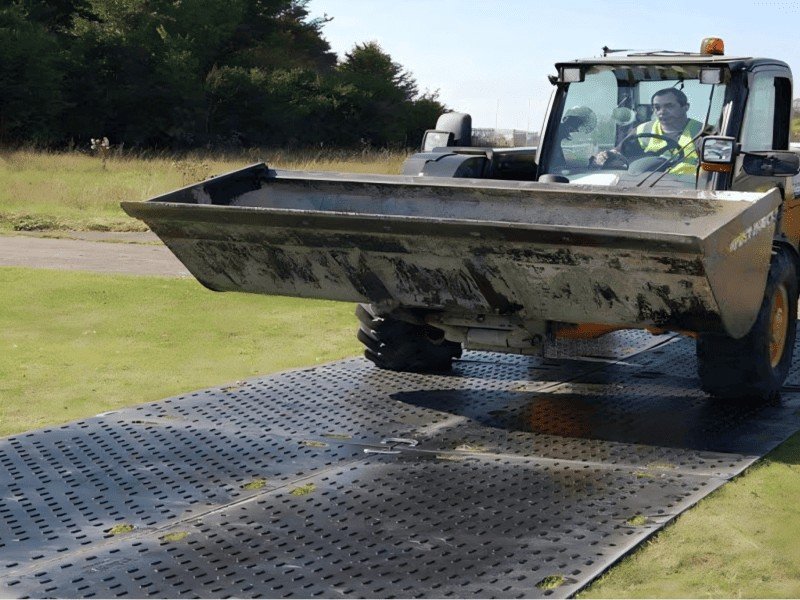 Black mats can save your lawn from tire ruts, but they can also burn the same grass if you leave them under hot sun too long. The difference is not the product alone. It is heat, sunlight, time, turf value, and how you plan the job.
Do Black Ground Mats Absorb Too Much Heat and Kill or Burn the Grass Underneath?
Yes, black ground mats can get hot enough to stress, yellow, burn, or even kill grass underneath if they are left on turf too long in direct sunlight.
This does not mean black HDPE ground mats are bad products. It means they need to be used in the right situation, for the right amount of time, and with the right plan.
For construction access, muddy jobs, tree work, utility projects, and short-term vehicle routes, black HDPE ground mats are still a practical choice. They are durable, cost-effective, and suitable for repeated outdoor use.
But when the job involves finished lawns, golf courses, parks, event venues, school grounds, hotel lawns, or customer-facing landscaping, grass heat stress becomes a real issue.
Can Black Mats Protect Grass and Still Damage It?
Yes. This is the part that often causes confusion.
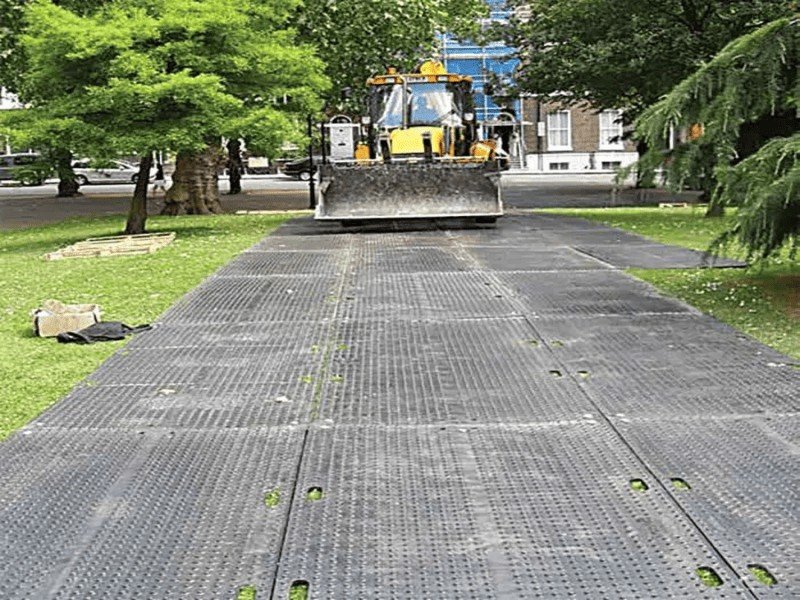
A black ground mat can protect grass from tire ruts, but still damage grass through heat, blocked light, poor airflow, and trapped moisture.
Those are different kinds of damage.
If you drive a skid steer, mini-excavator, forklift, truck, or lift directly over grass, tires and tracks can crush the turf and compact the soil. If the ground is wet, the vehicle can leave deep ruts.
A ground mat spreads the load and reduces direct tire contact. That is the protection benefit.
But if the mats stay on grass after the access work is finished, the benefit can turn into stress.
In BKM project discussions, I normally ask one question early: are you trying to prevent ruts for a short job, or are you trying to keep valuable grass looking good after the mats come up?
Those two goals may need different mat colors, layouts, and removal plans.
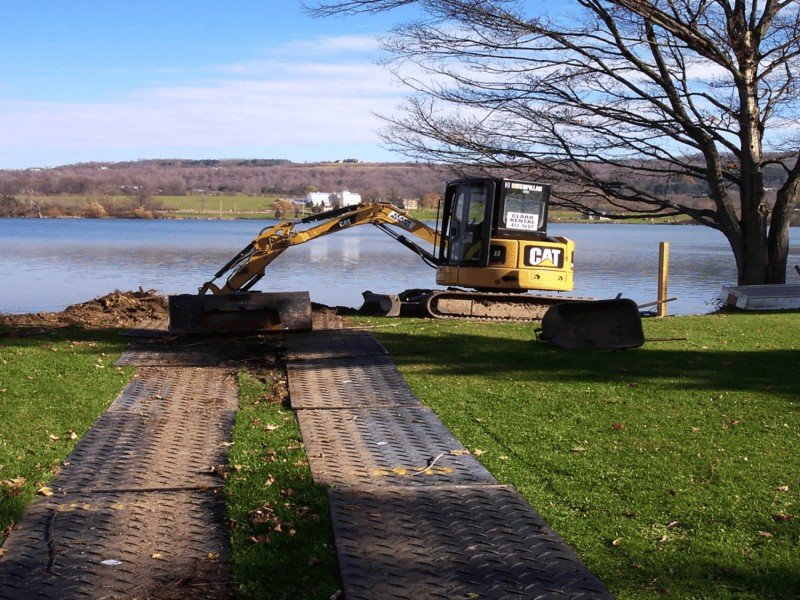
Why Black Ground Mats Get Hot
Black surfaces absorb more solar energy than light-colored surfaces. In outdoor heat planning, dark low-reflectance surfaces are treated as heat-absorbing surfaces, while lighter surfaces reflect more sunlight.1
That is why black mats can become hot in full sun.
When a black mat is placed over grass, three things happen at the same time.
First, the mat blocks sunlight from reaching the grass. Grass needs light for normal growth.
Second, the mat reduces airflow. Without airflow, heat and moisture can build up under the panel.
Third, the black surface absorbs heat and can transfer part of that heat to the covered area.
For your jobsite, the problem is not only mat color. It is the combination of black color, direct sun, warm weather, live grass, ground moisture, traffic pressure, and time.
That is why the same black mat may work well on a shaded construction route but create problems on a sunny finished lawn.
Heat, Light, and Airflow All Matter
Grass can suffer for more than one reason under a solid mat.
In hot sunny weather, heat is often the faster problem. The grass can be stressed or burned because the temperature under or near the mat becomes too high.
In cooler weather, lack of light becomes more important. Turf under shade or cover can lose vigor, density, and wear tolerance when light is limited for too long.2
Moisture can also create problems. When the area under the mat becomes warm and damp, the turf is under more stress and may become harder to recover.
So the damage can come from several directions:
- heat buildup
- blocked sunlight
- reduced airflow
- trapped moisture
- turf wear from traffic
- soil compaction under repeated loads
This is why I do not like answering this question with only “black mats burn grass” or “black mats are safe.” The real answer depends on site conditions.
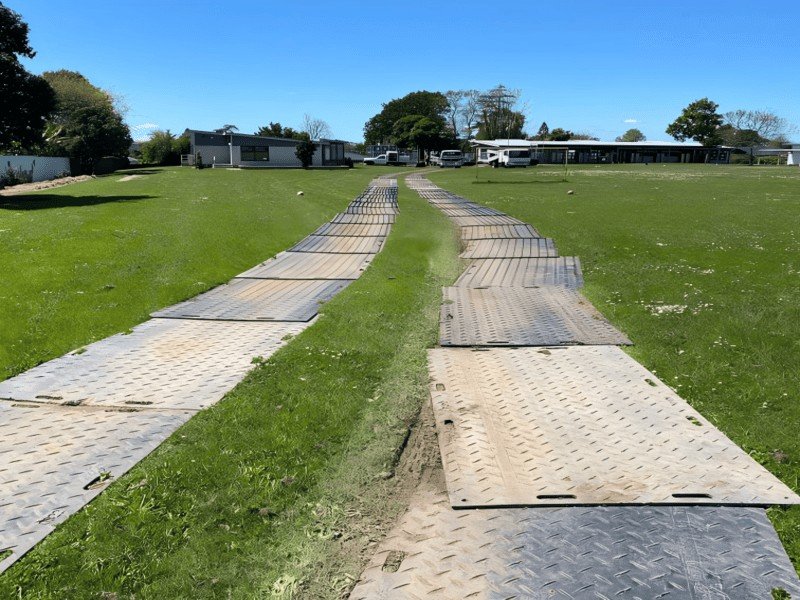
When Black Mats Are Still the Right Choice
Black HDPE mats are still a good choice in many situations.
They work well for construction site entrances, muddy access routes, landscaping machinery paths, tree service jobs, farms, utility work, temporary roads, and rental fleets.
They are also practical when the ground is bare soil, gravel, clay, mud, or grass that does not need to stay perfect after the job.
They are especially useful for short-term work where the mats are installed, used, and removed on the same day.
Black mats also make sense when the weather is cool, the area is shaded, or the main goal is preventing deep ruts from vehicles.
As a material, HDPE gives a useful balance of strength, moisture resistance, handling weight, and outdoor durability for removable ground protection products.3
So the problem is not that black HDPE mats are wrong. The problem starts when black mats are treated like long-term turf flooring under hot sun.
When Black Mats Become Risky on Grass
Black mats need more caution when the grass is valuable and the weather is hot.
This includes wedding lawns, golf courses, sports fields, school grounds, parks, hotel lawns, event venues, new sod, newly seeded areas, and residential lawns where the customer expects the grass to look good after the job.
Summer stress can reduce turf vigor, especially when heat and traffic pressure happen together.4
New grass needs extra caution. Newly seeded grass or newly laid sod has weaker roots and lower traffic tolerance.
If the customer cares about final grass appearance, do not wait until the end of the job to check. Lift a few mats during use and inspect the turf.
If the grass under the mat feels hot, wet, yellow, soft, or weak, the route needs adjustment.
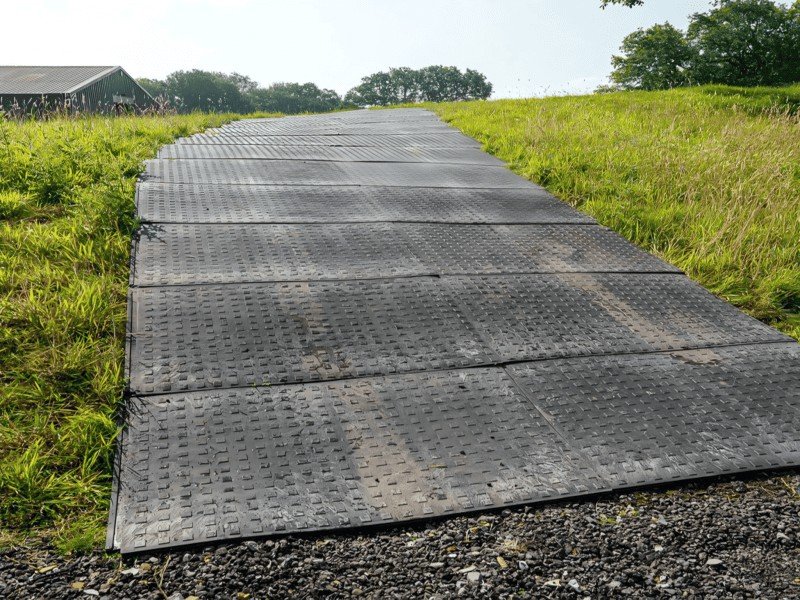
How Long Can Black Ground Mats Stay on Grass?
There is no fixed safe time for every site.
The safe time depends on:
- sunlight
- air temperature
- turf type
- soil moisture
- mat color
- mat design
- traffic load
- turf value
- time of day
- how quickly the mats are removed
For BKM project planning, I use a simple rule: the hotter and more valuable the turf, the shorter the mat time should be.
In cool, cloudy weather, black mats may stay on grass longer with lower risk, but they should still be checked.
In warm sunny weather, do not leave black mats on valuable grass longer than necessary.
In hot full sun, inspect the grass under the mats during the job, not only after the job.
For overnight or multi-day use on finished turf, black solid mats are usually not my first choice unless grass appearance is not important.
For sports fields, parks, event lawns, and golf courses, the better solution may be white or light-colored mats, translucent white mats, ventilated turf protection panels, or a zone-based system.
Black Mats vs White Mats on Grass
Black mats absorb more heat. White or light-colored mats reflect more sunlight and usually reduce heat buildup.
That difference matters when the mat is placed over living grass.
If your project is a short construction route over soil or rough turf, black mats may be the practical choice.
If your project is a hot-weather event on a finished lawn, white or light-colored mats may give you more working time before turf stress becomes visible.
This does not mean white mats can stay on grass forever.
White mats can reduce heat risk, but they still block airflow and may still affect light, moisture, and turf recovery if left down too long.
For BKM customers, I normally suggest this practical split:
| Project Situation | Better Mat Direction |
|---|---|
| Muddy construction access | Black HDPE mats are usually practical. |
| Short equipment route over rough grass | Black HDPE mats can work if removed quickly. |
| Finished lawn in hot sun | Consider white or light-colored mats. |
| Multi-day event on valuable turf | Consider ventilated or turf-specific panels. |
| Loading zone with vehicles | Use stronger HDPE mats and remove quickly. |
| Public walkway over premium grass | Use turf-friendly panels where possible. |
The best color is not about appearance alone. It is about heat, turf value, traffic, and time.
Solid Mats vs Ventilated Turf Protection Panels
Solid HDPE ground mats are good for load spreading, vehicle access, mud control, and temporary roads.
They are not designed to keep grass growing underneath for a long time.
Ventilated turf protection panels are different. They may have openings, raised structures, or airflow space that helps reduce grass stress.
For your project, choose based on the main risk.
If the main risk is vehicle rutting, use HDPE ground protection mats.
If the main risk is multi-day pedestrian traffic on valuable turf, consider turf protection panels or event flooring designed for grass.
If the route must handle both pedestrians and service vehicles, you may need a mixed system.
Use turf-friendly panels for public walkways and stronger HDPE mats for loading, service, or vehicle zones.
Traffic creates both wear and compaction stress on turf. That is why a valuable grass area should be divided into zones before the event or project starts.5
How to Reduce the Risk of Grass Burn
If you need to use black HDPE mats on grass, the safest method is to reduce heat, time, and stress.
Install the mats as close to the work time as possible. Do not place them the night before if they are not needed yet.
Use the shortest practical route, but make it wide enough so vehicles stay fully on the mats.
Avoid sharp turns on the lawn. Turning creates mechanical stress and can also shift mats.
Connect mats for vehicle access. Loose mats can move and expose grass edges.
Check the grass under the mats during warm weather. If the grass feels hot, wet, yellow, or soft, lift the mats and allow air and light exposure when possible.
Remove the mats as soon as the access work is finished. Do not leave them in place only for convenience.
For multi-day jobs, rotate sections when possible. Give turf time to breathe.
In hot summer conditions, consider white mats, translucent white mats, or turf-specific panels instead of solid black mats.
These steps do not guarantee zero grass damage, but they reduce avoidable problems.
Where Black Ground Mats Work Best
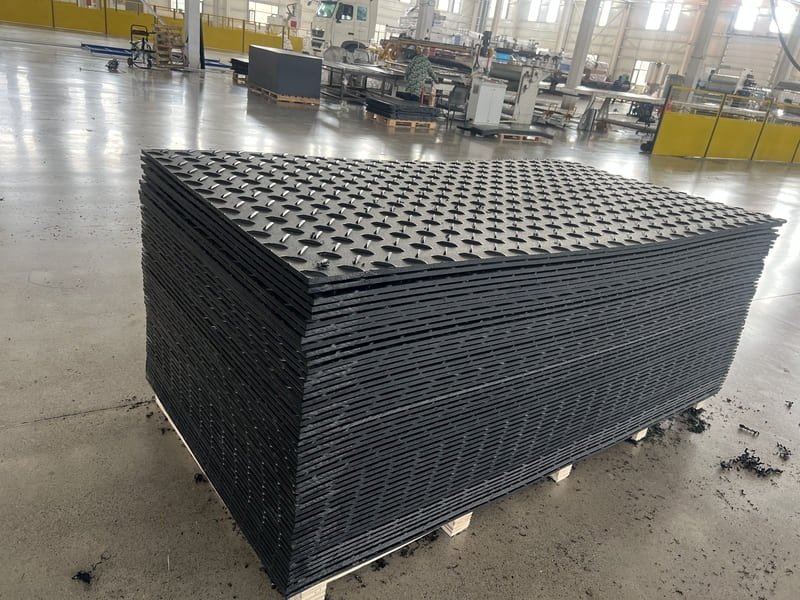
Black HDPE ground mats are a good choice when the main risk is ground rutting, mud, vehicle access, or repeated outdoor handling.
They work well for:
- construction access
- landscaping machinery paths
- tree service routes
- utility work
- temporary roads
- farm access
- muddy jobsite entrances
- rental mat fleets
- short-term equipment routes
In these jobs, the grass may not be the final visual priority, or the mats may be removed quickly after use.
If the job is short, shaded, cool, or vehicle-focused, black mats can be a cost-effective and practical solution.
The key is to remove them when the work is done.
When You Should Avoid Black Mats on Grass
You should be careful with black ground mats when the site has high-value turf and strong sun exposure.
This includes:
- wedding lawns
- golf courses
- sports fields
- school fields
- parks
- hotel lawns
- event venues
- new sod
- newly seeded areas
- residential lawns with high appearance expectations
You should also be careful during summer projects where the mats may stay down for many hours or several days.
If the route needs to stay in place for a long event, separate the site into zones. Do not treat the loading route, public walkway, parking area, and premium turf area as one surface problem.
Use stronger HDPE mats where vehicles must pass. Use lighter-colored or ventilated turf protection options where grass appearance matters most.
BKM Practical Recommendation
If your job is mainly about preventing vehicle ruts, black HDPE ground mats are a practical and cost-effective choice.
Use them for construction access, landscaping equipment, muddy routes, utility work, farms, temporary roads, and short-term vehicle paths.
If your job is mainly about protecting finished grass appearance, especially in hot weather, black mats should be used carefully and for short periods only.
For turf-sensitive projects, BKM recommends considering white HDPE mats, translucent white mats, lighter-colored mats, ventilated turf protection panels, or a zone-based layout.
The best solution is often not one mat for the whole site.
Use stronger HDPE mats for vehicle access. Use turf-friendly panels for pedestrian zones. Use extra mats at turning points, but remove them quickly when the work is done.
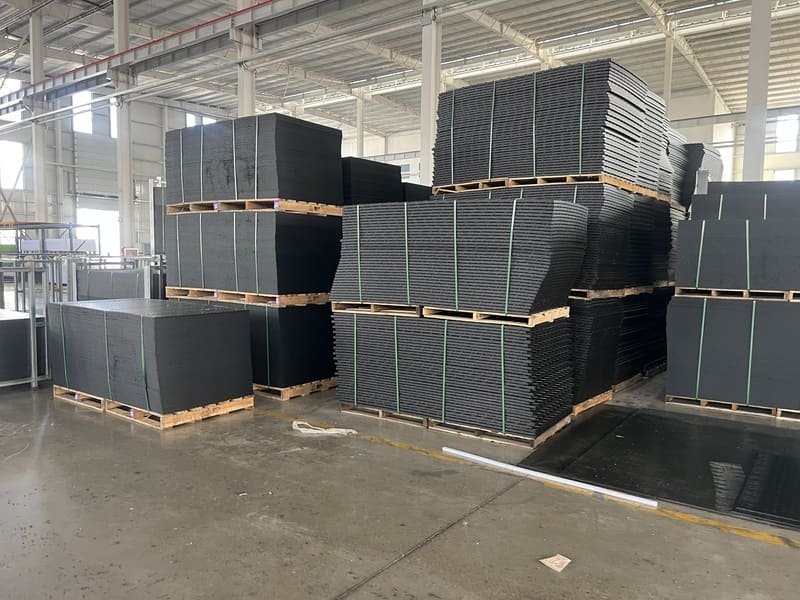
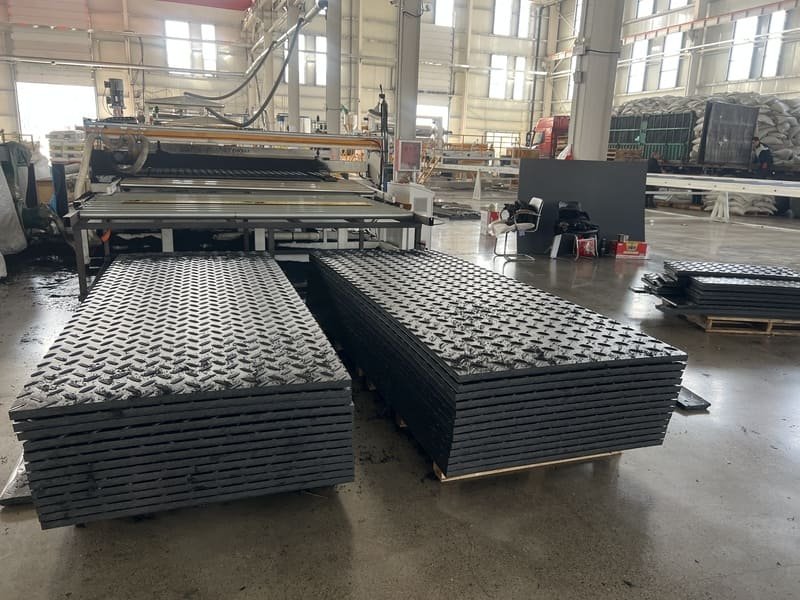
BKM can support black, white, and custom-color HDPE ground protection mats, along with surface texture options, common sizes, custom dimensions, hand holes, connector holes, logo marking, private-label needs, and export packaging.
BKM also provides connector systems for mat layouts. Other site accessories, such as ramps, hooks, storage racks, straps, anchors, or underlayment, can be sourced locally if your project requires them.
The key is to decide what you are protecting against: rutting, heat, pedestrian wear, mud, or long-term turf stress.
Once the real risk is clear, the mat choice becomes easier.
FAQ
Do black ground mats kill grass?
They can kill grass if they are left on turf too long in hot sunny weather. For short-term access, they usually protect grass from ruts and tire damage, but they should be removed as soon as the route is no longer needed.
Why do black ground mats burn grass?
Black mats absorb heat, block sunlight, reduce airflow, and can trap moisture. That combination can stress grass faster than many people expect.
How long can black mats stay on grass?
There is no fixed safe time. In cool or cloudy weather, risk is lower. In hot sun, valuable turf should be checked frequently and the mats should be removed as soon as possible.
Are white ground mats better for grass?
Yes, when heat is the main concern. White or light-colored mats reflect more sunlight and usually reduce heat buildup compared with black mats. They still need proper timing and inspection.
Are black HDPE mats bad products?
No. Black HDPE mats are practical for construction, muddy access, temporary roads, farms, utilities, and repeated outdoor use. They just need to be used carefully on live grass in hot sunny conditions.
Can grass recover after black mats are removed?
If the grass is only yellow or flattened, it may recover with air, light, watering, and time. If it has been overheated or covered too long, brown or dead patches may need repair.
Should I use black mats for an outdoor event on grass?
For short loading routes or service access, black mats can work. For public pedestrian areas or multi-day events on valuable grass, lighter-colored or ventilated turf protection panels are usually safer.
What is the safest way to use black mats on grass?
Install them only when needed, connect them properly, avoid leaving them in full sun too long, inspect the grass during the job, and remove them as soon as possible.
Why do white or translucent white mats perform better for turf protection during longer projects?
White mats reflect more sunlight than black mats, so they reduce heat buildup on grass. Translucent white mats may also allow some diffused light to pass through. They are still temporary protection products, so the mats should be checked, lifted, or removed when the grass needs air and light.
Conclusion
Black ground mats can absorb enough heat to damage grass underneath, especially in warm, sunny weather.
They can also block light and airflow, which causes yellowing and weakens turf over time.
But this does not mean black HDPE ground mats should be avoided. They are still one of the most practical options for temporary vehicle access, muddy construction routes, landscaping work, farms, utilities, and rental use.
The right question is not “Are black mats safe for grass?”
The better question is: how long will they stay down, how hot is the weather, how valuable is the turf, and what traffic will pass over them?
If the goal is short-term access and rut prevention, black HDPE mats can work well.
If the goal is long-term grass protection during hot weather or events, choose a lighter-colored or ventilated turf protection solution.
References
U.S. Environmental Protection Agency. “What Are Heat Islands?” https://www.epa.gov/heatislands/what-are-heat-islands ↩
UMass Amherst Center for Agriculture, Food, and the Environment. “Growing Turf Under Shaded Conditions.” https://www.umass.edu/agriculture-food-environment/turf/fact-sheets/growing-turf-under-shaded-conditions ↩
Plastics Europe. “Polyolefins.” https://plasticseurope.org/plastics-explained/a-large-family/polyolefins/ ↩
Penn State Extension. “How to Protect and Maintain Athletic Fields in the Heat of Summer.” https://extension.psu.edu/how-to-protect-and-maintain-athletic-fields-in-the-heat-of-summer/ ↩
UMass Amherst Center for Agriculture, Food, and the Environment. “Traffic Stress & Turf Cultivation.” https://www.umass.edu/agriculture-food-environment/turf/best-management-practices-bmps-for-lawn-landscape-turf/9-traffic-stress-turf-cultivation ↩