
 English
 Struggling to find a "standard" mat that fits? This is a common problem. The issue isn't your project; it's the misleading idea of a "standard" mat.
"Standard industrial floor mats" are not a universal size.1 They are simply a supplier's most common product configuration. The right mat depends entirely on your specific ground conditions, equipment load, and how you will use it, not a generic "standard" label.
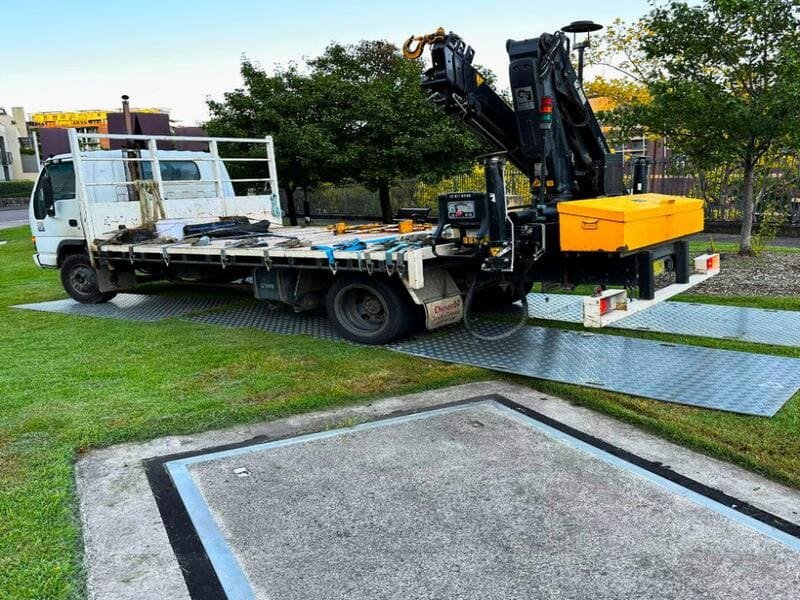
I talk to project managers every day, and many start by asking for our "standard size" mat. It's a logical question, but it often leads down the wrong path. We've all been trained to look for standard options to save time and money. But in the world of heavy-duty equipment and unpredictable job sites, "standard" can be a risky assumption. Instead of asking what's standard, the better question is, "What is the right mat for my job?" Let's dig into what that really means.
But isn't there a common size for industrial mats?
You've probably seen similar mats on different job sites and assumed they were all the same. This assumption can lead to costly mistakes, like cracked mats or bogged-down equipment.
While many suppliers offer popular sizes like 4'x8', the thickness, material (HDPE vs. UHMWPE), surface texture, and connection system vary greatly. There is no single industry standard, only common starting points that suppliers offer for general-purpose use.
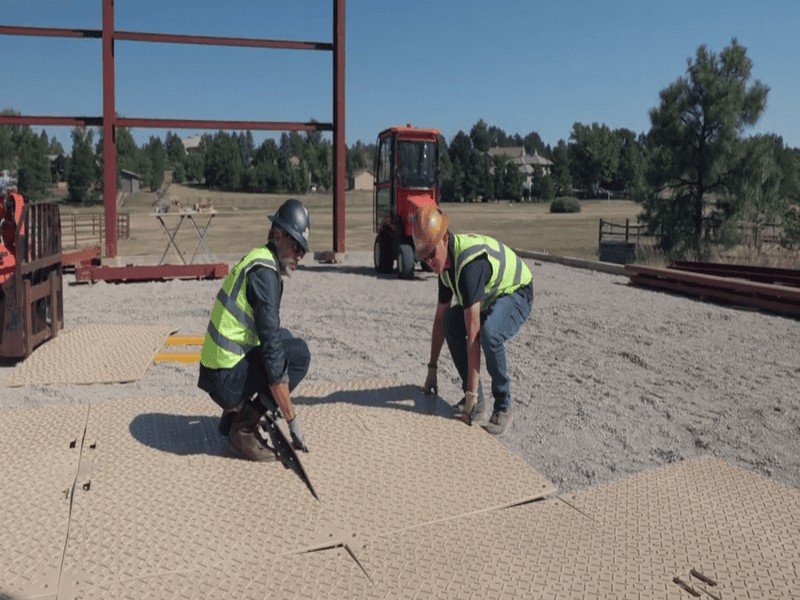
From my experience as a manufacturer, the term "standard" just refers to what we produce most often because it fits a wide range of common needs. For example, a 4'x8' mat is popular because it fits well in shipping containers and is manageable for two people to carry. But that's where the similarities end. I've seen customers get into trouble by buying what they thought was a "standard" heavy-duty mat, only to find it was a light-duty version that failed under their first truck. The details hidden behind the "standard" label are what truly matter.
What "Standard" Hides
A "standard" 4'x8' mat from two different suppliers can be completely different products.
| Feature | Supplier A (Light-Duty "Standard") | My Company (Heavy-Duty "Standard") |
|---|---|---|
| Material | Recycled HDPE Blend | Virgin HDPE or UHMWPE |
| Thickness | 1/2" (12.7mm) | 1/2" to 1" (12.7mm to 25.4mm) |
| Surface | One-sided simple texture | Dual-sided aggressive tread |
| Connectors | None | Option for 2-way or 4-way links |
| Intended Load | Pedestrians, light carts | Trucks, forklifts, tracked equipment |
As you can see, both might be sold as "standard mats," but they are designed for vastly different jobs.
How do you know if a standard mat is enough for your job site?
Worried your new mats won't hold up under your heavy equipment? Choosing the wrong mat can damage the ground and your machinery, causing expensive delays and costly repairs.
A "standard" mat is likely fine if you're creating a temporary walkway or driving light vehicles over firm, dry ground. But for heavy equipment, soft soil, mud, or slopes, you must verify the mat's specifications or consider a custom solution.
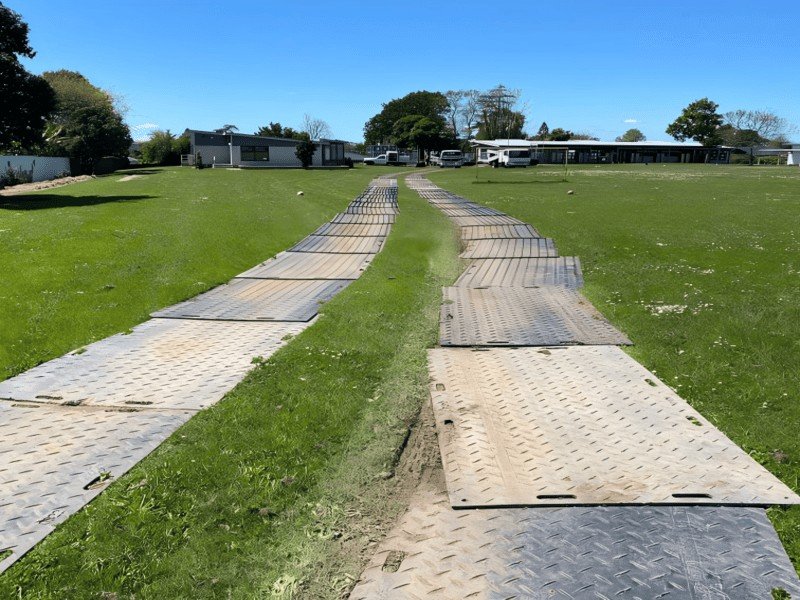
I remember a construction manager calling me in a hurry. He needed our "standard mats" for a new site, and he needed them fast. Instead of just giving him a price, I asked a few questions. This simple conversation saved him from a major headache. I always recommend my clients walk through a quick checklist before buying any mat, whether it's ours or someone else's.
Key Questions to Ask Before You Buy
To figure out if a standard mat works for you, you need to answer these questions honestly.
-
What's the heaviest thing crossing the mat? There's a huge difference between a pickup truck and a 60-ton crane. The total weight, and whether it's on wheels or tracks, will determine the thickness and material you need. A standard 1/2-inch mat might crack under a heavy load.2
-
What's the ground like underneath? Are you laying mats on asphalt, firm turf, or soft mud? If rain is in the forecast, that firm ground could turn soft quickly. Softer ground requires thicker mats to distribute the load effectively.
-
Do the mats need to be connected? For a simple access path, you might not need connectors. But if you're creating a large work pad or a road on a slope, you'll need connectors to keep the mats from shifting apart.
In the end, that construction manager realized our standard mat was too thin for his soft soil conditions. We recommended a thicker UHMWPE mat with connectors, and it performed perfectly.
What's the real difference between indoor industrial mats and outdoor ground protection mats?
Confused by the term "industrial mat"? Many people think it's one type of product, but using an indoor mat for an outdoor, heavy-duty job can lead to immediate failure and safety risks.
Indoor industrial mats are typically for anti-fatigue, anti-slip, or protecting floors from light traffic.3 Outdoor ground protection mats are heavy-duty engineered products made from HDPE or UHMWPE, designed to support heavy machinery and create temporary roads on unstable ground.
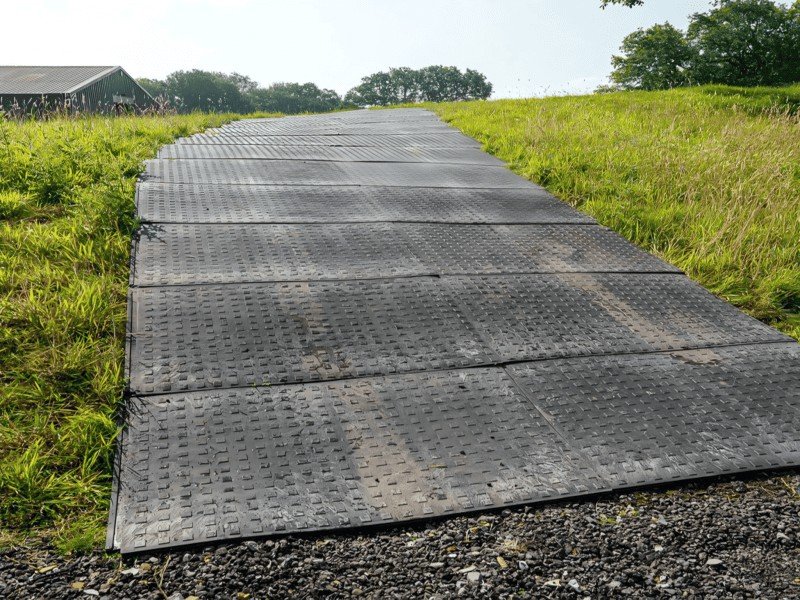
This is one of the biggest points of confusion I see. A customer might search online for "industrial mats" because they need to build a temporary road for a forklift. If they see a cheap rubber mat and buy it, they're in for a surprise. That mat, meant for a workshop floor, will tear apart the moment a forklift drives on it. They don't just need an "industrial mat"; they specifically need a "ground protection mat." The materials and design are fundamentally different because the jobs are different. One is for people; the other is for machines.
Comparing Mat Types
Understanding the core differences helps you choose the right tool for the job.
| Feature | Indoor Industrial Mats | Outdoor Ground Protection Mats |
|---|---|---|
| Primary Use | Anti-fatigue, spill control, floor protection | Temporary roads, equipment pads, ground stabilization |
| Material | Rubber, PVC, Foam | High-Density Polyethylene (HDPE), UHMWPE |
| Structure | Flexible, often thin or rolled | Rigid, thick, engineered for load-bearing |
| Load Capacity | Pedestrians, carts, light trolleys | Heavy vehicles, cranes, tracked equipment |
| Key Features | Beveled edges, drainage holes | Connection systems, aggressive treads, hand-holds |
Don't let a generic name fool you. Always check that the product's intended use matches your specific application.
When should you stop looking for a standard mat and ask for a custom one?
Are you frustrated that off-the-shelf mats don't fit your project's unique size or load needs? Forcing a standard solution can compromise safety and efficiency on your site.
You should request a custom mat when "standard" options don't meet your requirements for size, thickness, load capacity, color, or special features. Customization ensures the mat is perfectly engineered for your application, preventing failure and improving site safety.
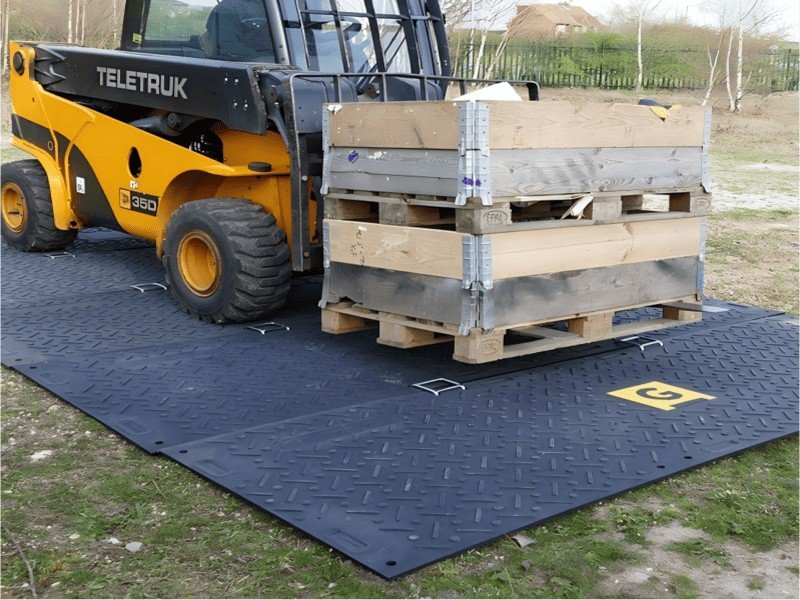
As a manufacturer, this is where we can provide the most value. While our standard mats cover about 80% of use cases, the other 20% involve unique challenges that demand a tailored solution. Trying to make a standard product work in a non-standard situation is a recipe for trouble. Instead, it's better to ask for exactly what you need. Because we control the entire process from making the raw material to the final CNC cutting, creating a custom mat is often simpler and more affordable than customers think.
Common Reasons to Go Custom
If any of these situations sound familiar, you should be thinking about a custom solution.
-
Extreme Loads or Soft Ground: If you're moving a large crane or working in a swampy area, a standard thickness won't be enough. We can use engineering principles to calculate the specific thickness needed to support your load without failure.
-
Specific Dimensions: Sometimes a project requires mats to fit a very specific footprint, like a narrow utility trench or an oddly shaped work platform. We can CNC-cut mats to nearly any size or shape.
-
Special Features: Many customers need unique features. This can include a specific color for safety zones (e.g., yellow for walkways)4, their company logo molded into the mat for branding and theft prevention, or a custom hole pattern for anchoring.
Don't settle for "good enough" when it comes to safety and performance. If a standard product doesn't feel right, it probably isn't.
Conclusion
Forget the word "standard." Focus on finding the right mat for your specific load, ground, and job site to ensure safety, prevent damage, and get the job done right.
"1926.962 - Grounding for the protection of employees. - OSHA", http://www.osha.gov/laws-regs/regulations/standardnumber/1926/1926.962. ↩
"Tensile Behavior of High-Density Polyethylene Including the Effects ...", https://pmc.ncbi.nlm.nih.gov/articles/PMC7564066/. . ↩
"Extent to which safety mats provide for compliance with ... - OSHA", http://www.osha.gov/laws-regs/standardinterpretations/1984-03-22. ↩
"1910.144 - Safety color code for marking physical hazards. - OSHA", http://www.osha.gov/laws-regs/regulations/standardnumber/1910/1910.144. ↩