
Parking cars on grass looks simple until rain, turning tires, and repeated traffic turn the field into ruts and mud. The best solution depends on how often you park, how valuable the turf is, and whether the surface must be removed afterward.
Quick Answer: Which Grass Parking Solution Should You Use?
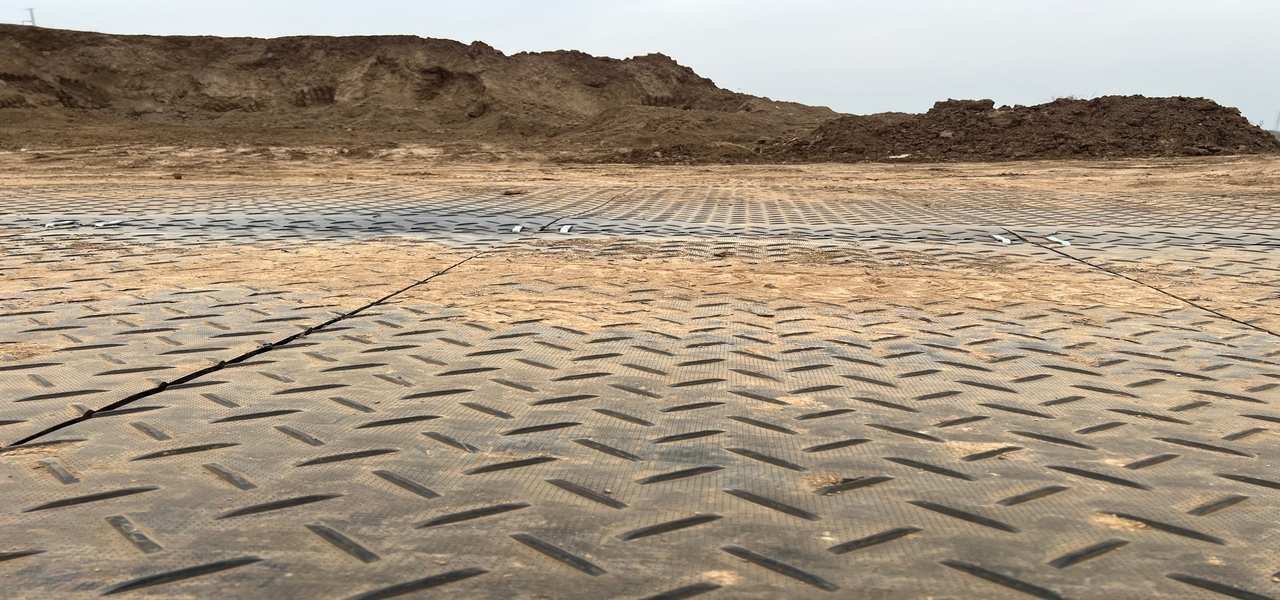
For one-day events and removable overflow parking, connected HDPE ground protection mats are usually the most practical option. They install quickly, spread vehicle traffic, and can be removed and reused.
For recurring seasonal parking, you may need a stronger interlocking route, prepared entry points, or a semi-permanent grid system.
For daily permanent parking, standard solid ground mats are not the complete answer. A prepared base with grass pavers, gravel grids, permeable pavers, or another engineered parking surface is usually more reliable.
| Parking Pattern | Better Starting Solution | Main Reason |
|---|---|---|
| One-day private event | Removable grass protection mats | Fast setup and recovery |
| Festival or public overflow parking | Connected field protection mats | Repeated traffic and route control |
| Seasonal farm, school, or venue parking | Interlocking mats with planned lanes | Reuse across wet periods |
| Weekly recurring parking | Grid system or reinforced base | Grass needs recovery and stable support |
| Daily staff or customer parking | Permeable permanent parking system | Drainage and long-term load support |
| Heavy trucks, buses, or RVs | Engineered access road or heavy-duty mats | Higher loads and turning forces |
| Accessible parking spaces | Firm, stable, slip-resistant surface | Grass alone may not provide access |
Grass paving systems are better suited to infrequent overflow use than daily traffic because living grass struggles under continuous parking.1
Decide Whether the Parking Is Temporary or Permanent
A venue needing overflow spaces for one afternoon has a different problem from a business parking on the same grass every day.
Temporary systems should be removable and reusable. Permanent systems must manage drainage, subgrade movement, repeated loading, and long-term maintenance.
For a detailed boundary between temporary mats and permanent stabilization, see Can I Use Plastic Ground Protection Mats as a Permanent Mud-Control Solution for Livestock or Parking?.
Solution 1: Removable HDPE Mats for One-Day or Short Events
For weddings, festivals, sports days, auctions, outdoor shows, and temporary staff parking, removable HDPE mats offer the strongest balance of speed and reuse.
Event ground protection mats can create marked parking rows, entrance lanes, and exit routes without converting the field permanently.
HDPE works well in this role because it combines useful stiffness, moisture resistance, and practical handling weight.2

I would not cover only the parking stalls.
The entrance, drive aisle, turning points, and exit usually receive more movement than the space under a parked car. Cars brake and steer at the gateway, then accelerate when leaving.
For small events, 4×8 ground protection grass protection mats simplify area calculation. Larger sites can use field protection mats.
Solution 2: Connected Mats for Public Overflow Parking
Public parking brings unpredictable drivers, queues, pedestrians, and accessibility requirements. Loose panels are a poor plan for a busy entrance or wet turning aisle.
Interlocking ground protection mats help compatible panels remain aligned across a wider field.

In BKM project discussions, the entrance is often underestimated. Buyers calculate the parking rows but leave the gateway and internal aisle on bare grass.
That is where the first ruts usually form.
A practical temporary parking layout should separate:
- entrance and queue lane
- internal drive aisles
- parking rows
- turning areas
- pedestrian routes
- accessible spaces
- emergency and service access
- exit lane
Use four-way connectors at internal grid points and two-way connectors along edges. See 2-Way vs 4-Way Connectors for a Temporary Parking Lot.
Solution 3: Temporary Road Mats for Entrances and Drive Aisles
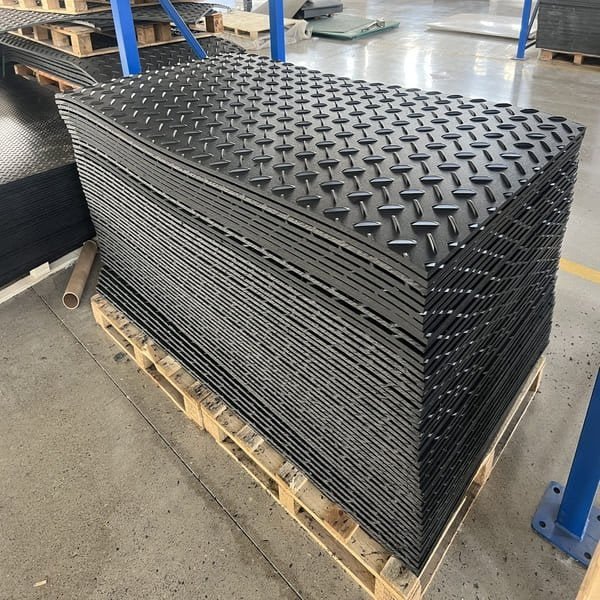
You may not need the same heavy system everywhere. Use stronger mats on entrances, aisles, turns, and exits; lighter protection may suit lower-traffic stalls.
Temporary road mats are useful where vehicle movement is concentrated.
This zone-based layout often gives better value. Upgrade these areas first:
| Parking Zone | Why It Needs More Protection |
|---|---|
| Field gateway | Every vehicle crosses the same point |
| Queue lane | Braking and waiting concentrate load |
| Main aisle | Repeated two-way traffic |
| Turning end | Lateral tire force moves panels |
| Exit | Acceleration can damage wet turf |
| Service lane | Vendors and support vehicles add traffic |
| Low spots | Water reduces ground support |
If rain is expected, plan for the wet version of the field. Wet soil is more vulnerable to compaction from vehicle traffic.3
Solution 4: Turf-Focused Mats for Valuable Lawns
Some venues need parking capacity and fast turf recovery. That changes the mat decision.
Turf mats for ground protection or a dedicated grass protection mat may be more suitable than a heavy construction-road panel.
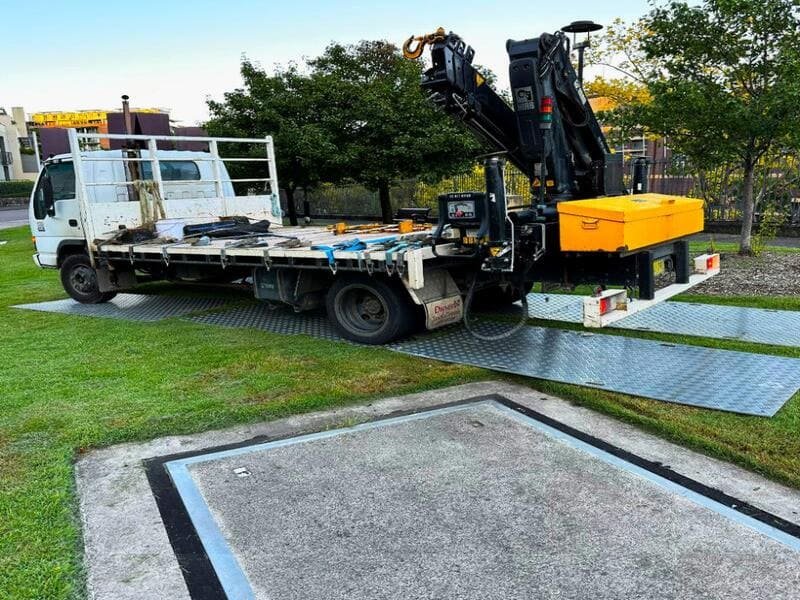
Mats reduce direct tire contact, but turf still experiences pressure and coverage. Repeated traffic causes wear and root-zone compaction.4
Install as late as practical and remove as soon as parking ends.
For hot weather or multi-day use, review Do Ground Protection Mats Harm Grass? before choosing black, white, translucent, or ventilated protection.
Solution 5: Grass Pavers for Infrequent Permanent Overflow
Grass pavers or open-cell parking grids can work when a site needs a permanent overflow area but wants to retain a green appearance.
These systems are installed into a prepared base and filled with soil and grass. They are not laid over an existing lawn before an event.
Grass-based paving systems are commonly associated with emergency lanes and temporary overflow parking rather than daily use.1 Grass cannot recover well under constant parking.
This option suits occasional overflow lots, fire lanes, and seasonal venue parking where permanent reinforcement is acceptable. The base, drainage, grass species, and traffic still need site-specific design.
BKM standard solid mats are a removable temporary product. We do not position them as a substitute for a permanent installed grass-paver system.
Solution 6: Gravel Grids or Permeable Pavers for Frequent Parking
Weekly or daily parking usually needs a gravel grid, permeable paver, porous asphalt, or pervious concrete system over a prepared base.
Permeable systems can manage load and stormwater as part of a permanent lot.5 This is the better direction for daily cars, frequent service vehicles, wet sites, or predictable accessibility.
Solution 7: Gravel or Aggregate for Low-Cost Permanent Parking
A prepared aggregate area can be a practical permanent option when green appearance is not essential.
It needs grading, drainage, compacted base layers, and sometimes separation fabric. Gravel can migrate and potholes can form, but it is still more suitable for daily parking than leaving temporary mats permanently over weak soil.
Accessible Parking Needs Its Own Route
Temporary grass parking still needs an accessibility plan. Accessible spaces and aisles must provide firm, stable, slip-resistant surfaces.6
Bare grass, deep gravel, or shifting panels may not meet that need.
Provide marked spaces, stable aisles, a connected route to the entrance, controlled transitions, and inspection during the event.
For public events, accessibility should be designed before tickets are sold, not improvised after the field becomes muddy.
How to Lay Out Temporary Parking on Grass
Walk the site first. Mark slopes, low spots, soft ground, irrigation, drains, roots, utility covers, and narrow gateways.
Total protected area = parking stalls + drive aisles + entrance + exit + turning zones + accessible routes + spare coverage
Do not calculate only the rectangular space beneath parked vehicles.
| Layout Detail | Practical Decision |
|---|---|
| Entry and exit | Use connected higher-duty coverage |
| Main aisle | Keep all tires on the route |
| Parking rows | Mark spaces before vehicles arrive |
| Turning end | Widen the grid |
| Soft areas | Add coverage or prepare the ground |
| Pedestrian route | Use a stable, lower-profile surface |
| Accessible route | Provide firm and stable connected access |
| Emergency route | Keep clear and load-appropriate |
Use the ground protection mats installation guide for route preparation, connection, testing, and removal.
Protect the Grass During and After Parking
Assign staff to inspect entrances, turns, and low spots. Stop traffic if panels shift, edges lift, or mud pumps through seams.
After the event:
- remove vehicles before disconnecting the route
- collect connector hardware in labeled containers
- lift mats instead of dragging them across turf
- remove debris before it is pressed into the grass
- inspect flattened or yellowing areas
- clean and stack the mats for the next deployment
Flattened grass may recover with light and normal care. Deep compaction, torn turf, or heat damage may need repair.
How BKM Helps You Build a Temporary Parking System
BKM can support HDPE/UHMWPE mats for events, overflow parking, venues, farms, schools, compounds, and rental fleets.
Specifications can include dimensions, tread, hand holes, connector layouts, colors, CNC machining, logos, and private-label packaging.

Send BKM vehicle types, estimated count, field dimensions, duration, ground condition, turns, weather, accessibility needs, reuse frequency, and storage method.
We can separate the site into light, medium, and high-movement zones before recommending panels and connectors.
This prevents you from overbuying the whole field because one entrance needs stronger protection.
FAQ
What Is the Best Temporary Surface for Parking Cars on Grass?
Connected HDPE ground protection mats are usually the strongest removable option for events and overflow parking. The entrance and drive aisles often need more protection than the stalls.
Can Cars Park Directly on Grass for One Day?
They can, but dry appearance does not guarantee strong ground. Wet soil, turning, repeated traffic, and queues can create compaction and rutting quickly.
Are Grass Pavers Better Than Temporary Mats?
Grass pavers are better for installed, infrequent overflow parking. Temporary mats are better when the system must be removed, stored, and reused elsewhere.
Can Ground Protection Mats Be Left Down Permanently?
Standard solid mats should not be treated as a complete permanent parking system. Long-term parking needs drainage, base support, and a surface designed for repeated use.
How Many Mats Do I Need for an Event Parking Lot?
Calculate parking stalls, drive aisles, entrances, exits, turns, accessible routes, and spare coverage. Do not calculate only the vehicle footprints.
Do Temporary Parking Mats Need Connectors?
For public parking, wet grass, turns, repeated traffic, and multi-row layouts, connectors are strongly recommended. They help reduce gaps and panel movement.
Will Parking Mats Kill the Grass?
Short-term use can reduce rutting, but any cover can stress turf if left too long. Weather, mat color, coverage time, traffic, and grass condition all matter.
Can Heavy Trucks or Buses Use the Same Mats as Passenger Cars?
Not automatically. Trucks, buses, RVs, and service vehicles need separate assessment of mat strength, ground support, route width, turning, and connectors.
Use Removable Mats for Temporary Demand and Engineered Surfaces for Daily Parking
The best solution depends on frequency.
Use removable mats for temporary demand, installed grass pavers for infrequent permanent overflow, and engineered permeable or aggregate surfaces when parking becomes frequent.
References
U.S. Environmental Protection Agency. [Green Parking Lot Resource Guide](https://nepis.epa.gov/Exe/ZyPURL.cgi?Dockey=P100D97A.TXT). ↩
Plastics Europe. [Polyolefins](https://plasticseurope.org/plastics-explained/a-large-family/polyolefins/). ↩
University of Minnesota Extension. [Soil Compaction](https://extension.umn.edu/natural-resources/conservation/agricultural-soil-and-water/soil-compaction). ↩
UMass Amherst Center for Agriculture, Food, and the Environment. [Traffic Stress & Turf Cultivation](https://www.umass.edu/agriculture-food-environment/turf/best-management-practices-bmps-for-lawn-landscape-turf/9-traffic-stress-turf-cultivation). ↩
U.S. Environmental Protection Agency. [Experimental Permeable Pavement Parking Lot and Rain Garden for Stormwater Management](https://www.epa.gov/water-research/experimental-permeable-pavement-parking-lot-and-rain-garden-stormwater-management). ↩
U.S. Access Board. [Chapter 5: Parking Spaces](https://www.access-board.gov/ada/guides/chapter-5-parking/). ↩