
 English
 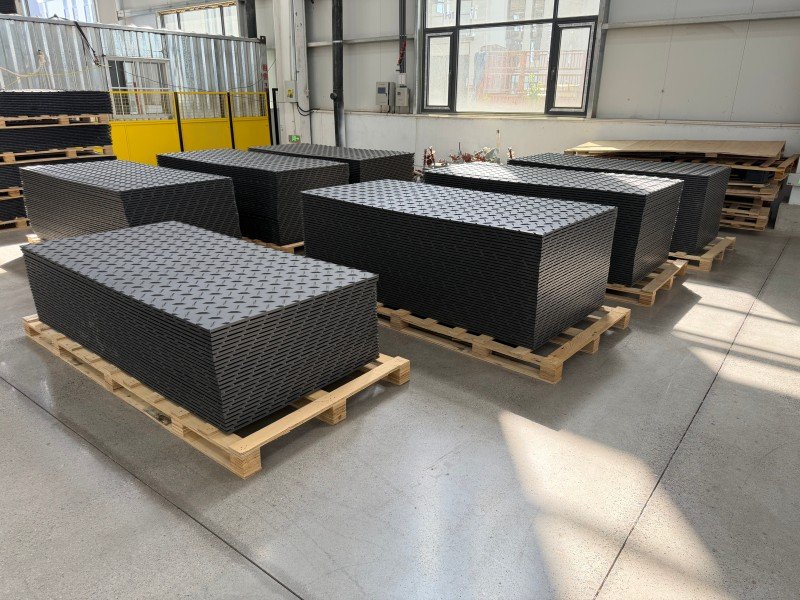 Plastic mats can hide mud for a season, but permanent mud control starts under the surface. If water, weak soil, animal traffic, or daily parking caused the problem, a solid mat alone will not make it disappear.
You can use plastic ground protection mats for temporary access, seasonal mud control, equipment routes, event parking, farm maintenance, and overflow parking.
But if you mean a true permanent mud-control surface for livestock yards or daily parking areas, standard solid HDPE ground protection mats are usually not the best final solution by themselves.
For permanent mud control, you need more than a plastic panel on top of wet ground. You need a system that manages water, soil separation, load support, drainage, manure, traffic frequency, and long-term maintenance.
Temporary Access or Permanent Mud Control?
The first question is not “Can plastic mats cover mud?” They can.
The better question is: do you need a removable access route, or do you need a permanent stabilized surface?
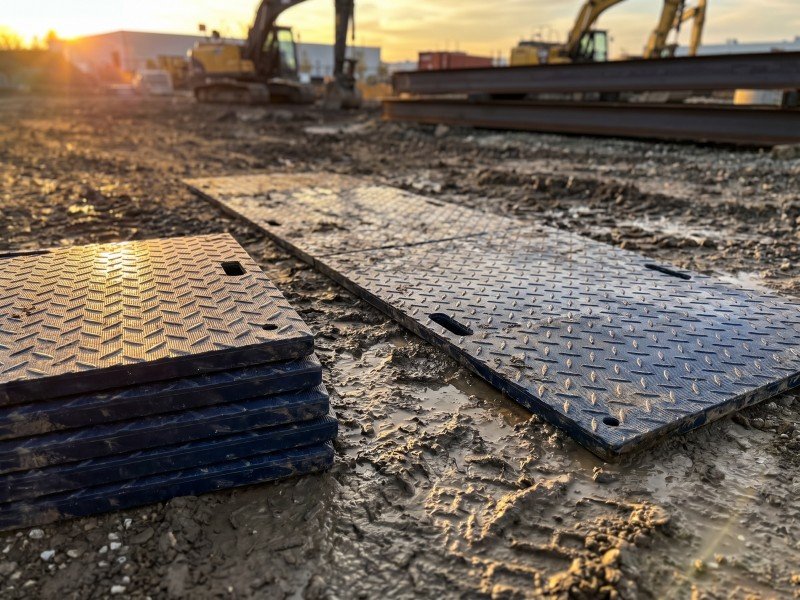
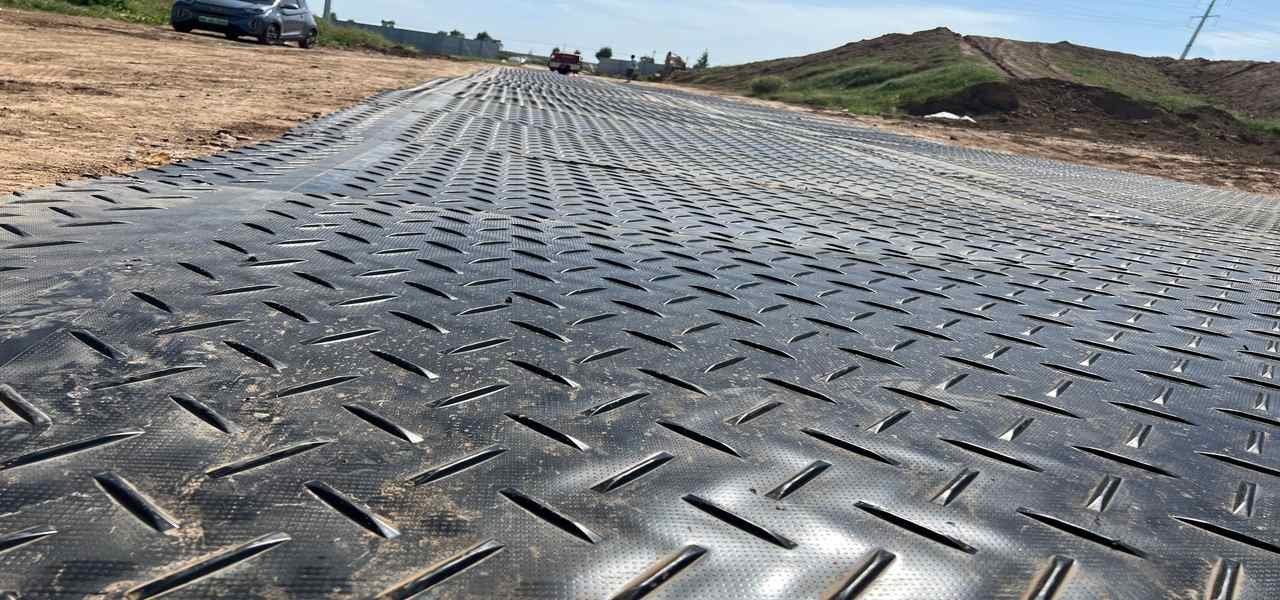
If you need a temporary route for tractors, feed trucks, service vehicles, trailers, or event parking, HDPE ground protection mats can be a practical choice. They can be installed quickly, removed after use, cleaned, stacked, and reused.
If you need a permanent surface for livestock standing areas, feeding zones, gates, water troughs, sacrifice lots, or daily parking, the decision changes.
Those areas are used again and again. Water does not disappear just because a mat covers the surface. The ground underneath still needs drainage and support.
In BKM project discussions, I normally separate this question into two applications: livestock areas and parking areas. Both have mud problems, but the pressure, hygiene, drainage, and maintenance requirements are not the same.
How I Judge This Application
When someone asks whether HDPE mats can solve mud permanently, I do not start with mat thickness.
I start with the source of the mud.
Is the mud caused by surface water? Poor grading? Animal traffic? Manure and bedding? Daily wheel loads? Weak soil? A low area that never dries?
Then I ask how often the area will be used.
A feed truck route used during a wet season is very different from a cattle gate used every day. Overflow event parking is different from daily employee parking.
This is the basic framework I would use before recommending mats or a permanent base system:
| Question | Why It Matters |
|---|---|
| Is the use temporary or daily? | Temporary access may suit removable mats; daily use usually needs a base system. |
| Is the area for animals or vehicles? | Hoof traffic, manure, and hygiene create different problems from parking. |
| Does water drain away? | Mud usually returns if water stays trapped under the surface. |
| Is the soil stable underneath? | A mat cannot permanently fix weak, saturated, or pumping soil by itself. |
| Will the surface need cleaning? | Livestock areas need manure management and maintainable footing. |
| Do you need the surface to be removable? | Removable access favors HDPE mats; permanent use favors drainage-based systems. |
Why Solid Mats Are Not a Complete Permanent Mud Solution
A solid plastic ground protection mat works by spreading load and creating a temporary surface.
That is useful when you need vehicles, people, or equipment to cross soft ground without making deep ruts.
But permanent mud control has a different goal. It must keep the area stable after rain, repeated use, animal traffic, vehicle movement, and daily maintenance.
If you lay solid mats permanently over wet soil, several problems can appear over time.
Water may stay trapped under or around the mats. Mud can pump up at seams. Edges may settle if the ground below is weak. Manure, urine, and bedding can collect on the surface or along gaps.
In livestock areas, I would never treat this as only a surface-covering issue. Mud, manure concentration, compaction, forage damage, and runoff are usually connected problems, so the solution needs to manage more than the top layer.1
For parking, the issue is different. A car or truck parking in the same place every day creates repeated loading. If the soil under a solid mat stays soft, the mat may shift, settle, or create uneven edges.
So the problem is not that plastic mats are weak. The problem is that mud is a water-and-base problem, not only a surface-covering problem.
Livestock Areas Need Drainage and Footing
Livestock mud control is more demanding than many people expect.
Hooves concentrate pressure into small areas. Animals repeat the same paths around gates, feeders, shelters, water tanks, and barn entrances.
Manure and urine add moisture and bacteria. If water cannot drain away, the surface breaks down quickly.
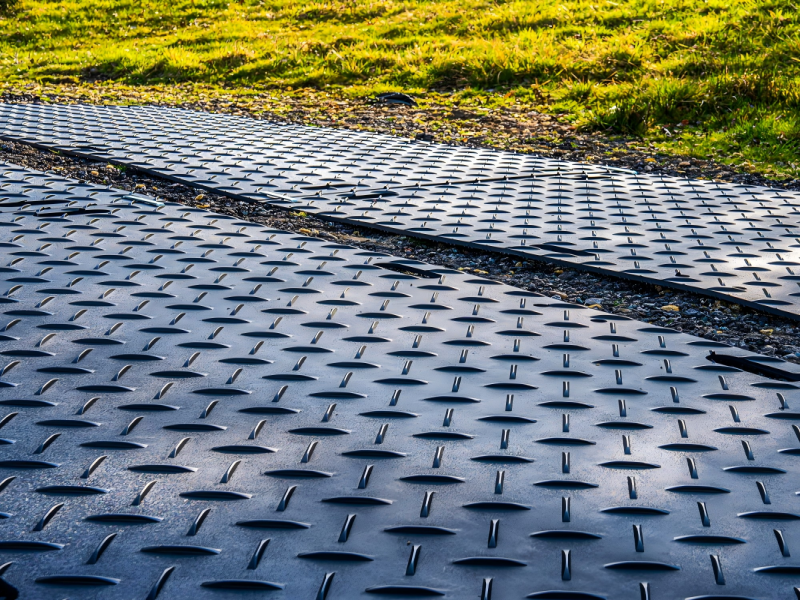
For horse farms, cattle yards, and other livestock areas, I would usually plan mud control around drainage first, then geotextile separation, gravel layers, and a maintainable surface. A surface cover alone does not solve the water problem underneath.2
For BKM customers asking about livestock yards, I normally do not recommend standard solid HDPE ground protection mats as the only permanent solution under animals.
They can be useful for temporary access, maintenance routes, feed delivery, or wet-season support. But daily animal standing areas need footing that drains and can be cleaned.
A solid mat may work for a short feed delivery route. It may work as a temporary lane for a tractor. It may work during a seasonal wet period.
But for a permanent cattle, horse, sheep, or goat area, the better plan is a designed heavy-use surface.
Heavy-Use Areas Need a Base System
A permanent livestock mud-control area usually needs a heavy-use pad or footing system.
That may include removing weak topsoil, grading the site, installing geotextile fabric, adding compacted stone layers, and choosing a suitable top footing.
When an area is used repeatedly by animals, vehicles, or people, I treat it as a heavy-use surface. That means stabilization, drainage, separation from weak soil, and maintenance all need to be considered from the beginning.3
That tells us something practical: permanent mud control is not only a “top layer” choice. It is a site design choice.
If animals gather in the same place every day, grass usually will not survive. If manure collects and water stands, mud will return.
For livestock, I would think in this order:
- Move clean roof water away.
- Grade the area so water does not sit.
- Separate weak soil from the surface material.
- Build a compacted base.
- Choose a footing that drains and can be maintained.
- Use removable mats only where temporary access makes sense.
This is different from laying solid mats on top of mud and hoping the problem stays hidden.
Parking Areas Need Drainage, Not Only Coverage
For parking, the common question is: “Can I lay plastic mats on the ground and park on them every day?”
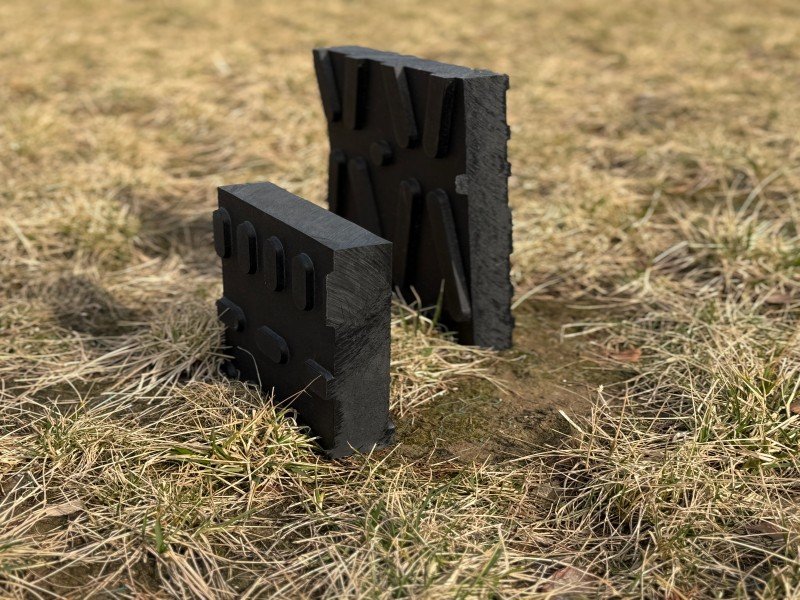
For short-term or overflow parking, yes. HDPE ground protection mats can work well.
They are useful for events, temporary car parks, muddy construction parking, trailer access, farm service areas, and seasonal overflow areas.
For permanent daily parking, a solid mat alone is usually not enough.
You need to prevent the soil under the surface from moving, pumping, and collecting water. A permanent parking area usually needs subgrade preparation, aggregate base, drainage, and sometimes geotextile or a permeable grid system.
For parking areas that need long-term drainage, I would think more like a permeable pavement system: water should move through or away from the structure, not sit trapped under a solid cover.4
That is the key difference. A permanent parking system should manage water through the structure. A solid mat mostly covers the top.
If your goal is daily parking, think base first and surface second.
Solid HDPE Mats vs Plastic Gravel Grids
This distinction is important.
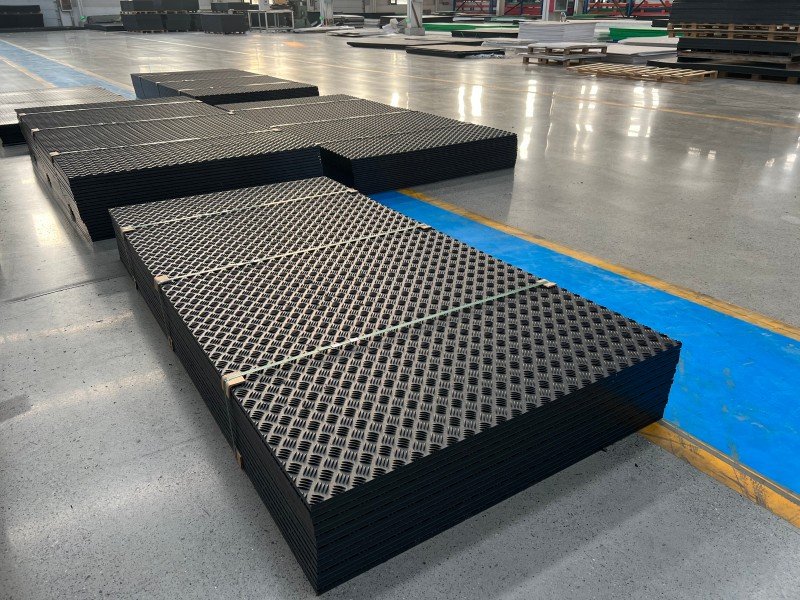
A solid HDPE ground protection mat is usually used as a temporary surface. It spreads load, protects turf or soil, and can be removed and reused.
A plastic gravel grid, grass paver, or geocell is usually installed as part of a permanent or semi-permanent stabilized surface.
It has open cells that hold gravel or soil in place while allowing water to drain through the system.
For muddy livestock areas or permanent parking, the grid-style system is usually more suitable because it works with drainage and infill.
Solid mats are better for access routes that need to be removed later.
If your main goal is “I need this area dry and stable every day,” choose a base-and-drainage solution.
If your main goal is “I need vehicles to cross this muddy area for a project, season, or event,” HDPE ground protection mats are usually more appropriate.
When Plastic Ground Protection Mats Make Sense
Plastic ground protection mats are still very useful. They are just not always the final permanent mud-control surface.
They make sense when you need:
- temporary vehicle access over mud
- seasonal farm access
- feed truck or tractor routes
- construction parking
- event parking
- overflow parking
- temporary pedestrian walkways
- service vehicle access
- work around barns, arenas, or paddocks
- a reusable mat fleet for rental
For these uses, HDPE mats can save time and reduce ground damage.
They are especially useful when you need a removable solution. After the project or wet season, you can lift the mats, wash them, stack them, and use them again.
For BKM, this is the proper position of standard HDPE ground protection mats: temporary, reusable, removable access equipment.
When You Need a Permanent Ground Stabilization System
You should choose a permanent ground stabilization system when the area will be used every day, especially if water and traffic are constant.
For livestock, this includes gates, feeding areas, watering points, dry lots, sacrifice areas, barn entrances, and narrow lanes where animals gather.
In wet seasons, I normally look for a way to protect the main pasture from repeated damage. A sacrifice lot or dedicated heavy-use area can help keep animals out of vulnerable pasture sections when the ground is too wet, but that area still needs proper drainage and footing.5
For parking, this includes daily driveway parking, commercial parking pads, RV parking, equipment storage, trailer parking, and repeated truck parking.
These areas need a base that supports the expected load and allows water to move away.
A plastic grid or geocell system can be a good choice when you want a plastic-based permanent surface. But it should be installed as a system, not simply placed on top of mud.
The ground should be graded, compacted, separated with the right fabric when needed, filled with the right aggregate, and maintained so the surface does not clog or settle.
Temporary Mats and Permanent Systems Compared
| Use Situation | Solid HDPE Ground Protection Mats | Permanent Ground Stabilization System |
|---|---|---|
| Seasonal farm access | Good choice | May be unnecessary |
| Feed truck route during wet months | Good temporary option | Better if used daily year-round |
| Livestock gate or water trough area | Not ideal as the only solution | Better choice |
| Temporary event parking | Good choice | Usually not needed |
| Daily car or truck parking | Not ideal as the only solution | Better choice |
| Overflow parking | Good removable option | Better for permanent overflow lots |
| Muddy construction parking | Good temporary option | Depends on project duration |
| Long-term manure-heavy area | Not recommended alone | Needs drainage and maintainable footing |
This table is not about saying mats are good or bad. It is about using them in the right place.
A removable mat is valuable when the access problem is temporary. A base-and-drainage system is better when the mud problem is permanent.
Know the Safety Limit: Mats Are Not Bridges
Solid HDPE mats should not be used as bridges over trenches, holes, septic fields, excavation edges, or unsupported voids.
They need support underneath.
For trenches, excavation edges, or unsupported ground, I would not treat a normal surface mat as a structural bridge. Those conditions need proper protective systems and a site-specific safety plan.6
This matters for farms, parking areas, construction sites, and utility work.
If the soil below cannot support the load, a mat alone will not make the area safe or permanent.
I would rather explain this before the order than after a problem happens on site.
HDPE Mats Still Have an Important Role
HDPE remains a practical material for removable ground protection.
As a material, HDPE gives a useful balance of strength-to-density ratio, outdoor durability, moisture resistance, and practical handling weight.7
For temporary access, that balance matters.
A ground mat may need to handle rain, mud, grass, gravel, cleaning, stacking, loading, and reuse.
Compared with wood sheets, HDPE mats are easier to wash, do not absorb water in the same way, and can be reused across multiple sites.
So the right question is not “Are plastic mats useful?” They are.
The right question is whether your mud problem is temporary or permanent.
How BKM Helps You Choose the Right Solution
BKM would not recommend using standard solid plastic ground protection mats as the only permanent mud-control solution for livestock pens or daily parking areas.
For livestock, build the mud-control area around water management first. Grade the site, move clean roof water away, manage manure, and use a footing system that drains.
Use HDPE mats where temporary access or removable protection is needed.
For permanent parking, prepare the base first. Remove weak organic material, grade the area, plan drainage, add geotextile or geogrid if needed, and use compacted aggregate or a plastic grid system.
Use HDPE mats for temporary parking, overflow parking, or seasonal access where removal and reuse are part of the plan.
For rental businesses, event companies, farms, and contractors, solid HDPE mats are still a strong product because they solve temporary access problems quickly.
But for permanent mud, do not let a surface mat hide the real issue underneath. Mud comes from water, weak soil, and repeated traffic. The permanent solution must deal with all three.
BKM can support HDPE ground protection mats in common sizes and custom dimensions, with surface texture options, colors, hand holes, connector holes, logo marking, private-label needs, and export packaging.
BKM also provides connector systems for mat layouts. Other site tools, such as grids, geotextile, aggregate, drainage materials, ramps, anchors, or underlayment, can be sourced locally according to the permanent system design.
FAQ
Can I leave HDPE ground protection mats outside permanently?
The material can handle outdoor exposure, but leaving solid mats permanently on wet ground is not always the right application. The bigger concern is drainage, trapped mud, shifting edges, and maintenance underneath the mats.
Can I use plastic mats in a horse paddock or cattle yard?
For temporary access or short-term routes, yes. For permanent standing areas, gates, feeders, or water troughs, a designed heavy-use pad with drainage, geotextile, aggregate, and suitable footing is usually better.
Will solid ground mats stop mud permanently?
No. They can cover mud and reduce rutting, but they do not remove water or stabilize weak soil permanently. If the ground underneath stays wet and unstable, the problem can return around edges and seams.
What is better for permanent livestock mud control?
A graded, drained heavy-use area with geotextile separation, compacted stone, and suitable footing is usually better. In some cases, plastic grids or geocells filled with gravel can help stabilize the surface.
Can I use HDPE mats for parking cars every day?
For temporary or overflow parking, yes. For daily permanent parking, a prepared gravel base, permeable grid system, asphalt, concrete, or other designed parking surface is usually more reliable.
Are plastic gravel grids better than solid mats for permanent parking?
Usually yes. Plastic gravel grids allow water to drain and hold aggregate in place. Solid mats are better for removable temporary access.
Can ground protection mats be used over gravel?
Yes, they can be used temporarily over gravel for extra protection or access control. For permanent parking, the gravel base itself should be properly designed and compacted.
What is the best BKM solution for this application?
For temporary farm access, event parking, construction access, overflow parking, or seasonal mud routes, BKM HDPE ground protection mats are suitable. For permanent livestock yards or daily parking, BKM treats mats as one possible temporary access tool, not the whole ground stabilization system.
Conclusion
Plastic ground protection mats can help control mud, but standard solid HDPE mats should not be treated as a complete permanent mud-control solution for livestock areas or daily parking.
They are excellent for temporary access, seasonal use, overflow parking, farm maintenance routes, construction sites, and rental applications. They protect the ground, reduce rutting, and can be reused many times.
For permanent livestock mud control, you need drainage, manure management, geotextile separation, aggregate layers, and suitable footing.
For permanent parking, you need a prepared base, drainage, and often a gravel grid, geocell, permeable paver, asphalt, or concrete solution.
The practical rule is simple: use HDPE ground protection mats when you need removable temporary access. Use a designed ground stabilization system when you need a permanent mud-control surface.
References
Penn State Extension. “Mud, Forages, and Livestock Health.” https://extension.psu.edu/mud-forages-and-livestock-health/ ↩
University of Minnesota Extension. “Managing Mud on Horse Farms.” https://extension.umn.edu/horse-pastures-and-facilities/managing-mud-horse-farms ↩
USDA Natural Resources Conservation Service. “Heavy Use Area Protection (Sq. Ft.) (561) Conservation Practice.” https://www.nrcs.usda.gov/resources/guides-and-instructions/heavy-use-area-protection-sq-ft-561-conservation-practice ↩
U.S. Environmental Protection Agency. “Soak Up the Rain: Permeable Pavement.” https://www.epa.gov/soakuptherain/soak-rain-permeable-pavement ↩
Penn State Extension. “Horse Management During Wet Weather.” https://extension.psu.edu/horse-management-during-wet-weather/ ↩
Occupational Safety and Health Administration. “Trenching and Excavation - Construction.” https://www.osha.gov/trenching-excavation/construction ↩
Plastics Europe. “Polyolefins.” https://plasticseurope.org/plastics-explained/a-large-family/polyolefins/ ↩