
 English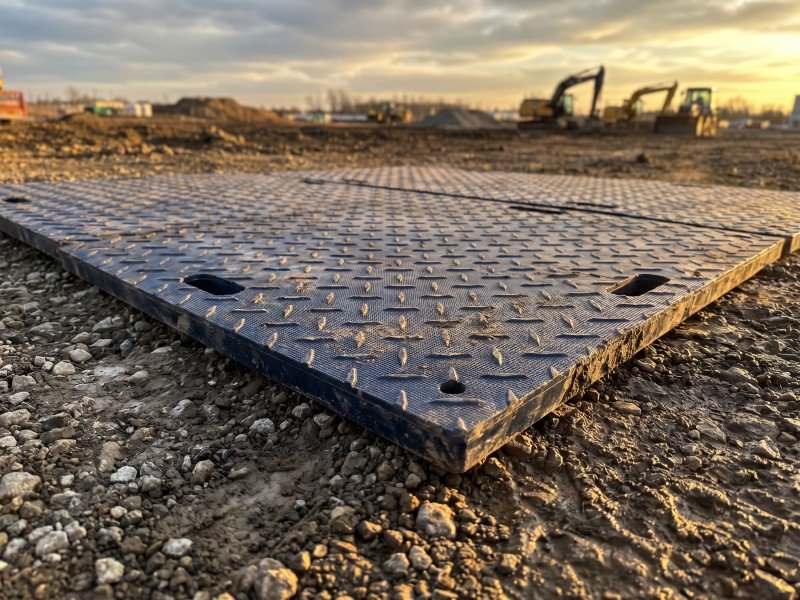
You usually do not need ground protection mats when the site is perfect. You need them when wet ground, heavy traffic, turf damage, cleanup labor, or access delays start threatening your profit.
Ground protection mats are used to create temporary access over grass, mud, soil, sand, gravel, and other surfaces that may be damaged by vehicles, equipment, carts, or repeated foot traffic.
From our experience, the best ground protection mats are not the ones that only look strong on paper. They are the ones that make access easier, reduce the mess after removal, and stay useful after many jobs.
The Real Benefit Starts Before the First Tire Touches the Ground
I have seen many project discussions start too late. The ground is already wet, trucks are already delayed, and the first question becomes, “Can mats still fix this?”
Sometimes they can help. But the best result comes when you plan the access route before the ground breaks down.
Once vehicles begin using the easiest path, that path becomes the jobsite road, whether you planned it or not. If the soil is wet, repeated traffic can compact the ground, hold water, and create deeper ruts.1
A ground protection mat helps you decide where traffic should go. You are not waiting for damage and then reacting.
You are creating a controlled route before the site becomes harder to manage.
They Help Spread Load Instead of Letting Tires Cut the Ground
The first practical benefit is load distribution.
When a truck, forklift, skid steer, lift, tractor, or service vehicle drives directly over soft ground, the load is pushed through the tire or track into a smaller contact area.
If the surface is wet, weak, or loose, that pressure can create sinking, rutting, and mud. A ground protection mat spreads that pressure across a wider area and helps reduce direct damage to one small point.1
This does not mean a mat becomes a bridge. The ground underneath still matters.
A mat over firm grass behaves differently from the same mat over wet clay, loose sand, compacted gravel, or saturated soil. I always ask about the ground before I talk about thickness.
If your route includes turning, braking, reversing, or loading in one place, the risk is higher. Straight driving across firm ground is much easier than repeated turning on wet soil.
That is why BKM normally checks vehicle type, ground condition, route direction, and traffic frequency before recommending a mat.
They Reduce Rutting, Turf Damage, and Repair Calls
Rutting usually begins in predictable places.
Site entrances fail first. Turning areas fail next. Loading zones, narrow lanes, and repeated access paths follow quickly.
Once ruts appear, water collects in them. Then the soil softens further, and every new pass makes the route worse.
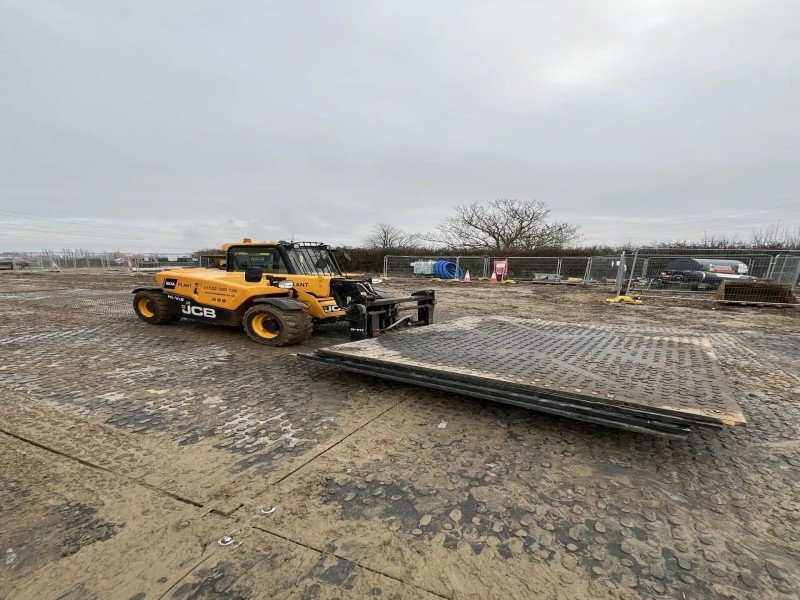
Ground protection mats reduce direct tire contact with the ground. This helps protect lawns, turf, soil, landscaped areas, and other finished surfaces.
If you work on someone else’s property, this benefit is not small. A project can be technically finished, but if the lawn is left with deep tire marks, the work still feels poorly managed.
I have seen this happen in landscaping and event projects. The work itself may be fine, but the access damage becomes the part people remember.
Using mats before the first machine enters the site helps you avoid that situation.
They Keep Access More Usable After Rain
Rain changes the job quickly.
A route that looks solid in the morning can become soft after trucks pass over it several times. The entrance breaks down, tires lose traction, and cleanup begins before the real work is done.
HDPE ground protection mats are useful in wet conditions because HDPE does not absorb water like wood. Typical HDPE material data shows a practical balance of low density, useful strength, and plastic performance for removable outdoor products.2
Plywood may look like a cheaper answer at first. But once it absorbs moisture, it can warp, split, splinter, and become slippery.
For your project, the goal is not to eliminate every bit of mud. That is unrealistic on many outdoor sites.
The goal is to keep the access route controlled enough so work can continue and vehicles are less likely to tear up the ground.
This matters for construction entrances, utility access, farms, temporary parking, outdoor events, and emergency service routes.
They Improve Traction When the Surface Pattern Matches the Job
Surface texture is not decoration. It changes how the mat performs.
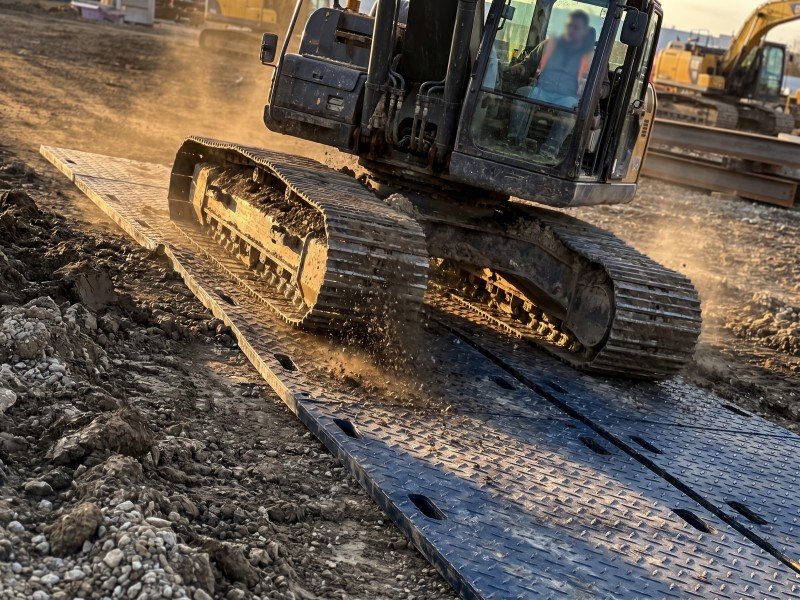
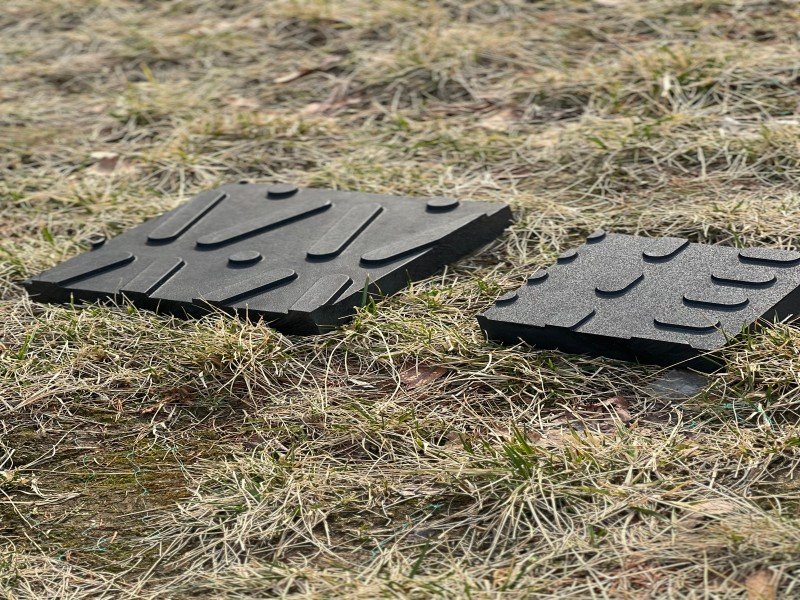
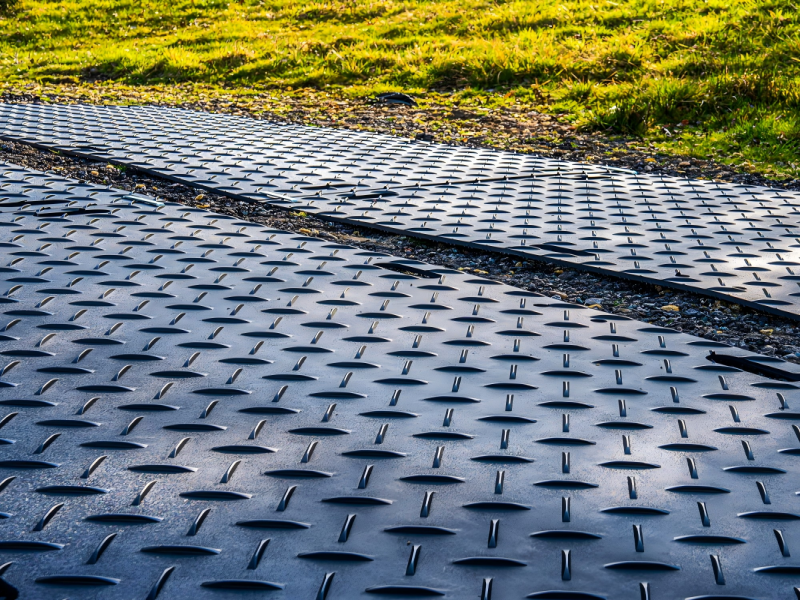
Many ground protection mats use diamond tread, raised cleats, or dual-sided textures. These surfaces help tires, tracks, boots, carts, and pedestrians get better contact with the mat.
If your site mainly handles trucks, skid steers, forklifts, or lifts, you need traction that works in wet or muddy conditions.
If your project is an event walkway, public route, or pedestrian path, you need a surface that feels stable under foot and does not create unnecessary trip points.
Walking-working surfaces should be maintained clean, dry where possible, and free from hazards that increase slips, trips, and falls.3
This is why I do not recommend one surface pattern for every order. A strong cleat may be useful for vehicles, but a lower-profile texture may be better for walking areas.
For BKM projects, we first look at the main traffic type. Vehicle access, pedestrian access, turf protection, and temporary event flooring should not be treated as the same surface problem.
They Protect Turf Better Than Waiting for Repair Later
Turf damage is not always visible at the moment it happens.
A lawn may look acceptable during the first few passes. Then the soil begins to compact, grass weakens, water sits on the surface, and recovery becomes slower.
Traffic stress can damage turf through both surface wear and compaction around the root zone.4
That matters for parks, golf courses, schools, sports fields, event lawns, hotels, and residential properties.
Ground protection mats help reduce direct traffic damage. They also help keep equipment and people on a planned route.
But there is a limit. Solid mats should not stay on valuable turf longer than necessary, especially in hot weather.
Grass still needs air, light, moisture balance, and recovery time. A mat protects the surface during use, but it is not a permanent cover for living turf.
They Are More Reusable Than Plywood
I understand why plywood is still used. It is familiar, easy to buy, and looks cheaper at first.
For a very light, short, dry job, it may be enough. But for repeated outdoor work, plywood usually loses value quickly.
It can absorb water, split, warp, rot, splinter, and become slippery. Once damaged, it often becomes waste instead of a reusable site asset.
HDPE ground protection mats are designed for installation, removal, cleaning, stacking, transport, and reuse.
This changes the cost calculation. You should not only compare one HDPE mat with one sheet of plywood.
You should compare cost per use.
If one mat can serve many projects, the long-term cost may be lower than a cheaper sheet that needs frequent replacement.
This is especially important if you rent mats, manage event flooring, handle landscaping routes, or work on different sites every week.
They Help You Build Temporary Roads Without Permanent Construction
Many projects need access, but not a permanent road.
You may need trucks to cross a field for one week. You may need equipment access for utility work. You may need a walkway for an event weekend.
Building a permanent road may be too expensive, too slow, or not allowed by the property owner.
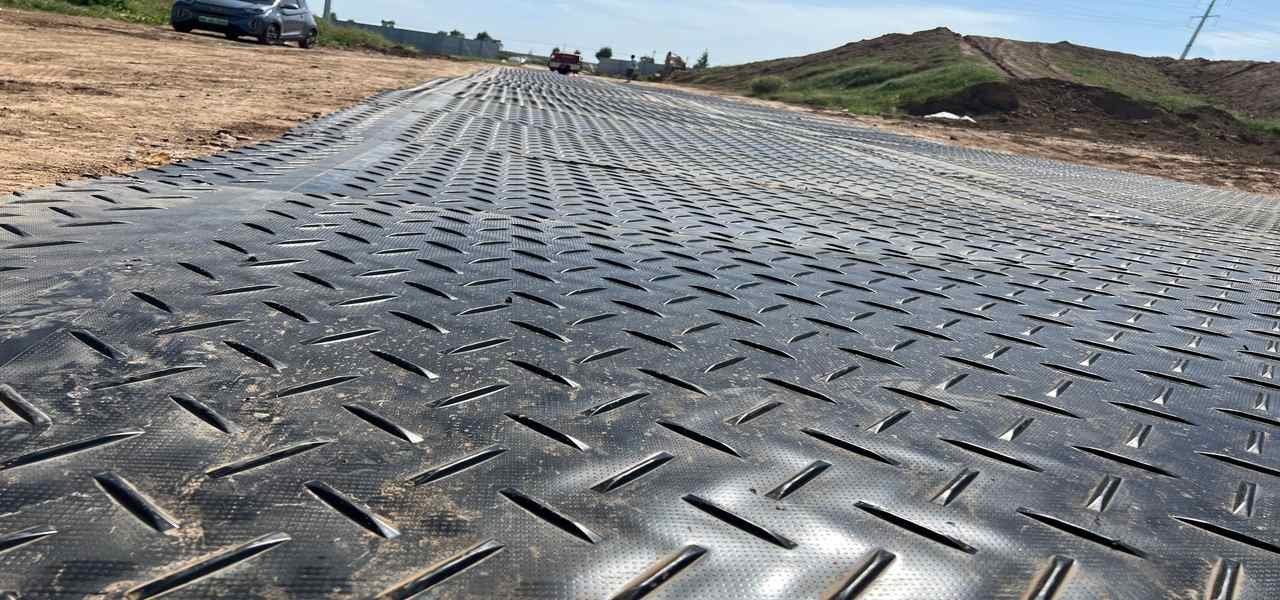
Ground protection mats let you create a temporary route, parking lane, work pad, or staging area. When the job is finished, the mats can be removed and reused elsewhere.
This is one of the reasons rental demand exists. A temporary road solves a temporary problem without changing the site permanently.
For remote work, parks, farms, venues, and residential projects, that flexibility can be more valuable than the mat itself.
They Reduce Cleanup After the Job
Ground damage does not end when the machine leaves.
You may still need to fill ruts, remove mud, level soil, repair turf, clean pavement, or restore a property before handover.
These costs are often underestimated during purchasing. The mat price is visible, but repair labor appears later.
Ground protection mats help reduce this after-work burden. They keep traffic in a defined route and reduce direct disturbance to the surrounding surface.
For event work, reduced cleanup can help return the venue faster. For landscaping, it can reduce callbacks.
For contractors, it can reduce complaints after equipment leaves the property.
A good mat system helps during the job and at the end of the job.
They Are Easier to Handle Than Steel Plates
Steel plates are strong, but they are heavy.
They often require lifting equipment, chains, forklifts, or machines to move. That may be acceptable for trench work, but it is not practical for every lawn, event site, or temporary access route.
HDPE ground protection mats are much lighter than steel because HDPE has far lower density than metal.2
This affects labor directly. If every installation requires equipment, setup becomes slower and more expensive.
If a small crew can carry, position, connect, remove, clean, and stack the mats, your job becomes easier to manage.
For rental operations, handling speed affects turnover. Mats that are easier to load, clean, and stack can be sent out again faster.
Connectors Turn Loose Panels Into a Working System
A single mat protects one spot. A connected layout creates a working access system.
Loose mats can shift under turning wheels, braking, slopes, mud, and repeated traffic. Gaps can open, edges can lift, and the route can become uneven.
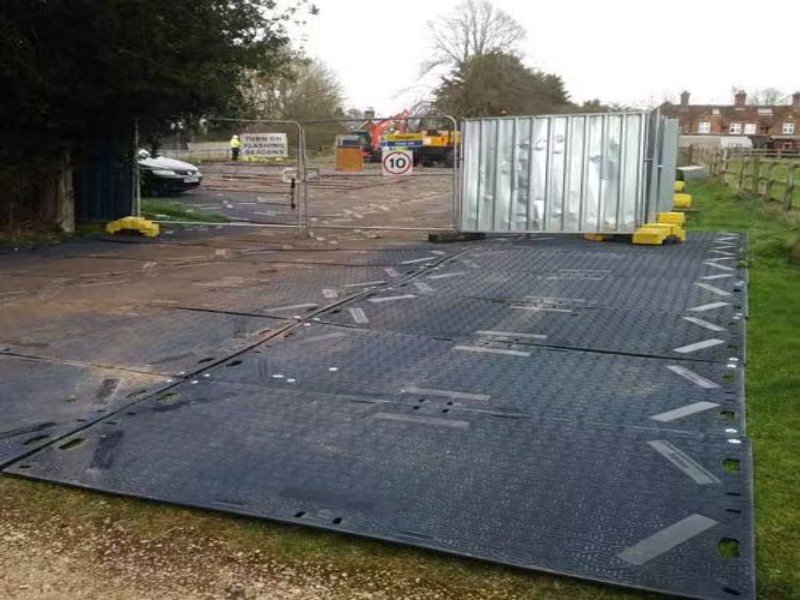
Connector holes and locking links help mats stay aligned. They allow you to build straight routes, wider work pads, turning areas, temporary parking zones, and pedestrian paths.
For BKM projects, connectors are not a decorative accessory when vehicles are involved. They are part of the performance plan.
You may not need connectors for a short pedestrian route on firm dry ground. But if vehicles turn, reverse, brake, or pass repeatedly, connectors should be planned from the beginning.
BKM provides connector systems for mat layouts. Other site tools, such as pulling hooks, racks, straps, ramps, anchors, or underlayment, can be sourced locally when your site requires them.
They Make Your Site Look More Controlled
Ground protection mats also improve site organization.
They show where vehicles should drive, where people should walk, where materials should be staged, and where equipment should operate.
That reduces random movement across the site.
For construction, mats help control entrances and equipment routes. For landscaping, they show care for the property.
For events, they guide visitors, vendors, service teams, and backstage movement. For public works, they help maintain access while protecting public ground.
This is not only about appearance. A planned route makes the site easier to supervise.
When a property owner or site manager sees that route, it shows you planned the access before damage happened.
They Support Better Cost Control
Ground protection mats cost money upfront, but they can reduce several hidden costs.
They can reduce vehicle recovery costs when equipment gets stuck. They can reduce turf repair, mud cleanup, site restoration, and plywood replacement.
They can also reduce downtime when wet ground would otherwise stop or slow the job.
For rental use, they can become a repeat-income asset. A durable mat can be rented many times if it is selected and maintained properly.
When you compare options, do not stop at unit price. Look at expected use cycles, cleaning time, connector needs, transport weight, storage space, and labor.
A lower-cost mat is not always cheaper if it breaks early, shifts often, or takes too much time to handle.
How to Choose Mats That Actually Deliver These Benefits
The benefits only appear when the mat matches the job.
First, check the ground. Grass, mud, clay, sand, gravel, and compacted soil all behave differently. Wet ground needs more attention than dry ground.1
Second, check the traffic. Pedestrians, pickups, forklifts, skid steers, cranes, and loaded trucks create different loads.
Third, check movement. Straight driving is easier than turning, braking, reversing, or loading in one place.
Fourth, check the mat structure. Material, thickness, surface texture, hand holes, connector holes, and anchor options all affect performance.
Fifth, check the layout. A narrow path may work for light traffic but fail when trucks turn or reverse.
Entrances, corners, loading zones, and soft spots often need extra coverage.
| Project Situation | What You Should Focus On |
|---|---|
| Construction entrance | Thickness, traction, connectors, and mud control |
| Landscaping route | Lawn protection, easier handling, and clean removal |
| Outdoor event | Walking comfort, turf protection, route width, and cleanup |
| Temporary parking | Wider layout, turning areas, connectors, and ground condition |
| Rental business | Reuse, cleaning, stacking, labeling, packaging, and spare connectors |
| Utility or farm access | Wet ground performance, route planning, and repeated traffic |
When BKM reviews a project, we normally ask about vehicle type, ground condition, route length, traffic frequency, and application. This helps us recommend a mat that fits the work.
The goal is not to choose the thickest mat every time. The goal is to choose the right mat and layout.
How BKM Helps You Turn Benefits Into a Practical Order
BKM supplies HDPE ground protection mats for construction access, landscaping, outdoor events, temporary parking, utility work, farms, and rental projects.
We can support common mat sizes and custom dimensions. We can also provide surface texture options, color choices, hand holes, connector holes, logo marking, private-label needs, and export packaging.
For bulk orders, packaging matters. Mats need to be stacked, wrapped, strapped, and loaded in a way that protects the panels and improves shipping efficiency.
For distributors and rental operations, we also think about repeat handling. Your mats should be easy to count, clean, store, transport, and send out again.
A good mat order is not only about buying panels. It is about building a product system that fits your market, site use, and long-term cost plan.
FAQ
What are the main benefits of ground protection mats?
They help spread load, reduce rutting, protect grass and soil, improve temporary access, improve traction, reduce cleanup, and support repeated use across many projects.
Why is HDPE commonly used for ground protection mats?
HDPE is tough, moisture-resistant, impact-resistant, and lighter than steel. It is practical for repeated outdoor use when the mat is designed and installed correctly.2
Are HDPE ground protection mats better than plywood?
For repeated outdoor use, yes. HDPE mats resist moisture better, do not splinter like plywood, and are easier to clean, stack, and reuse.
Can ground protection mats support heavy equipment?
Yes, if the correct mat is selected and the ground condition is suitable. Real performance depends on soil condition, mat thickness, vehicle weight, tire pressure, axle load, traffic movement, and layout.
Do ground protection mats prevent vehicles from getting stuck?
They reduce the risk by spreading load and creating a more controlled temporary surface. They cannot fix completely unstable, saturated, or unsupported ground by themselves.
Are ground protection mats good for lawn protection?
Yes. They are commonly used to protect lawns, turf, parks, gardens, and event venues from tires, equipment, and foot traffic. For valuable turf, removal timing and weather matter.4
Do ground protection mats need connectors?
For pedestrian use or very light short-term use, connectors may not always be necessary. For vehicles, repeated traffic, turns, slopes, or muddy ground, connectors are strongly recommended.
Can ground protection mats be used as temporary road mats?
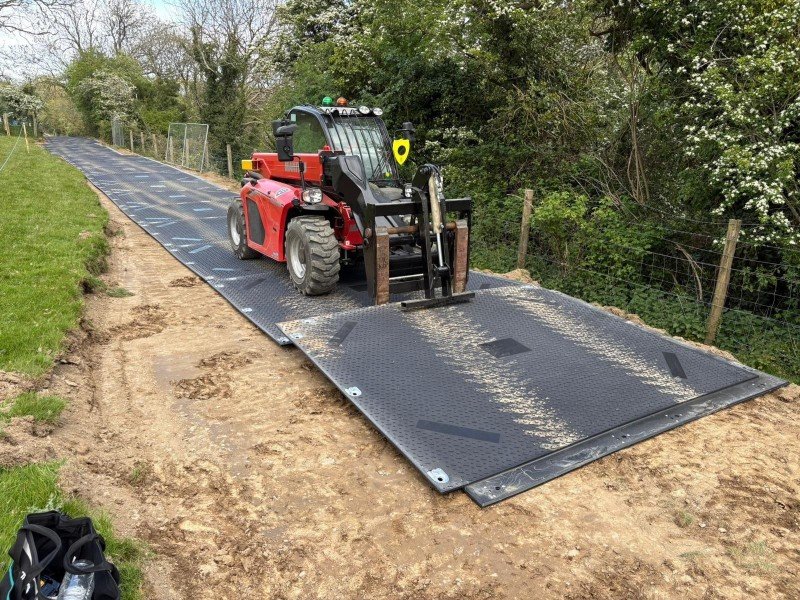
Yes. They can be used to build temporary access roads, vehicle routes, pedestrian walkways, staging areas, and work platforms. The layout should match traffic type and ground condition.
Conclusion
Ground protection mats are useful because they solve practical site problems. They help spread vehicle loads, reduce rutting, protect grass, improve traction, control temporary access, reduce cleanup, and provide reusable value.
HDPE is part of the reason. It gives ground mats the toughness, moisture resistance, and handling efficiency needed for repeated outdoor work.2
But material alone is not enough. The mat must match the ground condition, vehicle load, traffic pattern, route layout, and connector plan.
If you need temporary road mats, turf protection mats, construction ground mats, or heavy-duty ground protection mats, choose them as part of a site access plan.
A well-selected mat system can reduce damage, save labor, and help your project finish with fewer ground-related problems.
References
University of Missouri Extension. “Soil Compaction: The Silent Thief.” https://extension.missouri.edu/publications/g1630 ↩
MatWeb. “Overview of materials for High Density Polyethylene.” https://www.matweb.com/search/datasheet.aspx?MatGUID=fce23f90005d4fbe8e12a1bce53ebdc8 ↩
Occupational Safety and Health Administration. “1910.22 - General Requirements.” https://www.osha.gov/laws-regs/regulations/standardnumber/1910/1910.22 ↩
UMass Amherst Center for Agriculture, Food, and the Environment. “Traffic Stress & Turf Cultivation.” https://www.umass.edu/agriculture-food-environment/turf/best-management-practices-bmps-for-lawn-landscape-turf/9-traffic-stress-turf-cultivation ↩