
 English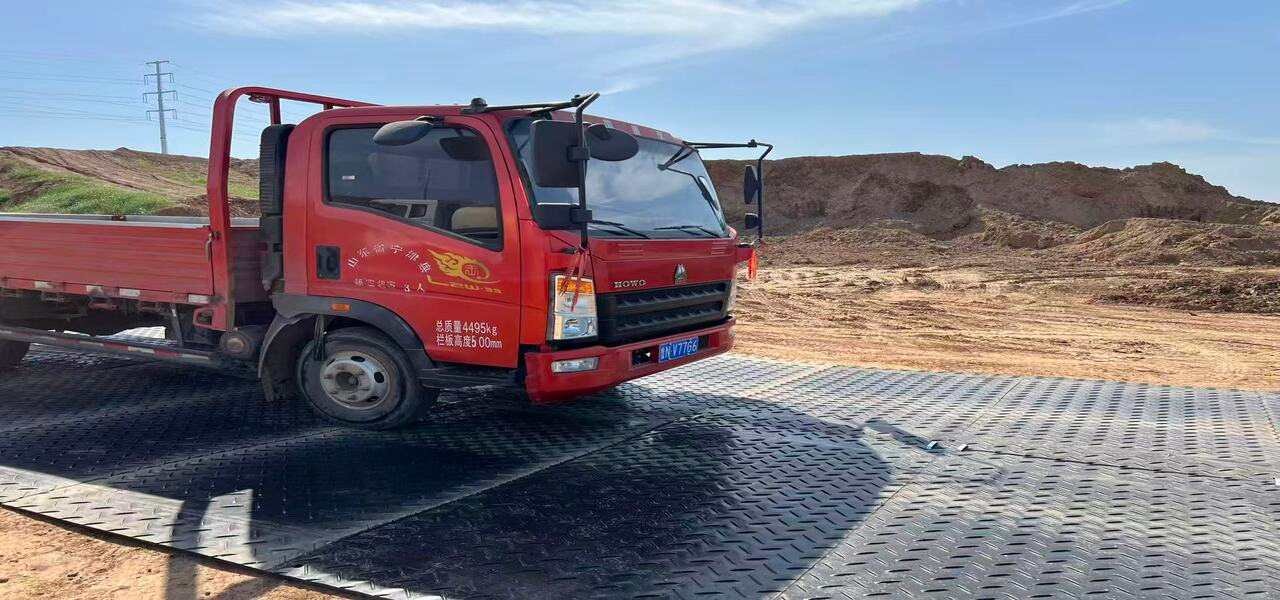
How to Pick the Best Ground Protection Mats for Your Site
You do not need the most expensive ground protection mats. You need mats that fit your ground, your traffic, your crew, and the way you plan to use them again.
The right mat can help you open a muddy access route, protect grass, reduce rutting, and avoid repair work after the job. The wrong mat may still look fine in a product photo, but it can shift, crack, sink, or slow your crew down when the site gets difficult.
I have seen this problem many times in project discussions. Someone starts by asking for “standard 4x8 mats,” but the real issue is not the size. The real issue is what will happen on the ground after the first truck, skid steer, or event cart starts moving.
Start with the Problem You Need the Mat to Solve
Before you compare prices, define the job.
Are you protecting a lawn from light vehicles? Are you building a temporary road across mud? Are you moving forklifts, skid steers, boom lifts, trucks, or tractors? Are you creating a public walkway, a loading route, or a rental mat fleet?
Each situation needs a different kind of mat decision.
A walkway for event guests does not need the same structure as a construction access route. A mat for one short landscaping job is different from a mat you plan to rent out many times.
This is where I would slow down before quoting. If you only ask for a size, you may get a size. But if you explain the work, you get a better mat specification.
For BKM, the first question is simple: what must the mat protect, and what must pass over it?
Do Not Let “Standard Size” Mislead You
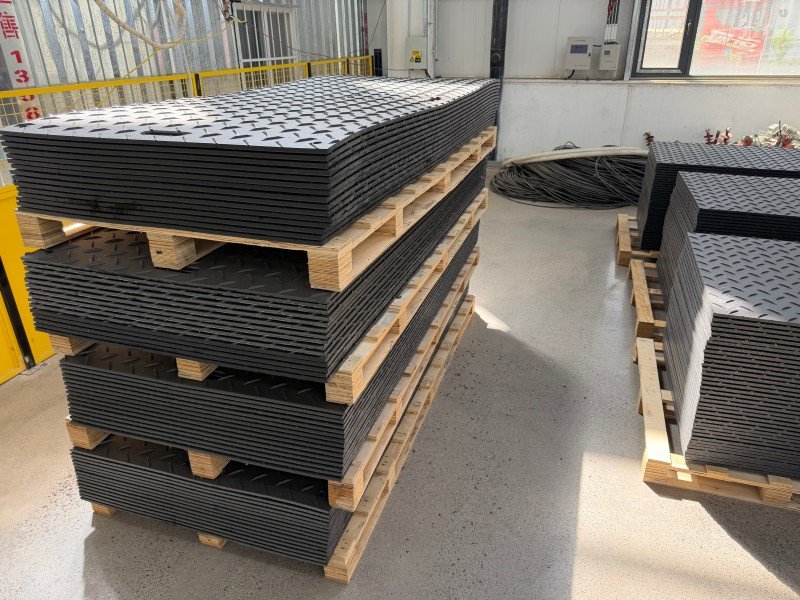
A 4 ft × 8 ft mat is common for a good reason. It covers a useful area, fits temporary road layouts, and can still be handled by a small crew in many cases.
But the same size does not mean the same product.
One 4 ft × 8 ft mat may be light, thin, and suitable for pedestrian or light-duty use. Another may be thicker, heavier, textured on both sides, and made for repeated vehicle access.
I often see price comparisons go wrong here. The cheaper quote looks attractive because the length and width are the same. Then you check the weight, thickness, surface pattern, material, and connector holes, and the products are not really the same.
The mat size tells you coverage. It does not tell you strength, traction, handling efficiency, or service life.
If your route is light, dry, flat, and short, a lighter mat may be enough. If your route includes mud, repeated vehicle traffic, turning, or rental use, the mat structure matters much more.
Read the Ground Before You Read the Load Rating
Ground condition is one of the biggest reasons mats perform differently.
Firm grass, wet clay, loose sand, compacted gravel, and saturated soil all react differently under the same mat. A product that works well on firm turf may need a wider layout or heavier specification on wet clay.
This is why I do not like choosing mats only by load rating. A load rating is useful, but it does not replace site judgment.
A loaded vehicle driving straight across firm grass is not the same as the same vehicle turning on wet soil. The second situation creates more movement, more side force, and more risk around edges and joints.
Walk the route before you order if possible. Look for entrances, corners, slopes, low spots, soft sections, and loading areas.
Those are usually the places that fail first.
If the ground is hollow, deeply waterlogged, or unsupported, a normal ground protection mat should not be treated like a bridge. You may need more preparation, a wider mat layout, or a different support plan.
Match the Mat to the Real Traffic
The next question is what will actually pass over the mats.
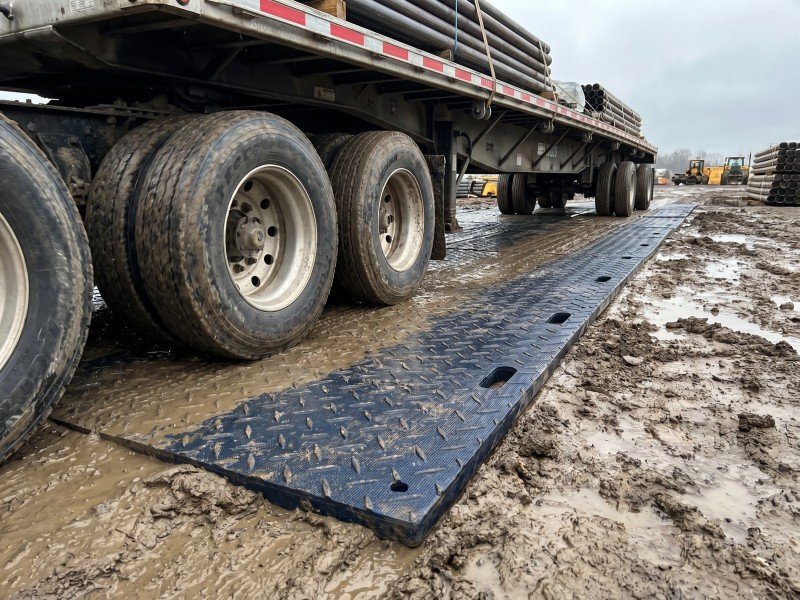
Pedestrians, carts, pickup trucks, forklifts, skid steers, tractors, boom lifts, and loaded trucks all create different pressure. Even the same vehicle behaves differently when it drives straight, turns, brakes, or stops with a load.
For light vehicles and pedestrian routes, you may not need the heaviest mat. A lighter mat can be faster to install, easier to remove, and better for temporary event or lawn protection.
For repeated construction traffic, forklifts, trucks, or muddy access routes, you should think more seriously about thickness, traction, connectors, and route width.
For concentrated point loads, such as crane outriggers or stabilizer legs, do not rely on a normal ground mat alone. A rolling tire load and a small outrigger footprint are different problems.
This is one of the most common mistakes I see. The mat is chosen for vehicle movement, then someone expects it to solve a concentrated support problem. That is when you need dedicated outrigger pads or an engineered load-spreading plan.
Choose Material by Reuse, Weather, and Handling
Most professional ground protection mats are made from HDPE, or high-density polyethylene. BKM uses HDPE because it offers a practical balance of toughness, moisture resistance, impact resistance, and manageable weight.
For outdoor use, that balance matters. The mat may face mud, rain, gravel, grass, pressure washing, stacking, transport, and repeated loading.
Plywood can still work for a very light, short, dry job. But when the job becomes wet or repeated, plywood often shows its limits.
It can absorb water, warp, split, rot, splinter, and become slippery. Once it fails, it usually becomes waste.
HDPE mats are different. They are designed to be installed, removed, cleaned, stacked, transported, and reused.
If you are buying for one emergency job, first price may matter most. If you are buying for regular work, rental supply, landscaping routes, or event access, cost per use becomes more important than the cheapest unit price.
Composite mats may be useful for heavier or more specialized access work. Steel plates may be necessary for trench coverage or structural bridging.
But for many construction, landscaping, event, farm, and rental applications, HDPE gives a practical balance between performance and handling.
Select Size and Thickness Together
Size and thickness should not be chosen separately.
A larger mat gives more coverage. A thicker mat can offer more support. But both also affect cost, shipping, handling, storage, and installation labor.
Common sizes include 4 ft × 8 ft, 3 ft × 8 ft, and 2 ft × 8 ft. The 4 ft × 8 ft size works well for temporary roads and wide coverage.
Smaller sizes are useful for narrow gates, gardens, side yards, pedestrian routes, and places where your crew needs more control during installation.
Thickness depends on load, ground condition, and reuse plan. Lighter mats may work for turf protection, pedestrian use, and short-term light access. Heavier mats are usually better for machinery, trucks, and repeated construction traffic.
I would not choose thickness by habit. I would choose it by the job.
If your crew installs and removes mats every week, weight matters. A mat that is strong but too difficult to handle can increase labor cost.
If you rent mats out, stacking, cleaning, loading, and return handling also matter. A rental mat must make sense after the third, tenth, and fiftieth use.
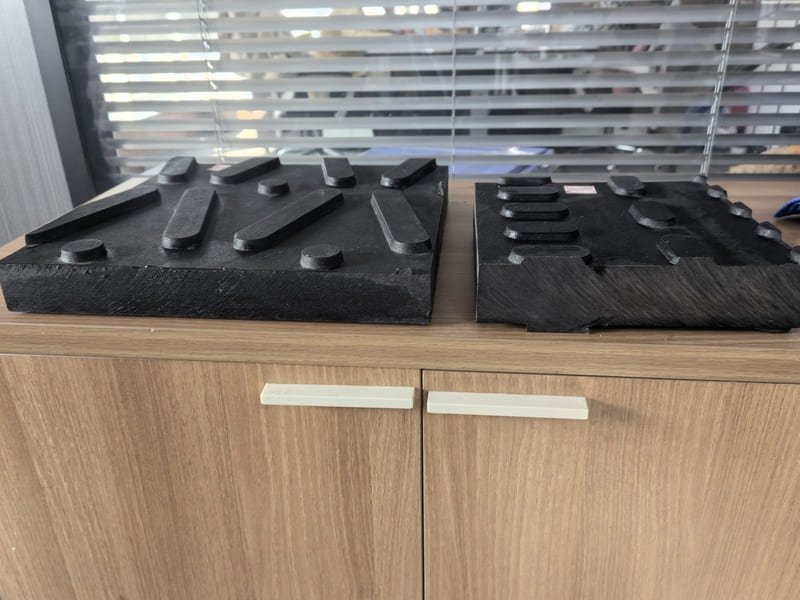
Choose the Surface Pattern for the Main Use
Surface pattern affects traction, walking comfort, cleaning, and turf impact.
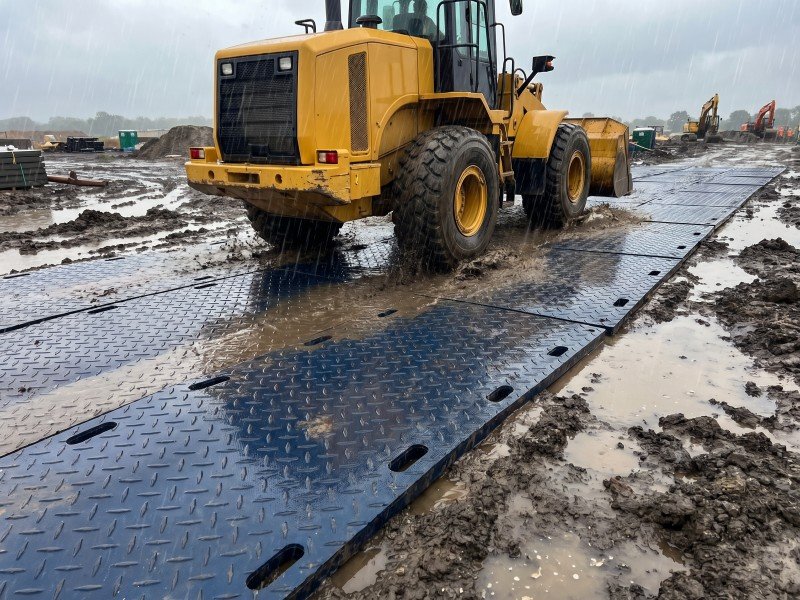
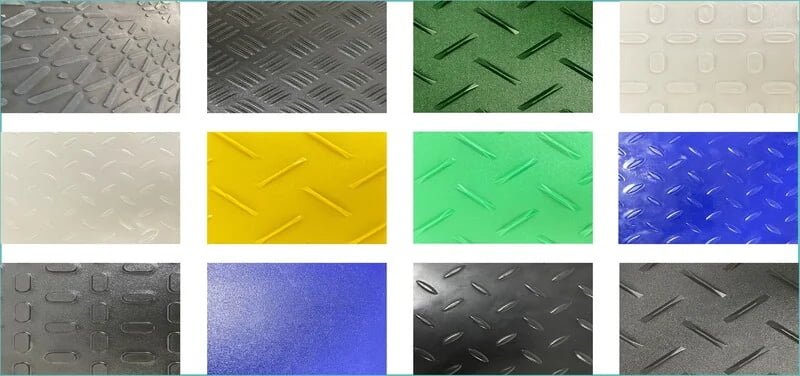
For vehicle access, you usually need a raised traction pattern. Diamond tread, cleat tread, or aggressive grip profiles can help tires and tracks get better contact in wet or muddy conditions.
For pedestrian routes, event walkways, or public access, a lower-profile texture may be better. People need a surface that feels stable and does not create unnecessary walking discomfort.
Some mats are dual-sided. One side may provide stronger traction for vehicles, while the other side may be better for walking or delicate surfaces.
This can be useful if you serve different project types. It also gives more flexibility for rental use.
Do not choose the roughest surface just because it looks stronger. Deep patterns can hold more mud and take longer to clean.
For rental businesses, cleaning time affects profit. A practical surface should provide enough grip without creating unnecessary maintenance work.
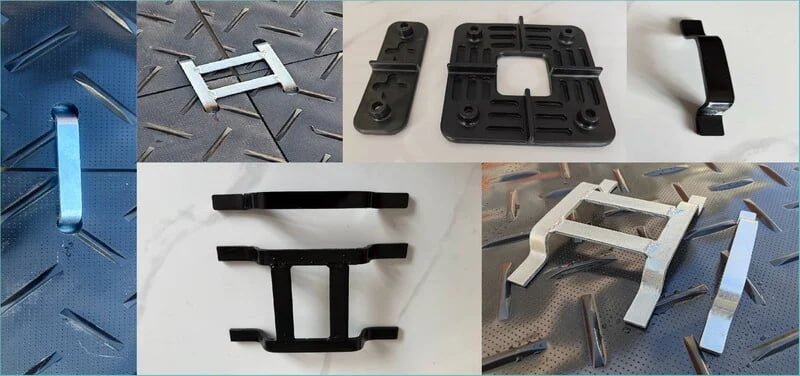
Do Not Ignore Connectors
Connectors are easy to overlook when you focus on mat price.
But if vehicles are involved, connectors can decide whether your mat route works like a system or like loose panels.
Loose mats can shift under turning wheels, repeated traffic, slopes, or muddy conditions. Gaps can open between panels. Edges can lift. The route can become uneven.
Two-way connectors can join mats in a line. Four-way connectors can hold four mat corners together in a wider pad or parking layout.
If you are building a straight temporary road, connectors help maintain alignment. If you are building a work platform, parking area, or turning zone, connectors become even more important.
BKM provides connector systems for mat layouts. This is one part I would plan with the mat order, not after the mats arrive.
Other site tools, such as pulling hooks, racks, straps, ramps, anchors, and underlayment, can be sourced locally when your project needs them. But the connector plan should be discussed with the mat specification.
Think About Installation and Removal Labor
A mat can look good in a catalog and still be inefficient on site.
Ask how your crew will carry it. Ask whether it has usable hand holes. Ask whether two workers can move it safely. Ask whether the mats stack well after muddy use.
If you are a contractor, fast installation helps open access sooner. If you manage events, fast removal helps clear the venue on time.
If you rent mats out, handling efficiency affects every delivery and pickup.
This is why BKM does not recommend choosing only by load rating. A mat must work for the vehicle, but it must also work for the people who move it.
The best mat is strong enough for the job and practical enough for daily handling.
Compare Cost Per Use, Not Only Unit Price
A low unit price can be tempting. But the cheapest mat is not always the lowest-cost mat.
If the mat cracks early, shifts often, takes longer to clean, or needs frequent replacement, the real cost becomes higher.
If plywood needs to be replaced after several wet jobs, its cost per use can rise quickly.
If connectors are not planned, you may spend more later or use the mats in a way that increases movement and site risk.
For regular use, compare cost per use. Ask how many jobs the mats can support. Ask how much labor they save. Ask how much repair work they may help avoid.
For rental use, this becomes even more important. Revenue comes from repeated use, so the mat must survive transport, cleaning, stacking, and return cycles.
A strong purchase decision is not only about what you pay today. It is about what the mats cost after many jobs.
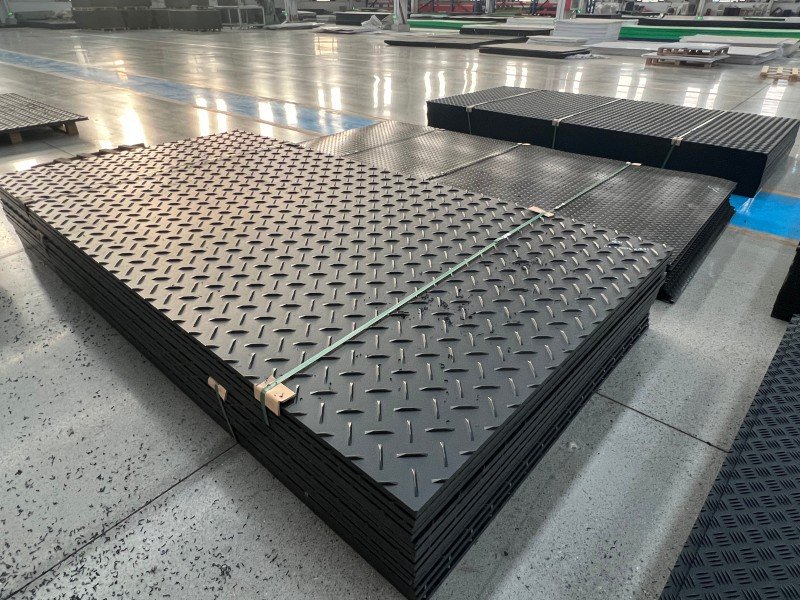
Match the Mat to the Application
Different applications need different priorities.
| Application | What You Should Focus On |
|---|---|
| Construction access | Thickness, traction, connectors, route width, and mud control |
| Landscaping work | Lawn protection, manageable weight, clean removal, and easy handling |
| Outdoor events | Walking comfort, turf protection, appearance, route width, and fast cleanup |
| Temporary parking | Wider coverage, turning zones, connectors, and ground condition |
| Utility or farm access | Wet ground performance, repeated traffic, and route planning |
| Rental business | Durability, cleaning, stacking, labeling, packaging, and spare connectors |
This table is not a fixed rule. It is a decision starting point.
If your project mixes several uses, separate the zones. A pedestrian walkway, truck route, loading area, and parking turn may not need the same mat layout.
That is how I would think through the site before recommending one product.
Mistakes That Make a Good Mat Perform Poorly
One common mistake is buying by the highest load rating. The number looks strong, but the ground and traffic pattern may not match the test condition.
Another mistake is making the route too narrow. Vehicles need room to steer, correct direction, and turn without falling off the mat edge.
A third mistake is ignoring connectors. Unconnected mats may work for light pedestrian use, but vehicle routes usually need better stability.
Another mistake is choosing the wrong surface. A vehicle cleat may not be ideal for public walkways, and a smooth surface may not be enough for muddy truck access.
You should also avoid buying only by price. Ground protection mats are not just plastic sheets. They are part of your site access plan.
How BKM Helps You Choose More Accurately
When you ask BKM how to pick the best ground protection mats, we normally do not start by asking how many pieces you want.
We first ask what problem you need to solve.
If your main problem is lawn damage, we look at weight, surface texture, and removal timing. If your main problem is muddy truck access, we look at traction, thickness, connectors, and layout.
If your main problem is rental use, we look at durability, cleaning, stacking, packaging, and repeat handling. If your main problem is heavy equipment, we check vehicle weight, ground condition, turning behavior, and whether other load-spreading products are needed.
BKM can support common sizes, custom dimensions, surface options, colors, hand holes, connector holes, logo marking, private-label needs, and export packaging.
The goal is not to make every order heavier or more expensive. The goal is to make the mat fit the work.
FAQ
What is the best material for ground protection mats?
HDPE is one of the most practical materials for many outdoor access jobs because it is tough, moisture-resistant, reusable, and easier to handle than steel. Composite mats may be considered for heavier or more specialized applications.
What size ground protection mats should I choose?
4 ft × 8 ft mats are common for temporary roads and wide coverage. 3 ft × 8 ft or 2 ft × 8 ft mats may be better for narrow access, gardens, side yards, or smaller routes.
How thick should ground protection mats be?
For light turf protection and event use, thinner mats may be enough. For trucks, machinery, muddy access, and repeated construction use, thicker heavy-duty mats are usually more suitable.
Are heavier mats always better?
No. Heavier mats may support tougher conditions, but they also increase handling labor and shipping weight. The right mat should balance strength, weight, installation speed, and transport cost.
Do I need connectors?
For vehicle traffic, repeated use, turning areas, slopes, or muddy conditions, connectors are strongly recommended. They help mats stay aligned and reduce movement.
Can I use plywood instead of ground protection mats?
For light one-time use, plywood may work. For repeated outdoor use, HDPE ground protection mats are usually more durable, reusable, and moisture-resistant.
How do I choose mats for a rental business?
Choose mats that are durable, easy to clean, easy to stack, practical to carry, and suitable for several applications. Cost per use matters more than the lowest purchase price.
Can ground protection mats handle heavy equipment?
Yes, if the mat is selected correctly and the ground condition is suitable. For heavy equipment, check vehicle weight, axle load, tire pressure, turning areas, mat thickness, connectors, and whether additional load-spreading products are needed.
Conclusion
To pick the best ground protection mats, do not start with the cheapest price or the highest load rating. Start with the job.
Check the ground condition, traffic type, vehicle load, route layout, surface requirement, installation labor, connector needs, and reuse plan.
For many professional uses, HDPE ground protection mats provide a strong balance of durability, moisture resistance, handling efficiency, and reusability.
But final performance still depends on proper selection and proper layout.
If you need temporary road mats, turf protection mats, construction ground mats, heavy-duty ground protection mats, or rental-grade HDPE mats, treat them as part of your site access system.
A well-chosen mat helps protect the ground, reduce delays, control access, and lower long-term operating cost.