
 English
 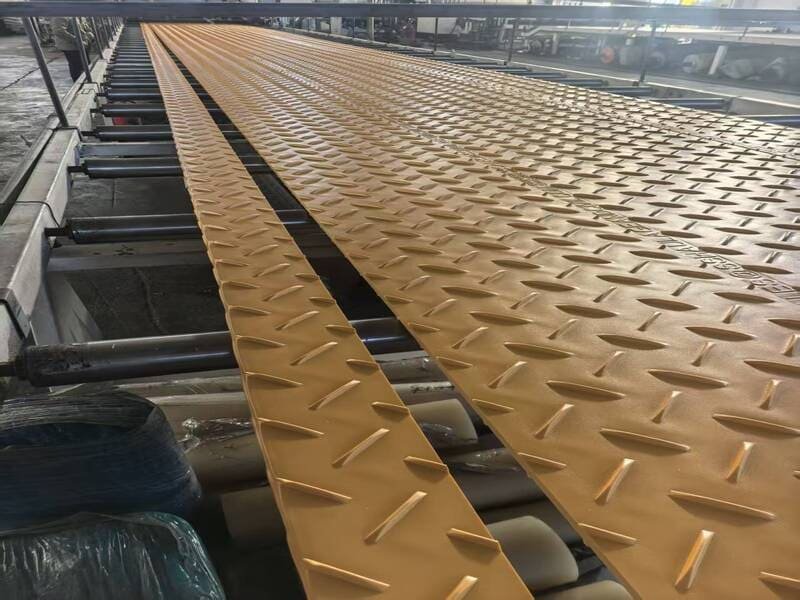 Choosing between HDPE and UHMWPE ground protection mats is not just a material question. It is a cost, traffic, handling, and risk question.
A mat that looks “stronger” on paper may be too expensive for normal site access. A cheaper mat may be enough for one job but not reliable for repeated rental use, cold weather, turning vehicles, or high-wear industrial routes.
I think the real decision is not about choosing the “better plastic.” It is about choosing the material that can take the abuse your job will give it—and deciding whether paying more now helps you avoid paying again later.
This article will help you understand the practical difference between HDPE and UHMWPE ground protection mats, where each material makes sense, and how to avoid paying for performance you do not really need.
HDPE and UHMWPE Are Related, But Not the Same
HDPE and UHMWPE both belong to the polyethylene family. They are both engineering plastics with good moisture resistance, chemical resistance, and outdoor usefulness.
The difference is mainly in molecular structure.
HDPE has a high-density polyethylene structure that gives it a practical balance of strength, stiffness, toughness, weight, and cost. It is widely used because it offers a strong performance-to-price ratio for many outdoor and industrial applications.1
UHMWPE has much longer molecular chains. Those long chains give it exceptional wear resistance, impact resistance, and low-friction behavior. It is often used in demanding wear parts, liners, sliding components, and high-performance engineering applications.2
For ground protection mats, this difference matters. But it does not mean UHMWPE is automatically the better choice for every job.
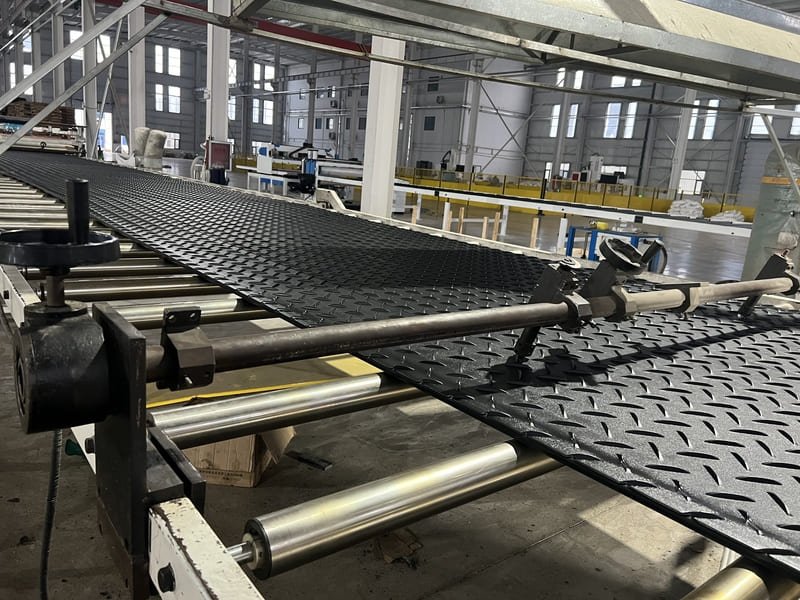
Quick Comparison: HDPE vs UHMWPE Ground Protection Mats
| Factor | HDPE Ground Protection Mats | UHMWPE Ground Protection Mats | Practical Meaning |
|---|---|---|---|
| Material cost | Lower | Much higher | HDPE is usually better for large mat fleets |
| Handling | Easier for most crews | Can be heavier or more specialized | HDPE is practical for frequent installation |
| Impact resistance | Good | Excellent | UHMWPE helps in severe impact or cold conditions |
| Wear resistance | Good | Excellent | UHMWPE is better for high-abrasion industrial use |
| Friction behavior | Higher than UHMWPE | Very low friction | UHMWPE may need careful surface design for traction |
| Typical ground mat use | Common and practical | Specialized | HDPE fits most temporary access work |
| Rental fleet value | Strong cost-performance | Useful only if premium performance is needed | Depends on use count and failure cost |
| Processing and cost control | Easier | More difficult and expensive | UHMWPE usually needs a stronger reason |
| Best fit | Construction, landscaping, events, temporary roads | High-wear, heavy-duty, cold impact, special industrial routes | Choose by site risk, not material name |
For most temporary access projects, HDPE gives the better balance. For very demanding wear, impact, or industrial conditions, UHMWPE may be worth considering.
What HDPE Ground Protection Mats Do Well
HDPE ground protection mats are the common choice for many construction, landscaping, event, utility, farm, and temporary road applications.
The reason is simple: HDPE gives useful strength without making the mat unnecessarily expensive.
HDPE is known for its strength-to-density ratio, and typical HDPE density is commonly around 0.93–0.97 g/cm³ depending on the grade and formulation.3
For jobsite use, that means HDPE mats can be designed to:
- spread vehicle load over soft ground
- reduce rutting on grass or mud
- create temporary access routes
- protect finished surfaces from direct tire pressure
- resist water and many chemicals
- clean more easily than plywood
- support repeated handling and storage
- remain cost-effective for large mat quantities
This is why HDPE is usually the first material I would consider for standard ground protection mats.
If your project involves temporary access, landscaping machinery, event flooring, light to medium construction vehicles, utility access, or rental mat fleets, HDPE usually gives the best practical balance.

Where HDPE Has Limits
HDPE is strong and practical, but it is not magic.
It still needs the right thickness, surface texture, connector design, ground support, and layout.
HDPE mats can fail or underperform if they are used in the wrong conditions, such as:
- extremely soft or unsupported ground
- repeated sharp turning in one area
- heavy point loads
- deep mud without enough mat coverage
- crane outriggers without proper outrigger pads
- cold impact beyond the mat design
- equipment that exceeds the intended application
- poor installation with loose panels or exposed edges
This is where many buying mistakes happen.
A mat is not only a material. It is a system: material, thickness, texture, connector holes, route width, ground condition, and operator behavior.
If the ground underneath cannot support the load, neither HDPE nor UHMWPE should be treated as a bridge.
What UHMWPE Ground Protection Mats Do Well
UHMWPE is a higher-performance polyethylene material. Its extremely long molecular chains give it strong wear resistance, excellent toughness, and very low friction behavior.4
In industrial applications, UHMWPE is often chosen where sliding, abrasion, impact, and repeated mechanical contact are major problems.
For ground protection mats, UHMWPE can be valuable when the site creates more severe stress than normal temporary access.
UHMWPE may be worth considering when you need:
- very high wear resistance
- repeated heavy-duty access
- strong impact resistance
- better cold-weather toughness
- high-abrasion ground conditions
- industrial working pads
- heavy equipment routes with frequent use
- special mats for harsh environments
- longer service life where failure is expensive
If your mats are dragged, loaded, cleaned, stacked, transported, and reused aggressively, UHMWPE can provide extra durability.
But that extra durability only matters if the job actually uses it.
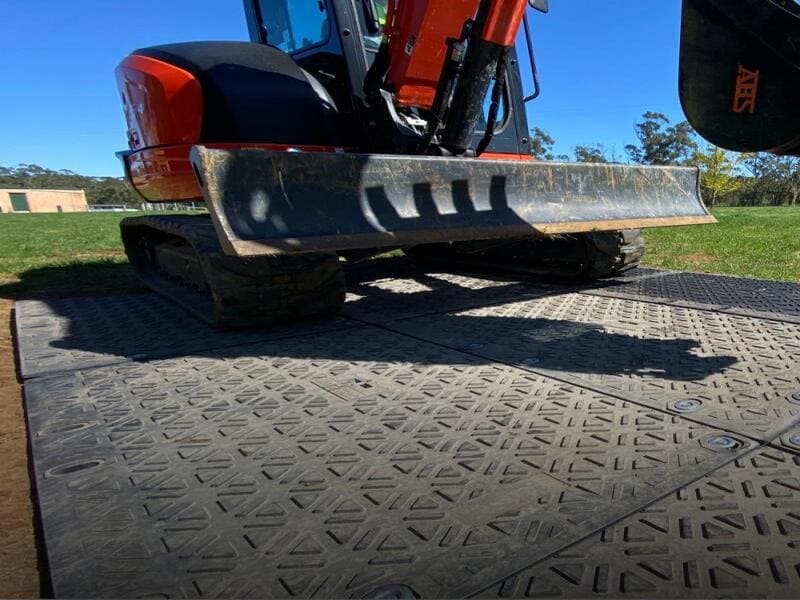
UHMWPE Is Not Always Better for Ground Mats
This is important.
UHMWPE has excellent properties, but it is not automatically the best material for every ground protection mat.
First, it costs more. If you need many mats for temporary access, the price difference can become large.
Second, UHMWPE has low friction. That is useful for wear strips, liners, sliding plates, and some industrial components, but a ground mat still needs surface traction. Tires, tracks, boots, and carts need grip.
So if UHMWPE is used for ground protection, the surface design becomes especially important. You still need a proper tread pattern, connector system, and layout.
Third, UHMWPE processing is more specialized. That can affect production cost, thickness control, design options, and lead time.
For many real jobsite applications, HDPE is not the “weaker choice.” It is the more practical choice.
Application Guide: Which Material Fits Your Job?
| Project Situation | Better Material Direction | Reason |
|---|---|---|
| General construction access | HDPE | Strong enough and cost-effective |
| Landscaping and lawn protection | HDPE | Easier handling and good surface protection |
| Temporary event access | HDPE | Good balance of cost, coverage, and reuse |
| Rental fleet for mixed users | HDPE or premium HDPE | Better cost per mat and easier scaling |
| Heavy repeated industrial route | UHMWPE may be considered | Extra wear resistance may pay off |
| Cold-weather impact risk | UHMWPE may be considered | Better toughness can reduce risk |
| High-abrasion work area | UHMWPE may be considered | Stronger wear resistance |
| Large temporary road quantity | HDPE | Better budget control |
| Crane outrigger point loads | Neither alone | Use outrigger pads or engineered support |
| Long-term sliding or wear surface | UHMWPE | Low friction and wear resistance matter |
| Standard muddy access road | HDPE | Usually enough when layout is correct |
| Premium high-risk project | HDPE or UHMWPE depending on load | Choose by failure cost and use frequency |
The material should follow the job, not the other way around.
If the job is normal temporary access, HDPE is usually the smarter buy. If the job is high-wear, high-impact, or very demanding, UHMWPE may be worth the premium.
Cost Per Use Matters More Than First Price
Do not compare HDPE and UHMWPE only by purchase price.
Compare them by cost per use.
| Material Option | Example Purchase Price | Reliable Uses | Basic Cost Per Use |
|---|---|---|---|
| HDPE mat | $180 | 60 uses | $3.00 |
| Premium HDPE mat | $240 | 100 uses | $2.40 |
| UHMWPE mat | $420 | 150 uses | $2.80 |
These numbers are only examples. Your actual cost and use count may be different.
The point is simple: a more expensive mat is not always more expensive if it lasts much longer. But a premium material is also not automatically better if your job will never use that extra performance.
I would look at three things:
- How often will the mats be reused?
- What happens if one mat fails?
- Is the job severe enough to justify a higher material cost?
If the mat is for one short project, HDPE usually makes more sense.
If the mat is for repeated harsh use where failure creates real cost, UHMWPE becomes easier to justify.
Load Capacity Is Not Only About Material
Many people ask whether UHMWPE can carry more load than HDPE.
The answer is not as simple as material name.
Load performance depends on:
- mat thickness
- mat size
- rib or solid design
- surface texture
- ground condition
- soil moisture
- tire size
- track width
- machine weight
- turning movement
- connector layout
- temperature
- unsupported gaps under the mat
A well-designed HDPE mat on stable ground may perform better than a poorly designed UHMWPE mat on weak ground.
The material matters, but the whole mat system matters more.
For soft ground, the layout often decides the result. Wider coverage, connected panels, reduced turning, and better route planning may improve performance more than simply switching to a more expensive material.
Wear Resistance: When UHMWPE Has the Advantage
UHMWPE has a clear advantage in wear resistance.
If the mat surface is exposed to heavy abrasion, repeated sliding, sharp aggregate, dragged equipment, or industrial friction, UHMWPE can last longer than HDPE.
This is why UHMWPE is common in wear-related applications and has been studied widely for its low-wear behavior in demanding mechanical environments.5
For normal ground protection, however, wear may not be the main failure point.
Many mat problems come from poor route layout, weak ground, sharp turns, connector stress, or wrong thickness.
If your site mainly needs a temporary road over mud or grass, HDPE may already be enough.
If your site destroys mats through abrasion and repeated industrial contact, UHMWPE deserves a closer look.
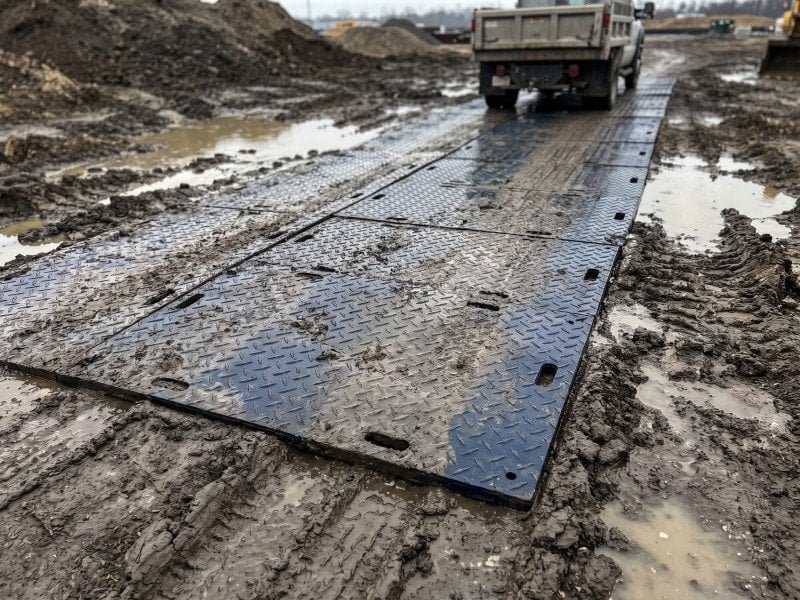
Cold Weather and Impact Resistance
Cold weather changes the decision.
Plastic materials can become less forgiving at lower temperatures. When mats are dropped, dragged, loaded, or driven over in cold conditions, impact behavior becomes more important.
UHMWPE is often chosen where impact resistance and toughness are critical. That can be useful for harsh winter work, cold industrial sites, utility routes, or repeated rental use in northern climates.
HDPE can also work well in cold environments when the grade, thickness, and design are appropriate.
The safer decision depends on how the mats will be used. A mat that only sits in place has a different risk from a mat that is dragged, dropped, and driven over repeatedly in freezing conditions.
For cold-weather rental fleets, I would be more careful with material consistency, impact resistance, and connector-hole durability.
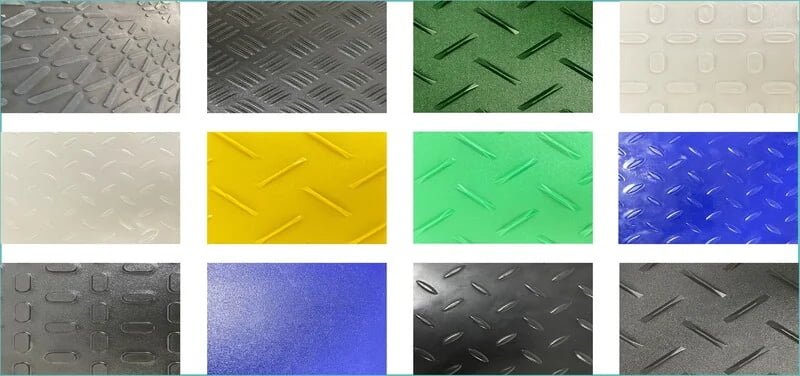
Surface Texture Still Matters
A ground mat needs traction.
This is true whether it is made from HDPE or UHMWPE.
A smooth plastic sheet may be easy to clean, but it may not be suitable for vehicles, wet grass, mud, or pedestrian routes.
The surface pattern should match the use:
| Surface Need | Practical Texture Direction |
|---|---|
| Vehicle route | Raised traction pattern |
| Pedestrian walkway | Lower-profile anti-slip texture |
| Mixed carts and foot traffic | Medium texture |
| Muddy access | More aggressive tread |
| Finished concrete or pavers | Controlled texture and clean underside |
| Turf protection | Texture that reduces slipping without tearing grass |
Do not choose only by material.
A good HDPE mat with the right tread pattern may be safer and more useful than a UHMWPE sheet with the wrong surface.
Handling and Installation
HDPE mats are usually easier to justify when crews need fast installation and removal.
For landscaping, events, and general construction access, handling matters. Mats are lifted, carried, dragged into place, connected, washed, stacked, and loaded again.
If the material is too expensive or too specialized, it may not fit the daily work model.
For many BKM customers, the practical questions are:
- Can two workers move it?
- Does it have hand holes?
- Can it be connected?
- Can it be cleaned quickly?
- Can it be stacked easily?
- Can it be reused across many job types?
- Is the cost reasonable for the number of mats needed?
HDPE usually answers these questions well.
UHMWPE is better when performance demands are high enough to justify the extra cost.
BKM Practical Recommendation
For most ground protection mat projects, BKM usually recommends HDPE first.
HDPE is practical for temporary roads, construction access, landscaping, events, utilities, farms, rental use, and general equipment routes.
It gives a strong balance of cost, durability, moisture resistance, handling, customization, and repeat use.
UHMWPE should be considered when the job has special demands: severe abrasion, heavy repeated industrial use, cold impact, extreme wear, or long service life where replacement is expensive.
The goal is not to choose the most expensive plastic. The goal is to choose the mat that protects the ground, fits the traffic, and keeps your project cost under control.
BKM can support HDPE and UHMWPE engineering plastic solutions, including mat size selection, surface texture options, hand holes, connector holes, custom dimensions, color options, logo marking, private-label needs, and export packaging.
BKM also provides connector systems for ground protection mat layouts. Other site accessories, such as ramps, hooks, storage racks, anchors, straps, or underlayment, can be prepared locally according to project needs.
FAQ
Is UHMWPE stronger than HDPE?
UHMWPE usually has better impact resistance and wear resistance than HDPE. But ground mat performance depends on more than material name. Thickness, design, surface texture, ground condition, and layout also matter.
Is HDPE good enough for ground protection mats?
Yes. HDPE is usually the best practical choice for general ground protection, temporary roads, landscaping access, construction sites, events, farms, and rental fleets.
When should I choose UHMWPE instead of HDPE?
Choose UHMWPE when the application involves severe abrasion, repeated heavy-duty use, cold impact risk, industrial wear, or long service life where failure is expensive.
Are UHMWPE mats always better than HDPE mats?
No. UHMWPE has stronger wear and impact properties, but it costs more and may not be necessary for normal temporary access. In many projects, HDPE offers better overall value.
Are UHMWPE mats slippery?
UHMWPE has low-friction behavior as a material. For ground mats, the surface texture must be designed properly so tires, boots, and carts can get enough grip.
Which material is better for rental mats?
HDPE is usually better for most rental fleets because it balances cost and durability. UHMWPE may be better for a premium rental fleet used in severe abrasion, cold weather, or heavy industrial conditions.
Which material is better for muddy construction access?
HDPE is usually enough when the mat thickness, layout, connectors, and ground conditions are suitable. UHMWPE may be considered if the route sees repeated heavy wear or severe abrasion.
Is UHMWPE worth the higher price?
It is worth it when the extra wear resistance, impact strength, or cold-weather performance reduces replacement cost or job risk. If the use is short-term or moderate, HDPE is usually the more economical choice.
Conclusion
HDPE and UHMWPE ground protection mats are both polyethylene-based solutions, but they are not used for the same reason.
HDPE is the practical choice for most temporary access and ground protection work. It is durable, cost-effective, easier to handle, and suitable for construction, landscaping, events, farms, utilities, and rental use.
UHMWPE is the premium material for more demanding conditions. It gives stronger wear resistance, impact resistance, and low-friction performance, but the higher cost should be justified by the job.
The best choice is not simply “HDPE or UHMWPE.”
The best choice depends on traffic load, ground condition, weather, wear level, reuse plan, connector stress, handling needs, and budget.
If you need reliable temporary access at a practical cost, HDPE ground protection mats are usually the right starting point.
If your mats face severe abrasion, cold impact, or repeated heavy-duty industrial use, UHMWPE may be worth the premium.
References
British Plastics Federation. “Polyethylene (High Density) HDPE.” https://www.bpf.co.uk/plastipedia/polymers/HDPE.aspx ↩
Hussain, M. et al. “Ultra-High-Molecular-Weight-Polyethylene (UHMWPE) as a Promising Polymer Material for Biomedical Applications.” *Polymers*, via PubMed Central. https://pmc.ncbi.nlm.nih.gov/articles/PMC7077409/ ↩
Plastics Europe. “Polyolefins.” https://plasticseurope.org/plastics-explained/a-large-family/polyolefins/ ↩
Bracco, P. and Oral, E. “Ultra-High Molecular Weight Polyethylene.” *Journal of Functional Biomaterials*, via PubMed Central. https://pmc.ncbi.nlm.nih.gov/articles/PMC5551834/ ↩
Sobieraj, M. C. and Rimnac, C. M. “Ultra High Molecular Weight Polyethylene: Mechanics, Morphology, and Clinical Behavior.” *Journal of the Mechanical Behavior of Biomedical Materials*, via PubMed Central. https://pmc.ncbi.nlm.nih.gov/articles/PMC3601552/ ↩


Comments
mike
Mar.5.2026good good
rose
Aug.5.2026good goodgood goodgood goodgood good