
 English
 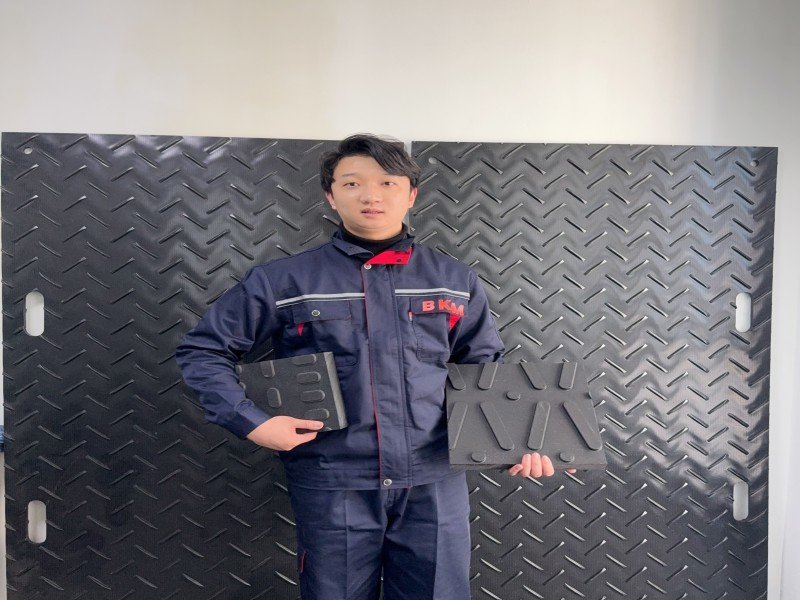 A mat that lasts one project is easy to judge. A mat that has to survive loading, mud, rain, cleaning, stacking, transport, and repeated reuse is a different story.
That is where the real difference between composite mats and traditional timber or bog mats begins.
A cheaper timber mat may look attractive at purchase. A premium hardwood bog mat may last for many years. A composite mat may cost more upfront but return to service faster after wet, muddy, repeated-use jobs.
This article will help you compare composite mats and timber or bog mats by real service life, wet-site performance, handling, maintenance, rental value, and cost per use—so you can choose the mat that gives better value over its working life.
Lifespan Depends on Use, Not Only Material Name
The actual lifespan of a mat is not decided by the material name alone.
It depends on:
- load level
- ground condition
- moisture exposure
- traffic frequency
- vehicle turning
- connector stress
- dragging and lifting method
- cleaning routine
- storage condition
- how often the mat is reused
For BKM project planning, a quality composite ground mat is usually treated as a long-term reusable asset when it is matched to the correct application and handled properly.
Traditional timber or bog mats have a wider lifespan range. A low-grade or hard-used timber mat may last only a few years. A premium hardwood bog mat can last much longer when the wood quality, construction, site condition, and storage method are good.
So the better comparison is not “composite vs wood” in general.
The better comparison is: which mat gives you the most predictable cost per use under your working conditions?
Practical Lifespan Planning Range
These are practical planning ranges, not fixed promises.
A badly used composite mat can fail early. A well-maintained hardwood bog mat can last many years.
| Mat Type | Practical Lifespan Range | How to Read It |
|---|---|---|
| Low-grade or hard-used timber mats | 1.5–3 years | Lower upfront cost, shorter working life |
| Standard timber mats | 3–5 years | General access use with limited reuse expectations |
| Better hardwood bog mats | 5–15 years | Heavy access and better durability when maintained |
| Premium hardwood bog mats | Decades possible | Strong timber quality, proper care, suitable heavy-duty use |
| Composite ground mats | 10–20 years | Repeated access, wet sites, rental use, easier cleaning, predictable handling |
The numbers are useful only when the application is realistic.
A composite mat used every week under heavy vehicle traffic will age faster than a composite mat used occasionally for light access.
A timber mat stored wet on the ground may deteriorate faster than one that is dried, stacked, and maintained properly.
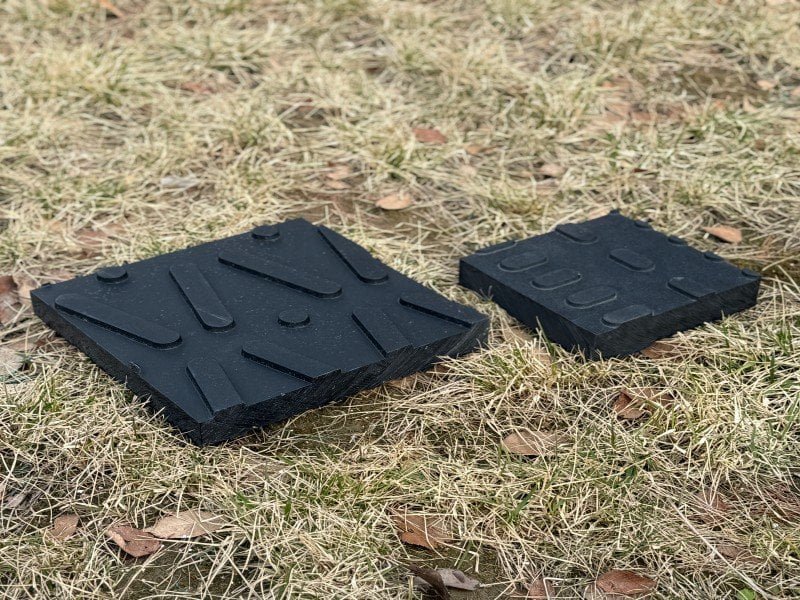
Why Composite Mats Often Have a More Predictable Service Life
Composite mats are usually selected when the job needs repeated, cleaner, and more predictable reuse.
Unlike timber, composite material does not rot like wood and does not absorb water in the same way. Plastic lumber and similar recycled plastic products are often valued for resistance to moisture, rot, and insect damage in outdoor applications.1
That matters because ground mats are not only used once.
In real work, mats are:
- delivered
- unloaded
- dragged or lifted
- driven over
- exposed to mud and rain
- cleaned
- stacked
- stored
- loaded again
- used on the next project
Composite mats usually perform well in this cycle because they are easier to wash, do not splinter like timber, and keep a more consistent weight after wet use.
For construction access roads, utility routes, event grounds, farm access, temporary parking, and rental projects, that predictability can be more valuable than the material name itself.
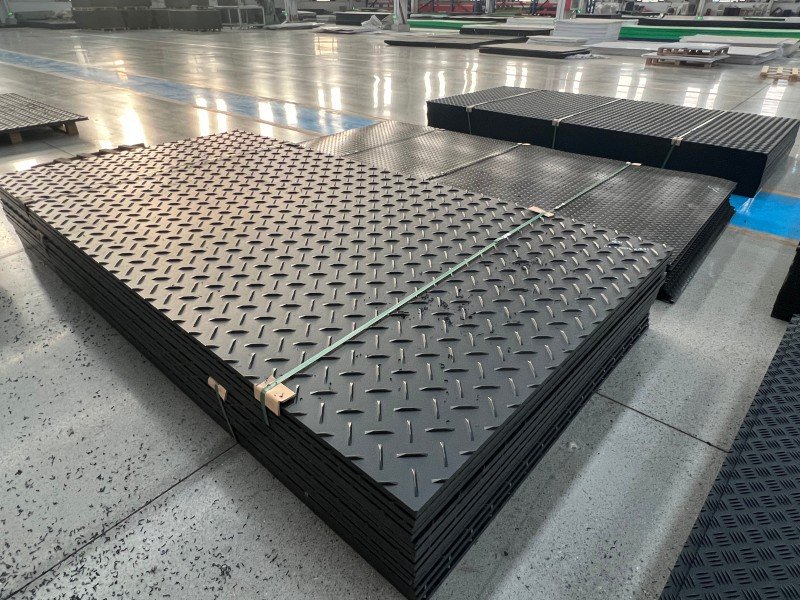
Why Timber and Bog Mats Have a Wider Lifespan Range
Traditional timber or bog mats should not be judged as one product category.
A low-grade timber mat and a premium hardwood bog mat are very different products.
Timber mat lifespan depends on:
- wood species
- hardwood or softwood
- mat thickness
- bolt or cable construction
- moisture exposure
- storage airflow
- mud and contamination
- handling damage
- whether the mat is dried between jobs
Moisture is one of the biggest reasons timber mats deteriorate. Wood decay is strongly connected to moisture conditions, and wood is much more vulnerable when moisture stays high for long periods.2
That is why timber mats may perform well on some jobs and poorly on others.
A hardwood bog mat used in the right heavy-duty application may last many years.
A low-grade timber mat left wet, dragged roughly, and stored poorly may not.
Composite vs Timber: Real-World Comparison
| Factor | Composite Mats | Timber / Bog Mats |
|---|---|---|
| Moisture resistance | Strong advantage | Depends heavily on drying and storage |
| Rot risk | No wood rot | Can rot if moisture is not controlled |
| Weight after wet use | More consistent | Can become heavier when wet |
| Cleaning | Easier to wash | Mud can hold in cracks and grain |
| Splinter risk | No wood splinters | Possible splinters and edge damage |
| Handling consistency | More predictable | Varies with moisture and damage |
| Heavy bearing mass | Depends on mat design | Strong advantage for thick hardwood bog mats |
| Rental fleet use | Strong advantage | Possible, but needs more inspection |
| Appearance after use | More consistent | Can look rough faster |
| Maintenance | Lower | Higher |
| Upfront cost | Usually higher than basic timber | Wide range |
| Long-term cost control | Often better in repeated use | Depends on mat quality and care |
Composite mats are not automatically better for every heavy-duty job.
Timber mats are not automatically short-life products.
The best choice depends on how the mat will actually be used.
Where Composite Mats Usually Perform Better
Composite mats usually make more sense when the job involves wet, muddy, repeated, or rental-style use.
They are often a better fit for:
- repeated construction access
- utility maintenance routes
- temporary parking
- event access
- landscaping access
- farm routes
- wet-site temporary roads
- rental fleets
- sites needing faster cleaning
- projects with frequent installation and removal
If the mats must be cleaned, inspected, stacked, and reused quickly, composite mats can reduce operating friction.
For one short job, this may not matter much.
For repeated work, it matters a lot.
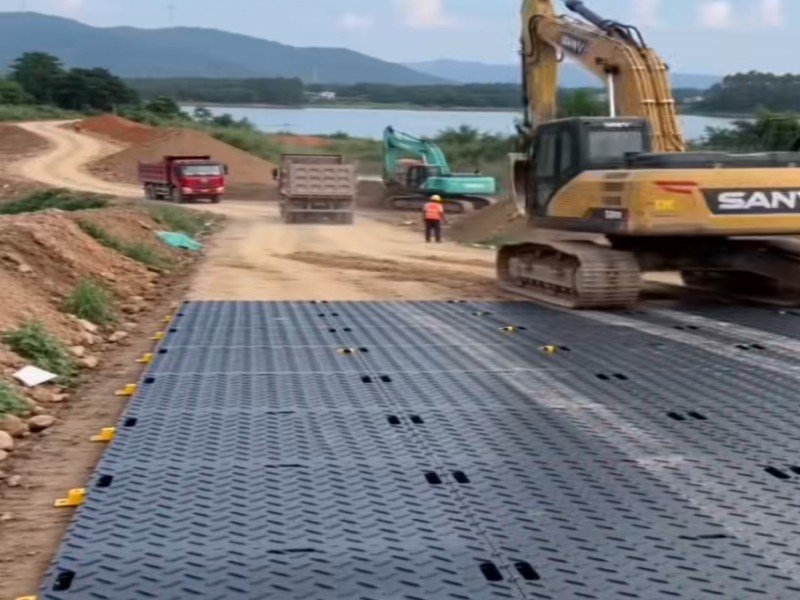
Where Timber or Bog Mats May Still Be Suitable
Composite mats are not the answer for every access job.
High-quality timber or hardwood bog mats may still be suitable when the project needs thick bearing structure, heavy mat mass, or traditional bog mat performance.
Timber mats may still make sense for:
- crane access roads
- pipeline work
- wetland access
- heavy tracked equipment
- very soft ground requiring thick bearing
- temporary roads where mat weight helps stability
- projects where hardwood bog mats are already standard
The important point is to compare the right products.
Do not compare a premium hardwood bog mat with a low-grade composite panel.
Do not compare a high-quality composite mat with a cheap timber mat and assume the difference is only material.
Compare load, ground condition, reuse frequency, cleaning time, storage, and cost per use.
What Shortens Composite Mat Life
Composite mats usually lose service life because of wrong application or poor handling.
Common causes include:
| Cause | What Happens |
|---|---|
| Overloading beyond intended duty | Cracking, bending, or permanent damage |
| Unsupported holes or voids under the mat | Mat can flex beyond design limit |
| Sharp steel, rebar, rock, or broken concrete under mat | Gouging or pressure damage |
| Heavy vehicles turning on narrow loose mats | Edge and connector-hole stress |
| Dragging across rough surfaces | Surface wear and edge damage |
| Rough forklift handling | Corner impact and bending damage |
| Poor stacking | Long-term deformation |
| Wrong mat for load type | Early failure |
Composite mats are durable, but they are still working equipment.
They should not be treated as disposable panels.
To extend service life:
- match the mat to the load
- prepare the ground
- remove sharp debris
- use connectors where needed
- widen turning areas
- avoid using mats over open voids
- clean before storage
- stack flat when possible
- avoid careless forklift impact
What Shortens Timber or Bog Mat Life
Timber mats usually lose service life through moisture, rot, splitting, hardware loosening, contamination, and rough handling.
Wood can decay when moisture stays high enough for fungal activity. One USDA Forest Service research summary notes that wood will decay above about 30% moisture content and will not decay below about 20% moisture content.2
That is why storage and drying matter.
Common causes of timber mat deterioration include:
| Cause | What Happens |
|---|---|
| Stored wet between projects | Higher decay risk |
| Poor airflow in storage | Slower drying and more rot risk |
| Mud and organic contamination | Holds moisture and accelerates deterioration |
| Rough dragging | Edge damage and splitting |
| Heavy impact | Internal cracks and broken boards |
| Loose bolts or hardware | Weaker mat structure |
| Saltwater or chemical exposure | Faster degradation |
| Lower-grade timber | Shorter working life |
A premium hardwood bog mat may last many years.
A low-grade timber mat in wet rough service may not.
Cost Per Use Matters More Than Lifespan Alone
A longer lifespan is useful, but it is not the only factor.
The more practical number is cost per use.
| Mat Type | Purchase Cost | Reliable Uses | Basic Cost Per Use |
|---|---|---|---|
| Low-cost timber mat | $300 | 30 uses | $10.00 |
| Standard timber mat | $500 | 70 uses | $7.14 |
| Composite mat | $900 | 180 uses | $5.00 |
| Premium hardwood bog mat | $1,200 | 200 uses | $6.00 |
These are example numbers only. Actual cost and use count vary by region, mat size, material, load, and handling.
The logic matters more than the sample price.
A mat that costs more at purchase may be cheaper over time if it lasts longer, cleans faster, needs fewer repairs, and returns to service more often.
A mat that costs less may be the better choice for one short project.
But for repeated access, the cheaper first price is not always the cheaper long-term cost.
Handling and Storage Change the Real Lifespan
A mat’s lifespan is not decided only while it is on the ground.
It is also decided during transport, loading, unloading, cleaning, stacking, and storage.
Composite mats are usually easier to wash and return to service. They do not absorb water like timber, so their handling weight is more predictable after wet use. They also avoid wood splinters, which makes handling cleaner for crews.
Timber mats can be heavier and more variable after wet use. They can hold moisture, mud, and contamination. If stored directly on wet ground or stacked without airflow, service life may drop.
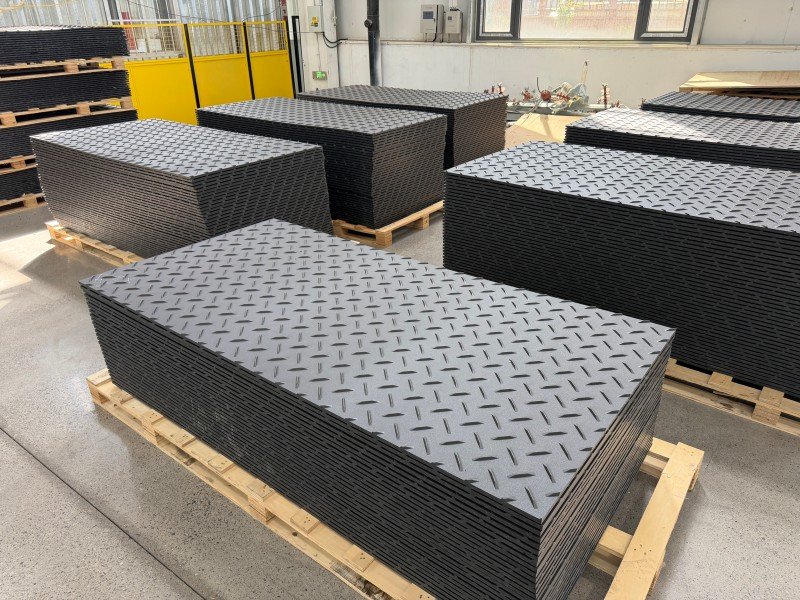
For repeated projects, this handling cycle matters.
The mat does not only need to survive the load. It also needs to move efficiently through the whole use cycle.
Which Mat Type Works Better for Rental Use?
For rental fleets, composite mats usually have a strong advantage.
Rental mats are handled harder than mats used by one crew. They are delivered, installed, removed, cleaned, inspected, stacked, and sent out again.
That repeated cycle puts stress on both the mat and your operation.
Composite mats help because they are:
- easier to clean
- easier to inspect
- more consistent in wet weight
- resistant to rot
- free from splintering
- more predictable across many jobs
- easier to present as a clean reusable asset
Timber mats can still be rented, especially for heavy-duty work, but they require closer inspection.
Check timber rental mats for:
- rot
- splitting
- loose hardware
- edge damage
- contamination
- moisture retention
- broken boards
- unsafe lifting points
If your rental work includes construction access, landscaping, events, utilities, and temporary roadways, composite mats can often support a wider range of jobs with less maintenance pressure.
Which Mat Type Works Better for Heavy Equipment?
Both composite mats and timber bog mats can be used for heavy equipment, but the right choice depends on load type and ground condition.
For very heavy tracked equipment, crane access, wetland access, or deep soft ground, thick hardwood bog mats may still be the better option.
Their mass, thickness, and timber structure can provide strong temporary bearing when used correctly.
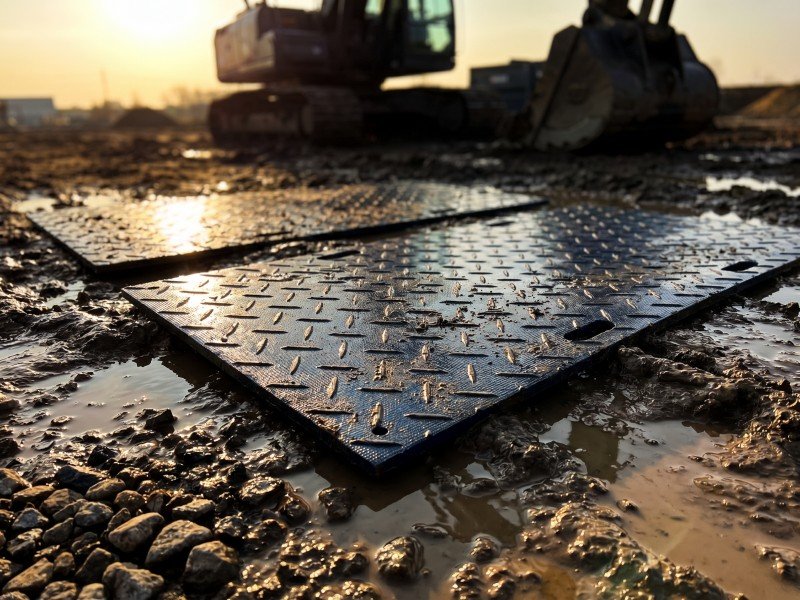
For wheeled vehicles, repeated access routes, temporary roads, event access, construction entrances, and rental use, composite mats may be more practical because they are easier to clean, easier to manage, and more consistent over time.
If the application involves crane outriggers or concentrated point loads, do not choose only by mat material.
Dedicated outrigger pads, engineered support, or a site-specific load plan may be needed.
Practical Selection Guide
| Your Main Need | Better Direction |
|---|---|
| Lowest initial cost for one short job | Timber may be enough |
| Repeated wet-site access | Composite mat |
| Rental fleet | Composite mat |
| Heavy crane access road | Premium hardwood bog mat or engineered system |
| Fast cleaning and reuse | Composite mat |
| Very soft wetland access | Hardwood bog mat may be suitable |
| Cleaner handling for crews | Composite mat |
| Long-term predictable reuse | Composite mat |
| Traditional heavy-duty bearing | Hardwood bog mat |
| High moisture exposure | Composite mat |
| Unknown storage conditions | Composite mat usually has lower risk |
| Tight long-term ROI control | Compare cost per use |
If your job is occasional and budget-sensitive, timber may be enough.
If your mats need to return to service again and again, composite usually becomes more attractive.
BKM Practical Recommendation
When you compare composite mats with timber or bog mats, start with your actual job.
If you need short-term access with a low initial budget, timber mats may be enough.
If you need heavy crane access, thick bearing, pipeline work, or traditional bog mat performance, high-quality hardwood bog mats may still be suitable.
If you need repeated wet-site access, rental use, easier cleaning, lower maintenance, and predictable service life, composite mats are usually the better long-term investment.
If you are comparing composite mats with low-grade timber or laminated mats, composite usually gives better lifespan, cleaning, and reuse value.
If you are comparing composite mats with premium hardwood bog mats, the decision should be based on load type, ground condition, handling equipment, maintenance capacity, storage condition, and total cost per use.
BKM can support composite and HDPE ground protection mat solutions for temporary access, construction routes, landscaping, events, utilities, farms, and rental applications.
BKM can also support custom mat size, surface texture, hand holes, connector holes, color options, logo marking, private-label needs, and export packaging.
BKM provides connector systems for mat layouts. Other site accessories, such as ramps, hooks, storage racks, anchors, straps, or underlayment, can be prepared locally if your project requires them.
FAQ
How long does a composite mat actually last?
A quality composite mat is often planned as a 10–20 year reusable asset when matched to the correct load and handled properly. Heavy weekly use, rough handling, sharp debris, and unsupported ground can shorten that lifespan.
How long do traditional timber mats last?
Low-grade or hard-used timber mats may last only a few years. Standard timber mats are often planned around 3–5 years. Better hardwood mats may last 5–15 years, and premium hardwood bog mats may last much longer with proper care.
Do composite mats last longer than timber mats?
Compared with low-grade or standard timber mats, composite mats usually provide a more predictable lifespan in wet repeated-use conditions. Compared with premium hardwood bog mats, the answer depends on the load, ground condition, and maintenance plan.
Do composite mats rot?
No. Composite mats do not rot like wood. However, they can still be damaged by overload, sharp debris, unsupported ground, poor handling, wrong application, or heavy turning on weak layouts.
Do timber bog mats always fail quickly?
No. High-quality hardwood bog mats can last many years. Their lifespan depends on wood species, construction quality, moisture exposure, storage, and handling.
Which mat gives better ROI?
For repeated wet-site access or rental use, composite mats often give better ROI because they last longer, clean faster, and are easier to reuse. For one short project, timber mats or rented mats may be more economical.
Which mat is better for heavy equipment?
Both can work, depending on the mat design and ground condition. Thick hardwood bog mats are still useful for very heavy access and crane work. Composite mats are often better for repeated vehicle routes, rental fleets, cleaner handling, and wet-site reuse.
Are composite mats always better than timber mats?
No. Composite mats are better for predictable reuse, wet-site handling, rental fleets, and easier cleaning. Timber or hardwood bog mats may still be better for certain heavy-duty bearing applications.
Conclusion
The actual lifespan of a composite mat is usually planned around 10–20 years in practical reusable access work.
Traditional timber or bog mats have a wider range. Low-grade timber mats may last only a few years, while premium hardwood bog mats can last much longer under good conditions.
Composite mats usually give more predictable long-term performance in wet, muddy, repeated-use environments. Timber and bog mats can still be valuable when they are made from high-quality hardwood and used in the right heavy-duty application.
Do not choose only by material name.
Compare the mat by cost per use, load type, ground condition, moisture exposure, cleaning time, storage method, handling cycle, and reuse frequency.
That is how you choose the mat that gives the best real value over its working life.
References
U.S. Environmental Protection Agency. “Plastic Oilfield Scrap to Picnic Tables: How EPA Supported Technology Advancing the Circular Economy.” https://www.epa.gov/sbir/plastic-oilfield-scrap-picnic-tables-how-epa-supported-technology-advancing-circular-economy ↩
USDA Forest Service. “Limiting Conditions for Decay in Wood Systems.” https://research.fs.usda.gov/treesearch/8587 ↩