
 English
 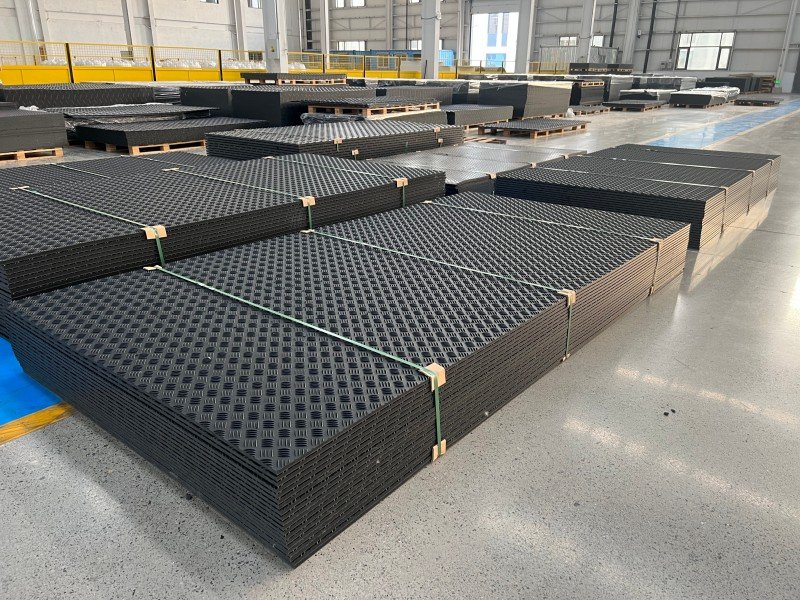 A cheaper mat can look like a smart buy on day one. The real test comes later—after truck traffic, cold mornings, hot sun, connector stress, cleaning, stacking, and repeated jobs.
If the mat cracks early, shifts under load, loses shape, or cannot be rented again, the lower price may disappear quickly.
I think what you care about most is simple: will the mat still perform when the job gets rough, and will the extra material cost come back through fewer problems and more uses?
This article will help you decide when 100% virgin HDPE is worth paying for, when controlled recycled HDPE is enough, and when “cheap recycled plastic” becomes a risk.
Start with Use Risk, Not Material Labels
The right question is not only “virgin or recycled?”
The better question is: how much risk can your project accept, and how many times do you need the mat to perform reliably?
If you use ground protection mats for one short, light-duty job, 100% virgin HDPE may not always be necessary.
But if your mats need to handle repeated vehicle access, rental use, cold-weather impact, hot-weather outdoor exposure, connector stress, white or translucent turf protection, or high-value job sites, 100% virgin HDPE is often worth the price premium.
For BKM, I would compare material choices by application, not by label.
A controlled recycled HDPE mat can be useful for many general jobs. A low-grade mixed recycled plastic mat can create problems. A 100% virgin HDPE mat gives you the highest consistency, but the premium only makes sense when that consistency protects your work, your schedule, or your rental income.
What 100% Virgin HDPE Really Means
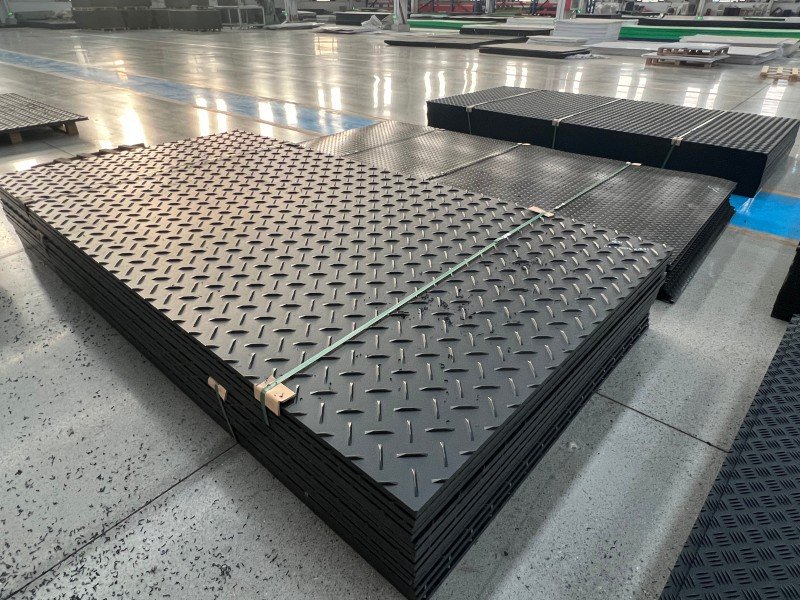
100% virgin HDPE means the mat is made from new high-density polyethylene resin, not reprocessed scrap or mixed recycled plastic.
The material source is more consistent, so the finished mat is usually more predictable in strength, flexibility, impact behavior, color, thickness stability, connector-hole performance, and long-term use.
HDPE is widely valued because it offers a strong balance of strength-to-density ratio, durability, and practical outdoor performance. Typical HDPE density is commonly around 0.93–0.97 g/cm³, depending on grade and formulation.1
In jobsite terms, that means HDPE can resist moisture, handle repeated use, clean more easily than wood, and stay useful across many projects when the mat is designed and used correctly.
Virgin HDPE does not make a mat indestructible.
You still need the right thickness, surface texture, connector design, layout, and ground support. But virgin HDPE gives the mat a more stable material foundation.
What “Recycled Plastic Construction Mat” Can Mean
“Recycled plastic construction mat” is a broad phrase. It does not always mean the same material.
It may mean:
- controlled recycled HDPE
- post-industrial HDPE regrind
- post-consumer recycled HDPE
- mixed polyethylene material
- mixed recycled plastic with HDPE, LDPE, PP, fillers, colorants, or unknown material streams
These are not equal.
The difference matters because recycled polymer blends can show more variable mechanical and thermal behavior when the feedstock is not controlled.2
A well-controlled recycled HDPE mat may perform well in many ground protection applications. A mixed recycled plastic mat with unclear input material may have more variation in stiffness, impact resistance, bending behavior, color, surface quality, and long-term durability.
That is why I would not reject recycled material automatically.
But I would also not buy a mat only because the price is low and the word “recycled” sounds good.
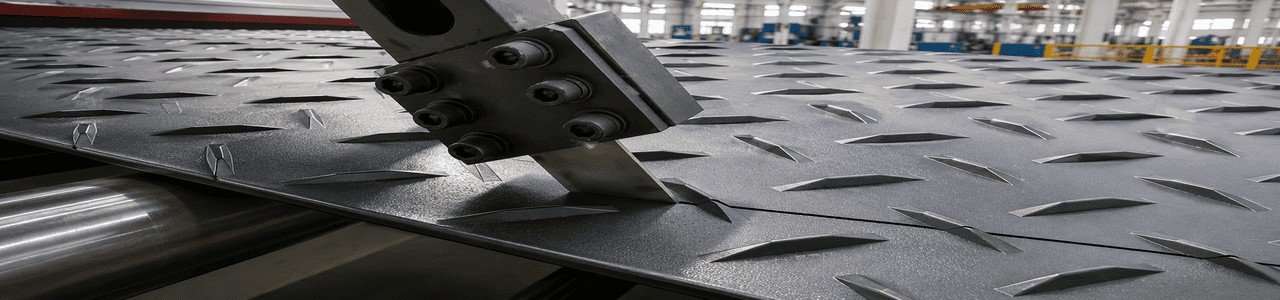
Virgin HDPE vs Recycled HDPE vs Mixed Recycled Plastic
Use this table before comparing quotes.
| Material Type | Material Consistency | Best Fit | Main Risk |
|---|---|---|---|
| 100% virgin HDPE | Highest | Rental fleets, repeated vehicle routes, cold weather, white mats, premium projects | Higher upfront price |
| Controlled recycled HDPE | Medium to high | General access, seasonal use, lower-risk vehicle routes | Depends on source control |
| Mixed recycled polyethylene | Medium | Light to medium use when supplier quality is clear | More property variation |
| Mixed recycled plastic | Low to uncertain | Price-sensitive, low-risk use only | Unknown stiffness, impact, aging, and connector behavior |
| Low-grade recycled plastic | Uncertain | Avoid for demanding access routes | Early cracking, warping, weak holes, poor repeat use |
I would rather pay less for recycled HDPE when the source is clear than pay slightly less for a mat made from unknown mixed plastic.
The risk is not “recycled.” The risk is unclear material control.
Where Virgin HDPE Gives Real Value
100% virgin HDPE becomes more valuable when performance must be predictable over many uses.
This is especially true in rental fleets.
A rental mat is handled much harder than a mat used by one careful crew. It is delivered, dragged, cleaned, stacked, loaded, unloaded, used by different customers, and rented again.
If the mat has weak spots, poor impact behavior, or unstable connector holes, the cost shows up later.
Virgin HDPE is also valuable for repeated construction access. Vehicle routes create bending, edge stress, tire pressure, turning force, and connector stress.
A consistent resin helps the mat behave more predictably under those repeated loads.
Virgin HDPE is usually worth stronger consideration when your mats face:
| Application | Why Virgin HDPE Helps |
|---|---|
| Rental fleet | More predictable service life and fewer unexpected failures |
| Repeated vehicle access | Better consistency under bending and turning stress |
| Cold-weather use | More reliable impact behavior |
| Connector-heavy routes | More stable hole performance under side force |
| High-value job sites | Lower risk of failure-related repair or complaints |
| White or translucent mats | Cleaner color and better appearance control |
| Long outdoor service | Better consistency when combined with proper additives |
If one failure could cost more than the material premium, the premium is easier to justify.
Where Recycled HDPE Can Be Enough
Recycled HDPE is not automatically a poor choice.
It can be a smart option when the application is less demanding and the material source is controlled.
Controlled recycled HDPE may work well for:
- general site access
- light to medium vehicle routes
- seasonal use
- temporary parking
- construction entrances
- farm access
- muddy work areas
- lower-risk short-term projects
- bare soil, gravel, or clay routes where appearance is not critical
If the mats will not be rented repeatedly, used in cold impact conditions, or placed on high-value surfaces, recycled HDPE may give a good balance between cost and performance.
The key is quality control.
Ask what recycled material is actually used. A controlled recycled HDPE mat is very different from a cheap mixed-plastic mat with unknown inputs.
Where Cheap Mixed Recycled Plastic Becomes Risky
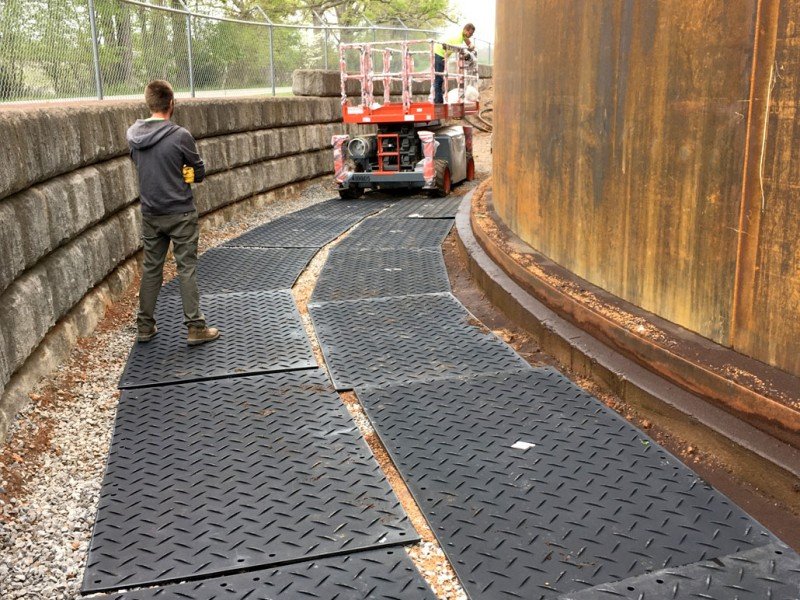
The risk is highest when the material is described only as “recycled plastic” without details.
Plastic recycling depends on sorting, contamination control, processing history, and material compatibility. Mechanical recycling can degrade polymer properties when heat, processing, contamination, or repeated cycles are not controlled.3
For ground protection mats, weak points often appear around:
- connector holes
- corners
- edges
- turning zones
- high-load tire paths
- cold impact points
- areas dragged during handling
- repeatedly flexed sections
A mat does not fail only from downward pressure. It also faces twisting, dragging, turning, bending, side movement, and repeated handling.
If the recycled material has poor fusion, contamination, uneven stiffness, or mixed polymers, the mat may look acceptable when new but perform poorly after real use.
This is the part I would not gamble on for a high-value job.
Virgin HDPE Matters More for White or Translucent White Mats
For black construction mats, controlled recycled HDPE can sometimes be acceptable because black color hides variation better.
For white or translucent white turf protection mats, virgin or carefully controlled natural HDPE becomes much more important.
White or translucent mats are often chosen for turf-sensitive sites because they reduce heat buildup compared with black mats. Light-colored surfaces reflect more sunlight and usually absorb less heat than dark surfaces.4
For this type of mat, material cleanliness matters.
Poor recycled material may cause:
- dark specks
- color variation
- uneven translucency
- gray or dirty appearance
- inconsistent light transmission
- less predictable surface quality
If your project involves golf courses, parks, schools, wedding lawns, event venues, sports fields, or customer-facing turf, appearance and heat behavior can matter as much as basic strength.
For BKM turf-sensitive applications, I would normally choose virgin or carefully controlled natural HDPE for white or translucent white mats.
Judge the Premium by Cost Per Use
Do not compare virgin HDPE and recycled mats only by purchase price.
Compare them by cost per use.
Here is a simple example:
| Mat Type | Purchase Price | Reliable Uses | Basic Cost Per Use |
|---|---|---|---|
| Recycled mat | $180 | 40 uses | $4.50 |
| Virgin HDPE mat | $260 | 100 uses | $2.60 |
| Cheap mixed plastic mat | $130 | 15 uses | $8.67 |
These are sample numbers, not fixed prices. Your actual cost and use count may be different.
But the logic is important.
A cheaper mat is not cheaper if it cracks earlier, moves more under load, fails around connector holes, cannot be rented again, or creates repair work after the job.
For one short job, the lower first cost may matter more.
For repeated work, longer service life usually matters more.
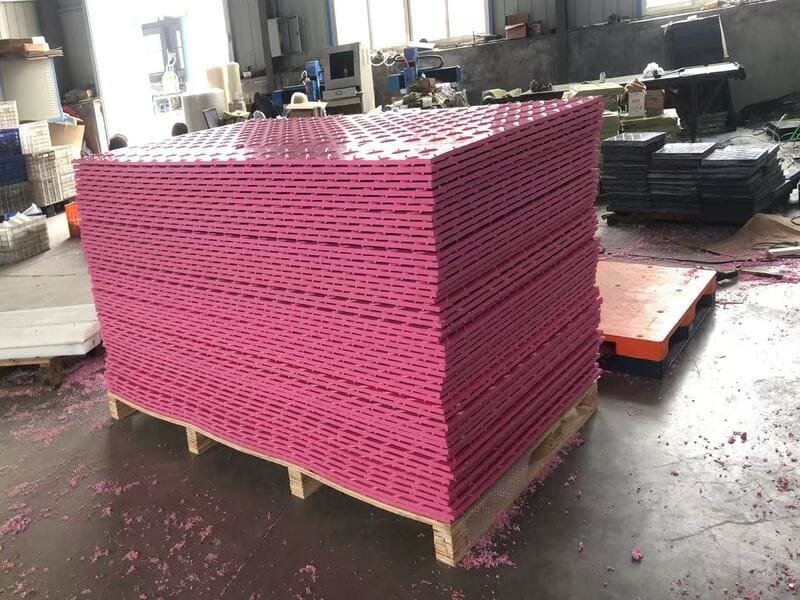
The Premium Is Worth It When Failure Is Expensive
Virgin HDPE becomes easier to justify when mat failure creates real cost.
Failure cost can include:
| Failure Result | Real Cost Behind It |
|---|---|
| Mat crack | Replacement cost and possible route shutdown |
| Connector-hole failure | More shifting and route instability |
| Edge bending | More rutting and harder recovery |
| Customer lawn damage | Repair work and complaints |
| Equipment stuck in mud | Crew downtime and recovery cost |
| Event entrance failure | Public safety and reputation risk |
| Rental mat failure | Lost rental income and replacement |
| Color inconsistency | Poor presentation for premium turf jobs |
If one failed mat can cost more than the price difference between virgin and recycled material, the cheaper quote is not really cheaper.
This is the business side of the decision.
I know price pressure is real. But the cheapest mat becomes painful when it fails in front of your customer.
Cold Weather and Impact Risk
Cold weather is another reason to be careful with material quality.
Plastic materials can become less forgiving at lower temperatures. Impact behavior, brittleness, and crack growth become more important when mats are dropped, dragged, loaded, or driven over in cold conditions.
For cold-weather work, I would rather use a mat with predictable resin quality than an unknown mixed recycled plastic.
Virgin HDPE does not remove all cold-weather risk, but it gives more confidence because the material input is more consistent.
For winter construction, utility routes, rental fleets, and northern climates, that consistency can be worth paying for.
Connector Stress Is a Material Test
Connector holes are one of the best places to see material quality over time.
A mat route does not only carry downward load. Vehicles turn, brake, reverse, and push sideways.
That side force often moves through the connector holes.
If the material around the holes is inconsistent, brittle, poorly fused, or weak, the holes may stretch, crack, or tear earlier.
For connector-heavy layouts, I would pay closer attention to:
- hole shape and finish
- mat thickness around the hole
- material toughness
- connector design
- turning zones
- ground support
- repeated installation and removal
- whether the mat will be used in cold weather
Virgin HDPE gives better predictability here, especially for repeated rental and vehicle-access routes.
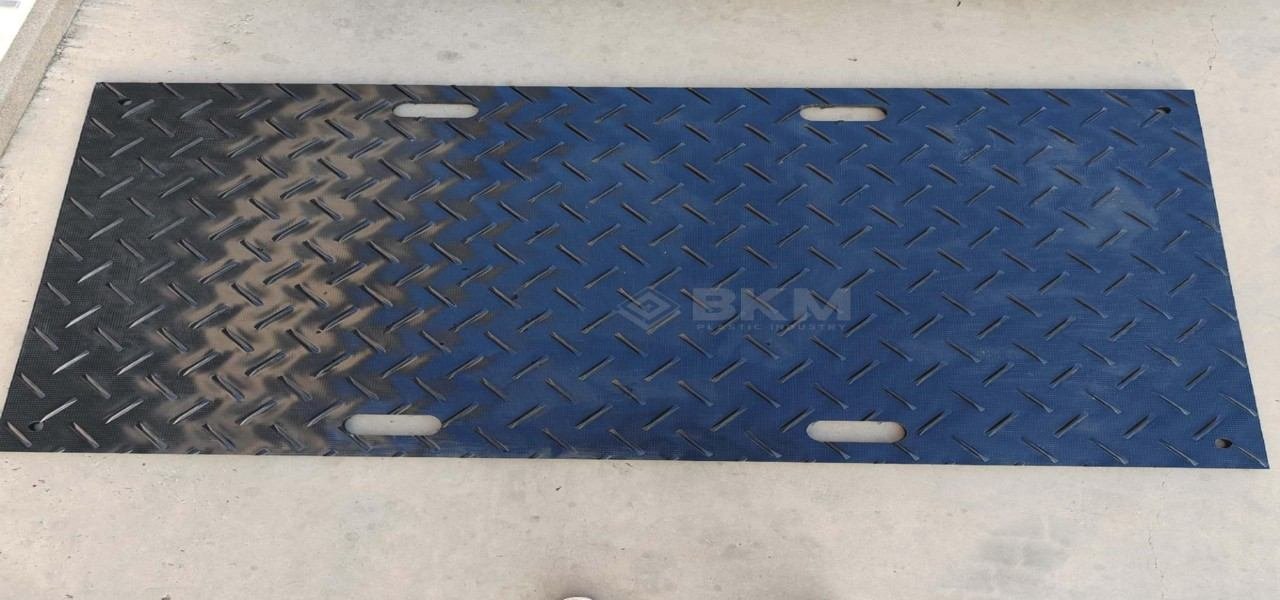
Practical Selection Guide
Use this table as a quick decision tool.
| Project Situation | Better Material Direction |
|---|---|
| One short light-duty job | Controlled recycled HDPE may be enough |
| General mud access on low-risk ground | Controlled recycled HDPE can work |
| Repeated construction access | Virgin HDPE is safer |
| Rental fleet | Virgin HDPE is usually worth it |
| Cold-weather use | Virgin HDPE is usually better |
| White or translucent turf mats | Virgin or carefully controlled natural HDPE |
| Premium customer property | Virgin HDPE gives lower risk |
| Heavy connector use | Virgin HDPE gives more predictable hole performance |
| Unknown recycled material source | Avoid for demanding jobs |
| Lowest possible upfront cost | Recycled HDPE only if risk is low and source is clear |
The best material is not always the most expensive one.
The best material is the one that matches your risk, use count, and customer expectations.
What to Ask Before Buying Recycled Mats
Before buying recycled mats, ask practical questions.
| Supplier Detail | Why It Matters |
|---|---|
| Recycled HDPE or mixed recycled plastic | These are not the same material risk |
| Post-industrial or post-consumer source | Source affects consistency |
| Mat weight | Helps check material amount and consistency |
| Thickness tolerance | Shows process control |
| Connector-hole design | Important for repeated routes |
| Cold-weather use guidance | Helps avoid impact surprises |
| UV/additive package | Important for outdoor service life |
| Sample availability | Lets you check stiffness, finish, and quality |
| Color consistency | Important for white or premium projects |
| Intended traffic type | Prevents using the wrong mat for the job |
If the supplier cannot explain the recycled material source clearly, do not judge only by the lower price.
You are not just buying plastic. You are buying predictability on site.
BKM Practical Recommendation
BKM does not recommend one material for every project.
If you need the lowest upfront cost for light or occasional use, a controlled recycled HDPE mat can be reasonable.
If you need a mat for rental, repeated construction access, harsh weather, high-value turf, strict appearance requirements, connector-heavy layouts, or long-term reuse, 100% virgin HDPE is usually worth the premium.
If the quote says “recycled plastic” but does not clearly say recycled HDPE, ask more questions before buying.
A mat is not only a plastic sheet. It is part of your access plan.
The material decides how predictable the mat will be after repeated loading, weather exposure, cleaning, storage, and handling.
BKM can support 100% virgin HDPE mats, controlled recycled HDPE options for suitable applications, black mats, white mats, translucent white mats, custom colors, surface textures, common sizes, custom dimensions, hand holes, connector holes, logo marking, private-label needs, and export packaging.
BKM also provides connector systems for mat layouts. Other site accessories, such as ramps, hooks, storage racks, straps, anchors, or underlayment, can be prepared locally if your project requires them.
FAQ
Is 100% virgin HDPE always better than recycled HDPE?
Virgin HDPE is more consistent, but it is not always necessary. For light or occasional use, controlled recycled HDPE may be enough. For repeated use, rental fleets, cold weather, white mats, or high-risk jobs, virgin HDPE is usually the better choice.
Are recycled plastic construction mats bad?
No. Recycled mats can work well when the material source is controlled and the mat is properly manufactured. The risk is higher when the material is mixed, unclear, or poorly processed.
Why does virgin HDPE cost more?
Virgin HDPE uses new resin with more consistent properties. This gives better control over strength, flexibility, impact behavior, color, connector-hole performance, and long-term use.
Can recycled HDPE mats handle vehicles?
Yes, if the mat is designed for that load and made from controlled recycled HDPE. You still need to check thickness, weight, connector design, ground condition, and traffic pattern.
Is virgin HDPE better for rental mats?
Usually yes. Rental mats go through repeated handling, cleaning, transport, and customer use. Material consistency helps reduce unexpected failures and makes service life more predictable.
Is virgin HDPE better for cold weather?
Usually yes. When mats are used in cold conditions, predictable impact behavior becomes more important. Virgin HDPE gives more confidence than unclear mixed recycled plastic.
Is recycled HDPE more environmentally friendly?
Recycled HDPE can reduce the need for new plastic material. But sustainability should also include service life. A low-quality recycled mat that fails early may not be the better long-term choice.
What should I ask before buying recycled mats?
Ask whether the mat is recycled HDPE or mixed recycled plastic, what the material source is, what the mat weight is, what the thickness tolerance is, whether connectors are supported, and what type of traffic the mat is designed for.
Conclusion
100% virgin HDPE is worth the price premium when you need consistency, long service life, repeated vehicle access, rental performance, cold-weather reliability, connector-hole strength, or white/translucent turf protection mats.
Recycled HDPE can still be a good option when the material is controlled and the application is less demanding.
The problem is not recycled material itself. The problem is unclear mixed plastic being sold as if it performs the same as high-quality HDPE.
To make the right decision, look at your real use: load, traffic frequency, climate, ground condition, connector stress, appearance needs, and expected reuse.
If the mat only needs to solve a short-term, low-risk problem, controlled recycled HDPE may be enough.
If the mat needs to protect your work, your schedule, your rental income, and your reputation over many projects, 100% virgin HDPE is often worth paying for.
References
Plastics Europe. “Polyolefins.” https://plasticseurope.org/plastics-explained/a-large-family/polyolefins/ ↩
Jones, H. et al. “Thermomechanical Properties of Virgin and Recycled Polypropylene/High-Density Polyethylene Blends.” *Polymers*, via PubMed Central. https://pmc.ncbi.nlm.nih.gov/articles/PMC10647352/ ↩
Patel, A. D. et al. “Defining Quality by Quantifying Degradation in the Mechanical Recycling of High-Density Polyethylene.” via PubMed Central. https://pmc.ncbi.nlm.nih.gov/articles/PMC11464626/ ↩
U.S. Environmental Protection Agency. “Using Cool Roofs to Reduce Heat Islands.” https://www.epa.gov/heatislands/using-cool-roofs-reduce-heat-islands ↩