
 English
 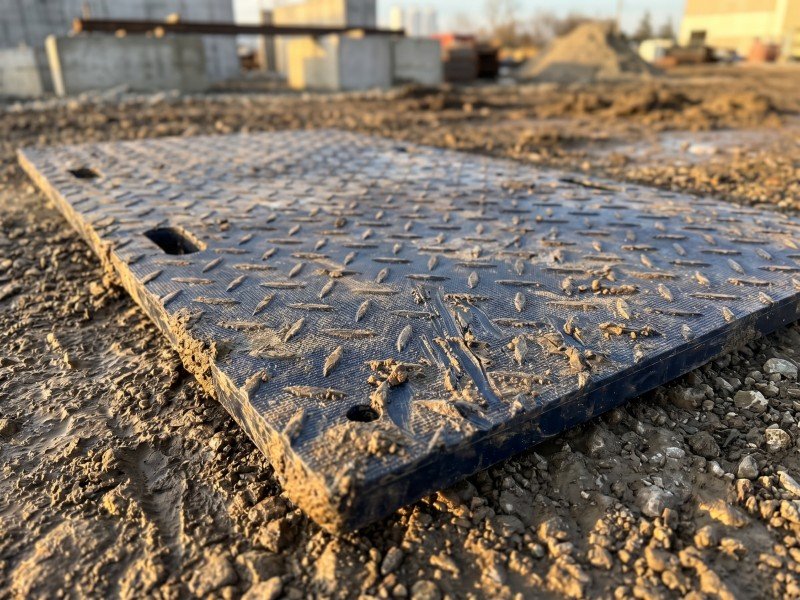 Rain can turn a well-planned outdoor event into a mud problem before the first guest even reaches the entrance.
People start walking around puddles. Side paths appear. Wheelchairs and strollers get stuck. Vendors drag carts through soft ground. The event still goes on, but the site starts looking messy, unsafe, and difficult to manage.
The solution is not simply to throw plywood, straw, or random plastic sheets over the mud.
This article will help you choose the right temporary pedestrian walkway system for muddy event grounds, including walkway width, mat type, connector use, event zoning, installation details, and when heavier ground protection mats are needed.
Start with the Real Event Problem
Muddy event ground is not only uncomfortable.
It affects:
- guest safety
- crowd flow
- accessibility
- vendor movement
- site appearance
- cleanup cost
- turf damage
- staff control
- emergency access
Once people avoid the muddy route, they create new walking paths. Those side paths spread the damage and make the ground worse.
The busiest problem areas are usually:
| Event Area | Main Problem |
|---|---|
| Entrance gates | Heavy crowd concentration |
| Ticket check points | People stand and shuffle in place |
| Food and beverage areas | Spills, queues, and repeated foot traffic |
| Toilet routes | Constant two-way movement |
| Stage access | Dense crowd and staff movement |
| Vendor routes | Carts and hand trucks |
| Medical access | Must stay clear and stable |
| Parking-to-event paths | Long muddy walking routes |
| Backstage service routes | Mixed staff, carts, and equipment |
| Low spots in the field | Water collects and softens the ground |
For an event, a walkway is not just ground cover. It is part of crowd management.
Best General Solution: Connected Temporary Walkway Mats
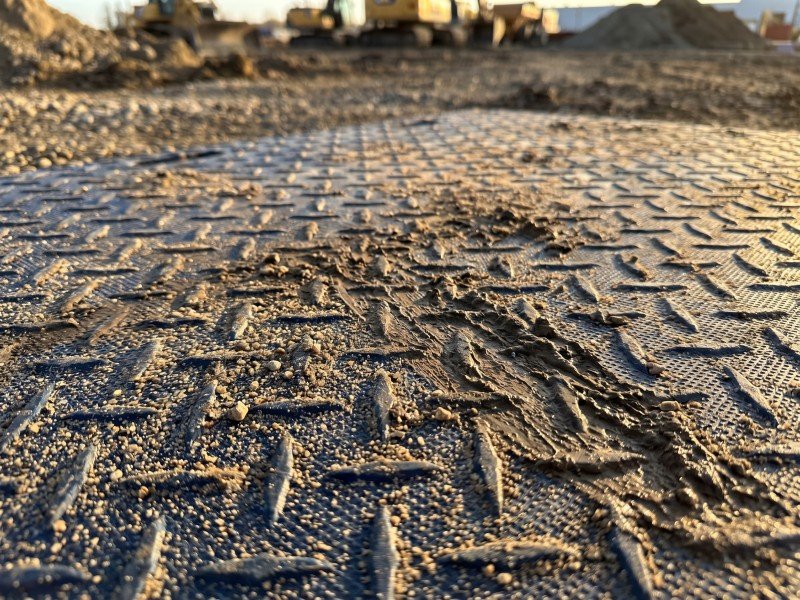
For most muddy event grounds, the best solution is a connected modular temporary walkway system with an anti-slip, pedestrian-friendly surface.
For pedestrian-only routes, you do not always need the heaviest vehicle mats.
You need a walkway that is:
- stable under foot
- low-profile
- connected
- slip-resistant
- easy to install
- easy to remove
- reusable
- wide enough for real crowd movement
- suitable for wheelchairs, strollers, carts, and elderly visitors
Loose mats can shift. Once gaps open, mud pushes through and raised edges become trip points.
Connected panels work more like one continuous walkway. That is the difference between a path that still works after rain and a path that only looked good during setup.
Do Not Use One Mat Type for the Whole Event
A guest walkway and a backstage loading route are not the same.
A muddy entrance and a forklift route behind the stage are not the same.
This is where many event layouts go wrong. They choose one product and try to make it solve every problem.
A better plan is to divide the ground into zones.
| Event Zone | Best Mat Direction | Why |
|---|---|---|
| Public pedestrian walkway | Pedestrian-friendly walkway mats | Lower trip risk and better walking comfort |
| Entrance and queue area | Wider connected walkway panels | High crowd pressure |
| Toilet and food routes | Wider anti-slip mats | Repeated two-way traffic |
| ADA / wheelchair route | Stable, firm, low-profile connected surface | Accessibility and smoother movement |
| Vendor cart route | Stronger HDPE mats with walking-safe surface | Carts add rolling load |
| Golf cart / utility cart route | HDPE ground protection mats | More load than foot traffic |
| Stage loading area | Heavy-duty ground protection mats | Concentrated equipment movement |
| Truck or forklift route | Temporary road mats or heavy-duty mats | Higher loads and turning force |
| Valuable turf area | Light-colored or ventilated turf panels if long coverage is needed | Reduces turf stress |
The practical rule is simple: choose the mat by traffic type, not only by mud depth.
Recommended Walkway Width for Events
A walkway that is technically passable may still be too narrow for a real event.
In U.S. accessibility planning, 36 inches is commonly used as a minimum clear width for accessible routes, but that should be treated as a baseline, not a comfortable event walkway width.1
For real crowd movement, BKM would usually plan wider.
| Event Use | Practical Walkway Width |
|---|---|
| Short low-traffic pedestrian path | 4 ft |
| Normal two-way guest walkway | 6 ft |
| Entrance route | 8 ft or wider |
| Food and toilet routes | 8–12 ft |
| Queue areas | Wider pad, not a narrow path |
| Wheelchair and stroller-heavy route | 6–8 ft or wider |
| Vendor cart route | 6–8 ft minimum, depending on cart size |
| Mixed pedestrian + small service route | 8 ft or wider |
| Stage or loading access | Design by equipment size and turning area |
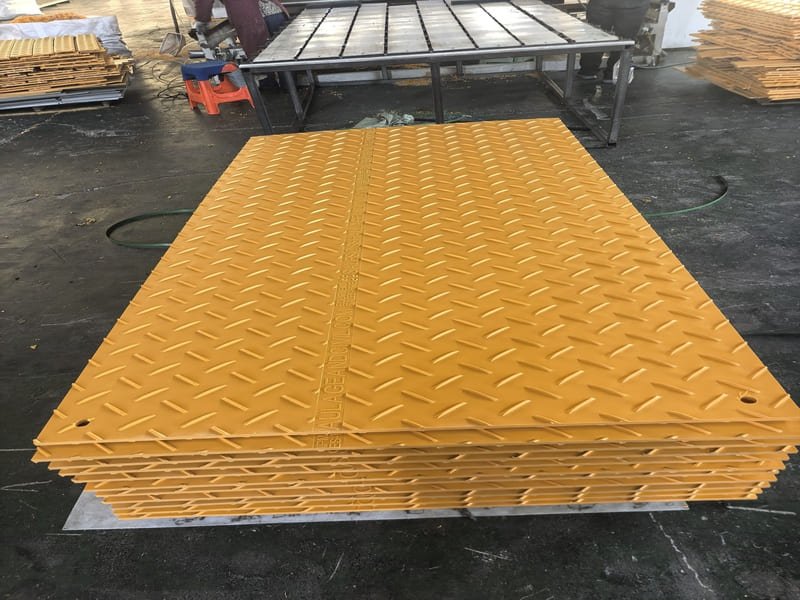
If you use 4 ft × 8 ft mats, one row creates a 4 ft path. Two rows create an 8 ft route.
For busy areas, two rows are often much more practical than forcing everyone onto one narrow line.
People do not walk like drawings on a site plan. They stop, turn, talk, carry bags, push strollers, and walk around slow groups.
Your walkway should allow for real movement.
Choose the Surface for Feet, Not Just Tires
Vehicle traction and pedestrian comfort are not the same thing.
A heavy aggressive tread may work well for equipment tires, but it may feel uncomfortable or awkward for public walking routes.
For event pedestrians, look for:
| Surface Feature | Why It Matters |
|---|---|
| Low-profile anti-slip texture | Better walking comfort |
| Stable panel surface | Reduces rocking and uneven steps |
| Controlled gaps | Reduces trip risk |
| Low edge height | Easier for carts, strollers, and wheelchairs |
| Drainage or mud control | Helps keep the surface usable after rain |
| Cleanable surface | Faster cleanup after the event |
| Suitable underside | Helps reduce turf or surface damage |
For muddy public routes, the goal is not the most aggressive tread. The goal is stable walking with enough grip.
If carts or small utility vehicles will also use the route, choose a stronger HDPE mat with a pedestrian-safe surface.
Why HDPE Mats Work Well for Muddy Event Access
HDPE ground protection mats are commonly used for muddy access because they resist moisture, clean easily, and can be reused across multiple events.
HDPE belongs to the polyolefin family and is widely used because it offers a practical balance of toughness, low moisture absorption, outdoor durability, and handling efficiency.2
For event use, this means HDPE mats can help you:
- create a defined route over mud
- reduce direct foot traffic on soft ground
- protect grass from rutting
- support carts and light service traffic
- clean mud off after removal
- reuse the mats for future events
- install and remove faster than many temporary ground materials
But not every HDPE mat is right for public walking.
You still need the correct surface texture, mat thickness, connector system, edge design, and layout.
What Not to Use as the Main Walkway
Some cheap solutions look helpful at first but create problems after rain and traffic.
| Material | Why It Becomes a Problem |
|---|---|
| Loose plywood | Can warp, slide, absorb water, and create uneven edges |
| Straw | Mixes into mud and creates cleanup work |
| Mulch or wood chips | Moves under traffic and does not create a firm surface |
| Thin plastic sheets | Wrinkle, curl, slide, and create trip hazards |
| Tarps | Trap water and shift under foot traffic |
| Loose rubber sheets | Can move, buckle, or collect water |
| Gravel | May be hard to remove and may not be allowed on lawns or venues |
| Random boards | Uneven surface and poor accessibility |
| Unconnected mats | Can open gaps and expose mud |
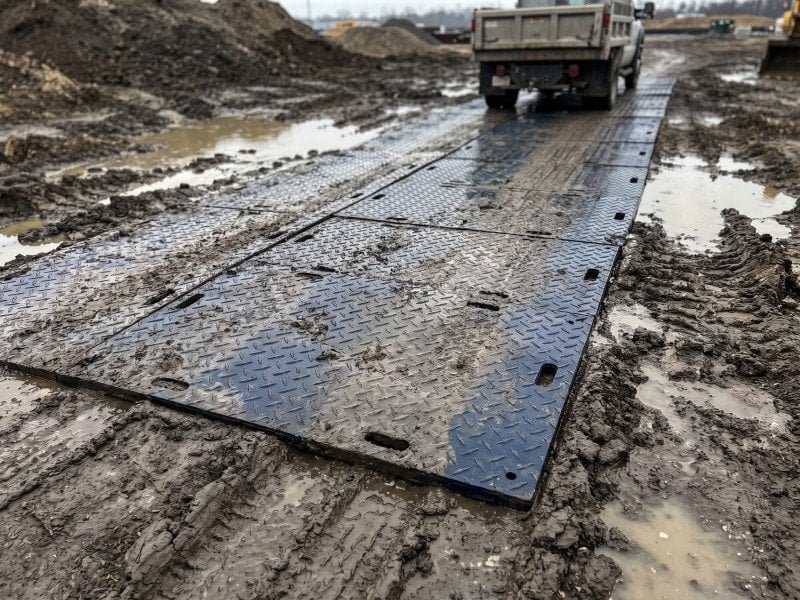
For a public event, the walkway should be removable, connected, textured, stable, and reusable.
Cheap ground cover is not cheap if it creates safety complaints, cleanup problems, or damaged turf.
Installation Details That Matter
Even the right mats can fail if they are installed poorly.
Start by choosing the route before visitors arrive.
The walkway should connect:
- parking areas
- entrances
- ticket points
- toilets
- food areas
- medical points
- stages
- vendor zones
- exits
- emergency access paths
Do not wait until visitors create their own muddy paths.
Before laying mats, remove:
- large stones
- branches
- sharp debris
- broken concrete
- metal pieces
- uneven objects
- anything that creates pressure points
The surface does not need to be perfect, but high points under the mat can cause rocking, raised edges, or discomfort under foot.
Lay mats from firm ground toward the muddy area. Keep edges tight. Align the panels. Connect the mats before opening the route to the public.
For corners and queues, widen the layout. Do not force people through a narrow turn.
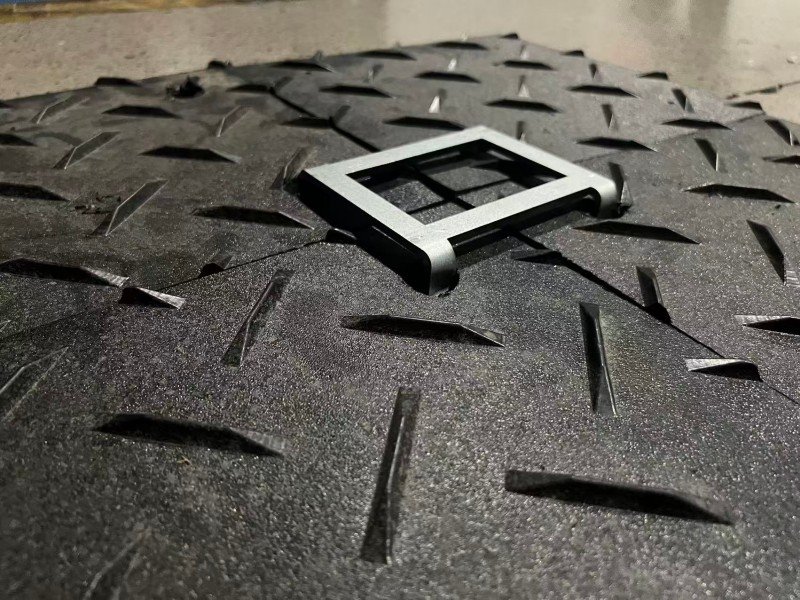
Connector Use for Event Walkways
For event walkways, connectors are strongly recommended.
They help reduce:
- panel shifting
- open gaps
- raised edges
- mud squeeze-through
- uneven seams
- trip points
- walkway drift under crowd movement
Public walking surfaces should stay stable, firm, and slip-resistant. This is especially important for distracted guests, elderly visitors, carts, strollers, and wheelchair users.3
Use more connectors in:
| Walkway Area | Connector Priority |
|---|---|
| Entrances | High |
| Ticket lines | High |
| Toilet routes | High |
| Food and beverage areas | High |
| Corners | High |
| Queue zones | High |
| ADA routes | High |
| Wet or muddy sections | High |
| Straight low-traffic paths | Medium |
| Short private staff paths | Medium to low |
If the walkway moves during testing, fix it before the event opens.
After the crowd arrives, repairs become harder.
Inspection During the Event
Muddy ground changes during the day.
A walkway that was stable at 9 a.m. may shift after rain, cart traffic, and thousands of steps.
For busy events, assign staff to inspect the main routes.
Check for:
- loose connectors
- raised edges
- open gaps
- mud coming through seams
- slippery spots
- rocking panels
- water pooling
- damaged corners
- crowded pinch points
- carts leaving the route
If a section starts failing, add panels, reconnect joints, redirect traffic, or widen the route before the problem spreads.
Small walkway problems are easier to fix early than after guests have already made a new muddy path.
Special Note for Grass and Turf
If the event is on grass, the walkway plan must also protect the turf.
Short-term coverage is usually manageable, but solid mats can stress grass if they stay down too long, especially in hot sun.
Grass needs light, air, and recovery time. When turf is covered for long periods, heat, shade, and reduced airflow can affect recovery.4
For valuable turf or multi-day events, consider:
- shorter coverage time
- staged installation
- staged removal
- lighter-colored panels
- ventilated turf protection panels
- wider routes to reduce concentrated wear
- post-event turf recovery plan
Solid black mats are practical for many muddy access jobs, but they should not be left on valuable grass longer than necessary in hot weather.
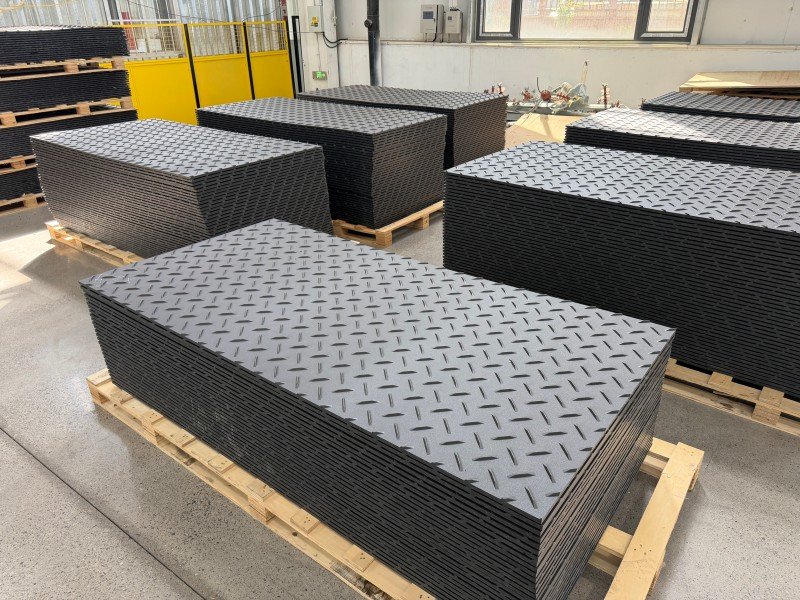
Removal and Cleanup
Good walkway planning includes removal.
Do not drag muddy mats across valuable turf or finished surfaces if they can be lifted.
During removal:
- Remove connectors first.
- Keep connector parts in containers.
- Lift panels where possible.
- Avoid dragging debris across grass.
- Clean mud from mats before storage.
- Inspect for cracks, edge damage, or worn connectors.
- Stack mats flat when possible.
- Store panels where they will not bend or warp.
For rental and repeated event use, cleaning matters. Mud left on mats adds weight, hides damage, and makes the next installation harder.
BKM Recommendation for Muddy Event Walkways
For a normal outdoor event walkway over muddy ground, BKM would usually recommend a connected HDPE pedestrian mat system with an anti-slip surface and manageable panel weight.
For light foot traffic, a 4 ft path may be acceptable.
For normal two-way event traffic, 6 ft is more practical.
For entrances, toilet routes, food areas, and queue zones, 8 ft or wider is usually better.
If carts or small service vehicles will use the same route, choose stronger HDPE mats and make the route wider.
If heavy trucks, forklifts, or stage equipment will use the area, separate that route and use heavy-duty ground protection mats or temporary road mats.
If grass protection is very important and the mats must stay down for several days, consider lighter-colored, raised, or ventilated turf protection panels for pedestrian zones.
The best result usually comes from using different mat types for different event zones instead of forcing one product to do every job.
BKM can support HDPE ground protection mats in common sizes and custom dimensions, with pedestrian-friendly texture options, vehicle traction surfaces, hand holes, connector holes, colors, logo marking, private-label needs, and export packaging.
BKM also provides connector systems for mat layouts. Other site accessories, such as ramps, hooks, storage racks, straps, anchors, or underlayment, can be prepared locally if your project requires them.
FAQ
What is the best walkway material for muddy event grounds?
A connected modular temporary walkway mat system is usually the best option. For pedestrian routes, choose anti-slip, low-profile mats. For service routes or vehicle access, use stronger HDPE ground protection mats.
How wide should a temporary pedestrian walkway be for an event?
For low traffic, 4 ft may work. For normal two-way pedestrian flow, 6 ft is more practical. For entrances, food areas, toilets, and busy routes, 8–12 ft is usually better. Accessibility rules may require minimum clear widths, so always check local requirements.
Can plywood be used for muddy event walkways?
Plywood can be used for small backstage areas, but it is not the best main solution for public pedestrian routes. It can absorb water, warp, become slippery, and create uneven edges.
Are HDPE mats good for event walkways?
Yes, if the surface is suitable for pedestrians. HDPE mats resist moisture, can be cleaned, and can be reused across events. For public walking areas, choose mats with a pedestrian-friendly anti-slip surface.
Do temporary walkway mats need connectors?
For event walkways, yes, connectors are strongly recommended. They help keep mats aligned, reduce gaps, and lower the risk of shifting panels or raised edges.
Can the same mats be used for pedestrians and service vehicles?
Sometimes, but only if the mats are strong enough and the surface is suitable for both. If heavy vehicles are involved, separate the pedestrian route from the vehicle route.
Will mats damage grass at an event?
Short-term use is usually manageable, but solid mats can stress grass if left too long, especially in hot sun. For multi-day events on valuable turf, consider ventilated or turf-specific panels.
What should I use at event entrances?
Use wider connected mat coverage at entrances because traffic is concentrated there. An 8 ft or wider entrance walkway is usually more practical than a narrow path, especially when visitors arrive in groups.
Conclusion
The best solution for temporary pedestrian walkways over muddy event grounds is a connected modular walkway system with an anti-slip, pedestrian-friendly surface.
For most event routes, HDPE mats are practical because they resist moisture, clean easily, connect into stable routes, and can be reused.
But the walkway should be planned by zone.
Use pedestrian mats for guest routes, stronger ground protection mats for carts and service areas, and heavy-duty temporary road mats for trucks or stage setup.
Keep main walkways wide enough for real crowd movement, connect the panels, inspect them during the event, and remove them carefully after use.
For muddy event grounds, the goal is not just to cover the mud.
The goal is to create a stable, safe, clean, and removable access route that keeps guests moving and keeps the event under control.
References
U.S. Access Board. “Chapter 4: Accessible Routes.” https://www.access-board.gov/ada/guides/chapter-4-accessible-routes/ ↩
Plastics Europe. “Polyolefins.” https://plasticseurope.org/plastics-explained/a-large-family/polyolefins/ ↩
U.S. Access Board. “Chapter 3: Floor and Ground Surfaces.” https://www.access-board.gov/ada/guides/chapter-3-floor-and-ground-surfaces/ ↩
UMass Amherst Center for Agriculture, Food, and the Environment. “Growing Turf Under Shaded Conditions.” https://www.umass.edu/agriculture-food-environment/turf/fact-sheets/growing-turf-under-shaded-conditions ↩